RankRizz

JEE Main 24 Jan 2025, Shift 1: Chemistry

The 25 Chemistry questions of JEE Main 24 Jan 2025, Shift 1, numbered across the whole paper. Pick an answer on any question to check it against the key. Free to read, nothing to download.

Chemistry

Q26Carbohydrates: classification and monosaccharidesTRANSCRIBED

The carbohydrate "Ribose" present in DNA, is A. A pentose sugar B. present in pyranose from C. in "D" configuration D. a reducing sugar, when free E. in α\alpha-anomeric form Choose the correct answer from the options given below:

  1. A

    A, D and E Only

  2. B

    A, C and D Only

  3. C

    A, B and E Only

  4. D

    B, D and E Only

Q27Nucleophilic substitution (SN1 and SN2)TRANSCRIBED

Given below are two statements: Statement I: The conversion proceeds well in the less polar medium.
CH3−CH2−CH2−CH2−Cl  →    HO−    CH3−CH2−CH2−CH2−OH+Cl(−)\mathrm{CH_3-CH_2-CH_2-CH_2-Cl} \;\xrightarrow{\;\;HO^-\;\;} \mathrm{CH_3-CH_2-CH_2-CH_2-OH} + \mathrm{Cl^{(-)}}
Statement II: The conversion proceeds well in the more polar medium.

page7_img1

In the light of the above statements, choose the correct answer from the options given below

  1. A

    Both Statement I and Statement II are true

  2. B

    Statement I is true but Statement II is false

  3. C

    Statement I is false but Statement II is true

  4. D

    Both Statement I and Statement II are false

Q28Reactions of alkynesTRANSCRIBED

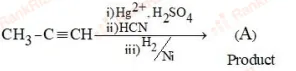
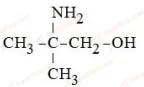
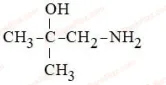
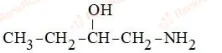
The product (A) formed in the following reaction sequence is

page7_img2
  1. A
    page7_img3
  2. B
    page7_img4
  3. C
    page7_img5
  4. D
    page7_img6
Q29Nucleophilic addition reactions of carbonyl compoundsTRANSCRIBED

Aman has been asked to synthesise the molecule

page7_img7

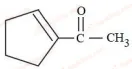
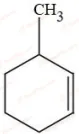
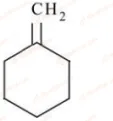
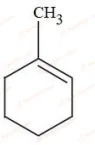
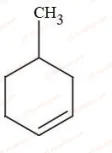
(x).He thought of preparing the molecule using an aldol condensation reaction. He found a few cyclic alkenes in his laboratory. He thought of performing ozonolysis reaction on alkene to produce a dicarbonyl compound followed by aldol reaction to prepare " x ". Predict the suitable alkene that can lead to the formation of " x ".

  1. A
    page8_img1
  2. B
    page8_img2
  3. C
    page8_img3
  4. D
    page8_img4
Q30Nucleophilic addition reactions of carbonyl compoundsTRANSCRIBED

Which of the following arrangements with respect to their reactivity in nucleophilic addition reaction is correct?

  1. A

    acetophenone < benzaldehyde < p-tolualdehyde < p- nitrobenzaldehyde

  2. B

    benzaldehyde < acetophenone < p-nitrobenzaldehyde < p-tolualdehyde

  3. C

    p- nitrobenzaldehyde < benzaldehyde < p-tolualdehyde < acetophenone

  4. D

    acetophenone  < p-tolualdehyde < benzaldehyde < p- nitrobenzaldehyde

Q31Gibbs energy and spontaneityTRANSCRIBED

Let us consider an endothermic reaction which is non-spontaneous at the freezing point of water. However, the reaction is spontaneous at boiling point of water. Choose the correct option.

  1. A

    Both ΔH and ΔS are (−ve)\text{Both } \Delta H \text{ and } \Delta S \text{ are } (-\text{ve})

  2. B

    ΔH is (−ve) but ΔS is (+ve)\Delta H \text{ is } (-\text{ve}) \text{ but } \Delta S \text{ is } (+\text{ve})

  3. C

    ΔH is (+ve) but ΔS is (−ve)\Delta H \text{ is } (+\text{ve}) \text{ but } \Delta S \text{ is } (-\text{ve})

  4. D

    Both ΔH and ΔS are (+ve)\text{Both } \Delta H \text{ and } \Delta S \text{ are } (+\text{ve})

Q32Other important compounds of transition metalsTRANSCRIBED

Preparation of potassium permanganate from MnO2MnO_2  involves two step process in which the 1st step is a reaction  with KOHKOH and  KNO3KNO_3 to produce:

  1. A

    K3MnO4K_3MnO_4

  2. B

    K4[Mn(OH)6]K_4[Mn(OH)_6]K

  3. C

    KMnO4KMnO_4K

  4. D

    K2MnO4K_2MnO_4K

Q33Rate of reactionTRANSCRIBED

For a reaction, N2O5(g)→2NO2(g)+12O2(g)N_2O_5(g) \rightarrow 2NO_2(g) + \frac{1}{2}O_2(g) in a constant volume container, no products were present initially.  The final pressure of the system when 50%50\% of reaction gets completed is:

  1. A

    5 times of initial pressure5 \text{ times of initial pressure}

  2. B

    52 times of initial pressure\frac{5}{2} \text{ times of initial pressure}

  3. C

    72 times of initial pressure\frac{7}{2} \text{ times of initial pressure}

  4. D

    74 times of initial pressure\frac{7}{4} \text{ times of initial pressure}

Q34Valence bond theory of complexesTRANSCRIBED

One mole of the octahedral complex compound  Co(NH3)5Cl3Co(NH_3)_5Cl_3  gives 3 moles of ions on dissolution in water. One mole of the same complex reacts with excess  AgNO3AgNO_3 solution to yield two moles of  AgCl(s).AgCl(s).  The structure of the complex is:

  1. A

    [Co(NH3)4Cl2]⋅Cl⋅NH3[Co(NH_3)_4Cl_2]\cdot Cl \cdot NH_3

  2. B

    [Co(NH3)3Cl3]⋅2NH3[Co(NH_3)_3Cl_3]\cdot 2NH_3

  3. C

    [Co(NH3)5Cl]Cl2[Co(NH_3)_5Cl]Cl_2

  4. D

    [Co(NH3)4Cl]⋅Cl2⋅NH3[Co(NH_3)_4Cl]\cdot Cl_2 \cdot NH_3

Q35Lanthanoids and lanthanoid contractionTRANSCRIBED

Which of the following ions is the strongest oxidizing agent? (Atomic Number of Ce=58,  Eu=63,  Tb=65,  Lu=  71Ce = 58,\; Eu = 63,\; Tb = 65,\; Lu =  71)

  1. A

    Eu2+Eu^{2+}

  2. B

    Tb4+Tb^{4+}

  3. C

    Lu3+Lu^{3+}

  4. D

    Ce3+Ce^{3+}

Q36Solubility product and common ion effectTRANSCRIBED

Ksp for Cr(OH)3 is 1.6×10−30.K_{sp} \text{ for } Cr(OH)_3 \text{ is } 1.6\times10^{-30}. What is the molar solubility of this salt in water?

  1. A

    1.8×10−3027\sqrt{\frac{1.8\times10^{-30}}{27}}

  2. B

    1.8×10−305\sqrt[5]{1.8\times10^{-30}}

  3. C

    1.6×10−30274\sqrt[4]{\frac{1.6\times10^{-30}}{27}}

  4. D

    1.6×10⁻³⁰\sqrt{1.6\times10^{-30}}

Q37Modern periodic table and classification of elementsTRANSCRIBED

Which of the following statements are NOT true about the periodic table? A. The properties of elements are function of atomic weights. B. The properties of elements are function of atomic numbers. C. Elements having similar outer electronic configurations are arranged in same period. D. An element's location reflects the quantum numbers of the last filled orbital. E. The number of elements in a period is same as the number of atomic orbitals available in energy level that is being filled. Choose the correct answer from the options given below:

  1. A

    A, C and E Only

  2. B

    A and E Only

  3. C

    B, C and E Only

  4. D

    D and E Only

Q38Quantitative estimation of elementsTRANSCRIBED

Given below are two statements I and II. Statement I: Dumas method is used for estimation of &amp;quot;Nitrogen&amp;quot; in an organic compound. Statement II: Dumas method involves the formation of ammonium sulphate by heating the organic compound with conc H2SO4H_2 SO_4. In the light of the above statements, choose the correct answer from the options given below

  1. A

    Statement I is true but Statement II is false

  2. B

    Both Statement I and Statement II are false

  3. C

    Statement I is false but Statement II is true

  4. D

    Both Statement I and Statement II are true

Q39VSEPR theory and shapes of molecules and ionsTRANSCRIBED

Which of the following statement is true with respect to  H2O, NH3H_2O,\ NH_3 and  CH4?CH_4? A.A.  The central atoms of all the molecules are  sp3sp^3  hybridized.  B.B. The  H−O−H, H−N−HH-O-H,\ H-N-H and H−C−HH-C-H angles in the above molecules  are 104.5∘, 107.5∘104.5^\circ,\ 107.5^\circ  and 109.5∘109.5^\circ respectively.  C.C. The increasing order of dipole moment is CH4<NH3<H2O.CH_4 < NH_3 < H_2O. D.D. Both H2OH_2O   and NH3NH_3 are Lewis acids and  CH4CH_4 is a Lewis base.  E.E. A solution of  NH3NH_3 in H2OH_2O  is basic. In this solution  NH3NH_3 and H2OH_2O act as Lowry-Bronsted acid and base respectively. Choose the correct answer from the options given below:

  1. A

    A, B and C only

  2. B

    A, D and E Only

  3. C

    C, D and E Only

  4. D

    A, B, C and E Only

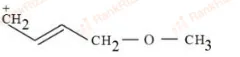
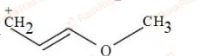
Q40Reactive intermediates and rearrangementsTRANSCRIBED

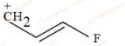
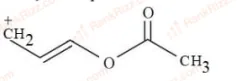
Which one of the carbocations from the following is most stable?

  1. A
    page9_img1
  2. B
    page9_img2
  3. C
    page9_img3
  4. D
    page9_img4
Q41Electrophilic addition to alkenesTRANSCRIBED

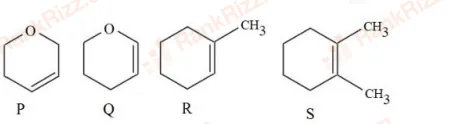
Following are the four molecules "P", "Q", "R" and "S". Which one among the four molecules will react with

page10_img1

H−Br(aq)H-Br_{(aq)} at the fastest rate?

  1. A

    R

  2. B

    P

  3. C

    Q

  4. D

    S

Q42Electrode potentials, electrochemical series and cell EMFTRANSCRIBED

For the given cell Fe(aq)2++Ag(aq)+→Fe(aq)3++Ag(s),Fe^{2+}_{(aq)} + Ag^+_{(aq)} \rightarrow Fe^{3+}_{(aq)} + Ag_{(s)}, the standard cell potential of the above reaction is Given: Ag++e−→AgE∘=x VFe2++2e−→FeE∘=y VFe3++3e−→FeE∘=z V\begin{aligned}Ag^+ + e^- &\rightarrow Ag \qquad E^\circ = x\,V \\Fe^{2+} + 2e^- &\rightarrow Fe \qquad E^\circ = y\,V \\Fe^{3+} + 3e^- &\rightarrow Fe \qquad E^\circ = z\,V \end{aligned}

  1. A

    x+y−zx + y - z

  2. B

    x+2yx + 2y

  3. C

    x+2y−3zx + 2y - 3z

  4. D

    y−2xy - 2x

Q43Group 16: trends, dioxygen, ozone and oxidesTRANSCRIBED

The large difference between the melting and boiling points of oxygen and sulphur may be explained on the basis of

  1. A

    Atomicity

  2. B

    Electron gain enthalpy

  3. C

    Electronegativity

  4. D

    Atomic size

Q44Depression in freezing pointTRANSCRIBED

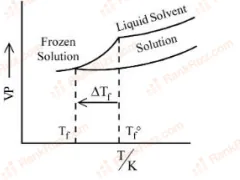
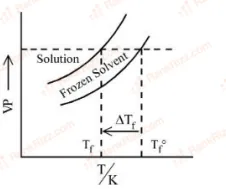
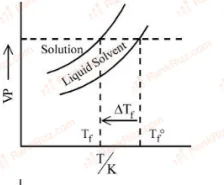
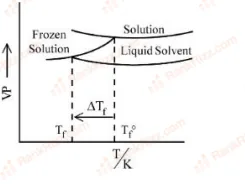
Consider the given plots of vapour pressure (VP) vs temperature (T/K). Which amongst the following options is correct graphical representation  showing  ΔTf,\Delta T_f,  depression in the freezing point of a solvent in a solution?

  1. A
    page10_img2
  2. B
    page10_img3
  3. C
    page10_img4
  4. D
    page10_img5
Q45Molecular orbital theory of diatomic speciesTRANSCRIBED

Which of the following linear combination of atomic orbitals will lead to formation of molecular orbitals in homonuclear diatomic molecules [internuclear axis in zz-direction] ? A. 2pz2p_z and 2px2p_x B. 2 s and 2px2p_x C. 3 dxyd_{xy} and 3 dx2−y2d_{x^{2} - y^{2}} D. 2 s and 2pz2p_z E. 2pz2p_z and 3dx2−y23d_{x}^{2}- y^{2} Choose the correct answer from the options given below:

  1. A

    A and B Only

  2. B

    D Only

  3. C

    E Only

  4. D

    C and D Only

Q46Mole concept, atomic and molar massTRANSCRIBED

X gX\,g of benzoic acid on reaction with aq. NaHCO3NaHCO_3 released CO2CO_2 that occupied 11.2 L11.2\,L  volume at STP.  XX  is  ‾ g.\underline{\hspace{2cm}}\,g.

Q47Stoichiometry, limiting reagent and percentage yieldTRANSCRIBED

Consider the following reaction occurring in the blast furnace: Fe3O4(s)+4CO(g)→3Fe(l)+4CO2(g)xFe_3O_4(s) + 4CO(g) \rightarrow 3Fe(l) + 4CO_2(g) x kg of iron is produced when  2.32×10³ kg Fe3O42.32\times10^3\,kg\,Fe_3O_4 and 2.8×10² kg CO2.8\times10^2\,kg\,CO are brought together in the furnace. The value of  xx  is  ‾\underline{\hspace{2cm}} (nearest integer). Given: M(Fe3O4)=232 g mol−1,M(Fe_3O_4)=232\,g\,mol^{-1}, molar mass of  CO=28 g mol−1,CO=28\,g\,mol^{-1}, molar mass of (Fe)=56 g mol−1.(Fe)=56\,g\,mol^{-1}.

Q48Law of mass action and equilibrium constants Kc and KpTRANSCRIBED

37.8 g N2O537.8\,g\,N_2O_5 was taken in a  1 L1\,L reaction vessel and allowed to undergo the following reaction at 500 K  2N2O5(g)⇌2N2O4(g)+O2(g)2N_2O_5(g) \rightleftharpoons 2N_2O_4(g) + O_2(g) The total pressure at equilibrium was found to be  18.65 18.65\,bar.  Then, Kp=‾×10−2K_p = \underline{\hspace{2cm}}\times10^{-2}  [nearest integer]. Assume  N2O5N_2O_5  to behave ideally under these conditions. Given:  R=0.082 bar L mol−1K−1R=0.082\,bar\,L\,mol^{-1}K^{-1}

Q49Group analysis and confirmatory tests of cationsTRANSCRIBED

Among the following cations, the number of cations which will give  characteristic precipitate in their identification tests with K4[Fe(CN)6]K_4[Fe(CN)_6]  is  ‾\underline{\hspace{2cm}}. Cu2+,  Fe3+,  Ba2+,  Ca2+,  NH4+,  Mg2+,  Zn2+Cu^{2+},\; Fe^{3+},\; Ba^{2+},\; Ca^{2+},\; NH_4^{+},\; Mg^{2+},\; Zn^{2+}

Q50Gibbs energy and spontaneityTRANSCRIBED

Standard entropies of  X2, Y2X_2,\ Y_2  and  XY5XY_5  are  70, 5070,\ 50  and  110 J K−1mol−1110\,J\,K^{-1}mol^{-1} respectively. The temperature in Kelvin at which the reaction 12X2+52Y2⇌XY5ΔH⊖=−35 kJ mol−1\frac{1}{2}X_2 + \frac{5}{2}Y_2 \rightleftharpoons XY_5 \Delta H^\ominus = -35\,kJ\,mol^{-1} will be at equilibrium is ‾\underline{\hspace{2cm}}  (Nearest integer).} 

NEXT IN THIS PAPER →Maths, Q51 onwards