Q31Valency, oxidation states and nature of oxidesTRANSCRIBED
Given below are two statements:
Statement - I: Along the period, the chemical reactivity of the element gradually increases from group 1 to group 18.
Statement - II: The nature of oxides formed by group 1 element is basic while that of group 17 elements is acidic.
In the light of the above statements, choose the most appropriate from the options given below:
- A
Both Statement I and Statement II are true.
- B
Statement I is true but Statement II is false.
- C
Statement I is false but Statement II is true.
- D
Both Statement I and Statement II are false.
Q32Dipole moment and molecular polarityTRANSCRIBED
Given below are two statements:
Statement-I: Since fluorine is more electronegative than nitrogen, the net dipole moment of NF3 is greater than NH3.
Statement-II: In NH3, the orbital dipole due to lone pair and the dipole moment of NH bonds are in opposite direction, but in NF3 the orbital dipole due to lone pair and dipole moments of N-F bonds are in same direction.
In the light of the above statements, choose the most appropriate from the options given below.
- A
Statement I is true but Statement II is false.
- B
Both Statement I and Statement II are false.
- C
Both Statement I and Statement II are true.
- D
Statement I is false but Statement II is true.
Q33Group 16: trends, dioxygen, ozone and oxidesTRANSCRIBED
Given below are two statements: One is labelled as Assertion A and the other is labelled as Reason R.
Assertion A: H2Te is more acidic than H2S.
Reason R: Bond dissociation enthalpy of H2Te is lower than H2S.
In the light of the above statements, choose the most appropriate from the options given below.
- A
Both A and R are true but R is NOT the correct explanation of A.
- B
Both A and R are true and R is the correct explanation of A.
- C
A is false but R is true.
- D
A is true but R is false.
Q34IUPAC nomenclature of organic compoundsTRANSCRIBED
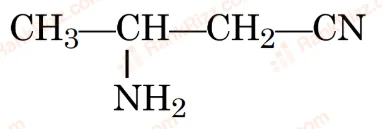
IUPAC name of the following compound is:
- A
- B
- C
- D
Q35Methods of purification of organic compoundsTRANSCRIBED
Which among the following purification methods is based on the principle of "Solubility" in two different solvents?
- A
- B
- C
- D
Q36Reactive intermediates and rearrangementsTRANSCRIBED
The correct stability order of carbocations is
- A
(CH3)3C+>CH3-C+H2>(CH3)2C+H>C+H3
- B
C+H3>(CH3)2C+H>CH3-C+H2>(CH3)3C+
- C
(CH3)3C+>(CH3)2C+H>CH3-C+H2>C+H3
- D
C+H3>CH3-C+H2>(CH3)2C+H>(CH3)3C+
Q37Electrophilic addition to alkenesTRANSCRIBED
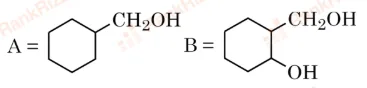
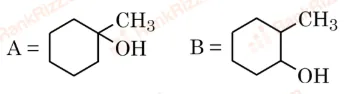
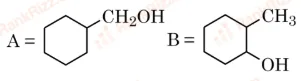
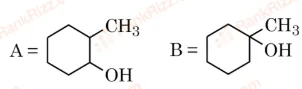
Product A and B formed in the following set of reactions are:

- A
- B
- C
- D
Q38Concentration terms and their interconversionTRANSCRIBED
If a substance 'A' dissolves in solution of a mixture of 'B' and 'C' with their respective number of moles as nA, nB and nC, mole fraction of C in the solution is:
- A
nA×nB×nCnC
- B
nA+nB+nCnC
- C
nA−nB−nCnC
- D
nA+nBnB
Q39Depression in freezing pointTRANSCRIBED
The solution from the following with highest depression in freezing point/lowest freezing point is
- A
180 g of acetic acid dissolved in 1 L of aqueous solution
- B
180 g of acetic acid dissolved in benzene
- C
180 g of benzoic acid dissolved in benzene
- D
180 g of glucose dissolved in water
Q40Electrode potentials, electrochemical series and cell EMFTRANSCRIBED
Reduction potential of ions are given below:
ClO4−: E°=1.19 V; IO4−: E°=1.65 V; BrO4−: E°=1.74 V
The correct order of their oxidising power is:
- A
ClO4−>IO4−>BrO4−
- B
BrO4−>IO4−>ClO4−
- C
BrO4−>ClO4−>IO4−
- D
IO4−>BrO4−>ClO4−
Q41Group 15: trends and hydridesTRANSCRIBED
Choose the correct statements about the hydrides of group 15 elements.
A. The stability of the hydrides decreases in the order NH3>PH3>AsH3>SbH3>BiH3
B. The reducing ability of the hydrides increases in the order NH3<PH3<AsH3<SbH3<BiH3
C. Among the hydrides, NH3 is strong reducing agent while BiH3 is mild reducing agent.
D. The basicity of the hydrides increases in the order NH3<PH3<AsH3<SbH3<BiH3
Choose the most appropriate from the options given below:
- A
- B
- C
- D
Q42Other important compounds of transition metalsTRANSCRIBED
The orange colour of K2Cr2O7 and purple colour of KMnO4 is due to
- A
Charge transfer transition in both
- B
d→d transition in KMnO4 and charge transfer transitions in K2Cr2O7
- C
d→d transition in K2Cr2O7 and charge transfer transitions in KMnO4
- D
d→d transition in both
Q43Other important compounds of transition metalsTRANSCRIBED
A and B formed in the following reactions are:
CrO2Cl2+4NaOH→A+2NaCl+2H2O
A+2HCl+2H2O2→B+3H2O
- A
A=Na2CrO4, B=CrO5
- B
A=Na2Cr2O4, B=CrO4
- C
A=Na2Cr2O7, B=CrO3
- D
A=Na2Cr2O7, B=CrO5
Q44Other important compounds of transition metalsTRANSCRIBED
Alkaline oxidative fusion of MnO2 gives "A" which on electrolytic oxidation in alkaline solution produces B. A and B respectively are:
- A
Mn2O7 and MnO4−
- B
MnO42− and MnO4−
- C
Mn2O3 and MnO42−
- D
MnO42− and Mn2O7
Q45VSEPR theory and shapes of molecules and ionsTRANSCRIBED
The molecule/ion with square pyramidal shape is:
- A
[Ni(CN)4]2−
- B
- C
- D
Q46Werner's theory and coordination terminologyTRANSCRIBED
The coordination geometry around the manganese in decacarbonyldimanganese(0) is:
- A
- B
- C
- D
Q47Nucleophilic substitution (SN1 and SN2)TRANSCRIBED
Given below are two statements:
Statement - I: High concentration of strong nucleophilic reagent with secondary alkyl halides which do not have bulky substituents will follow SN2 mechanism.
Statement - II: A secondary alkyl halide when treated with a large excess of ethanol follows SN1 mechanism.
In the light of the above statements, choose the most appropriate from the options given below:
- A
Statement I is true but Statement II is false.
- B
Statement I is false but Statement II is true.
- C
Both Statement I and Statement II are false.
- D
Both Statement I and Statement II are true.
Q48Reactions of phenolsTRANSCRIBED
Salicylaldehyde is synthesized from phenol, when reacted with
- A
- B
- C
- D
Q49Nucleophilic addition reactions of carbonyl compoundsTRANSCRIBED
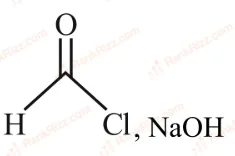
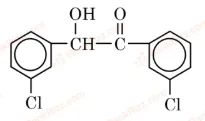
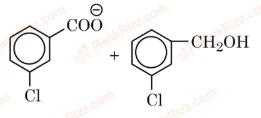
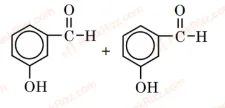
m-chlorobenzaldehyde on treatment with 50% KOH solution yields
- A
- B
- C
- D
Q50Diazonium saltsTRANSCRIBED
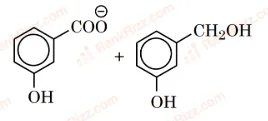
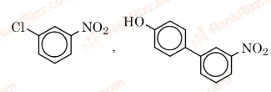
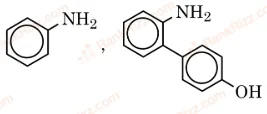
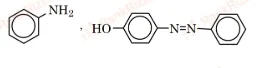
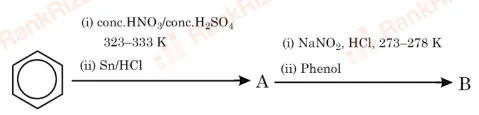
The products A and B formed in the following reaction scheme are respectively:
- A
- B
- C
- D
Q51Hydrogen spectrum and spectral seriesTRANSCRIBED
Number of spectral lines obtained in He+ spectra, when an electron makes transition from fifth excited state to first excited state will be
Q52Enthalpies of reaction and Hess's lawTRANSCRIBED
Two reactions are given below:
2Fe(s)+23O2(g)→Fe2O3(s), ΔH°=−822 kJ/mol
C(s)+21O2(g)→CO(g), ΔH°=−110 kJ/mol
Then enthalpy change for following reaction:
3C(s)+Fe2O3(s)→2Fe(s)+3CO(g)
Q53pH of acids, bases and their mixturesTRANSCRIBED
The pH of an aqueous solution containing 1M benzoic acid (pKa=4.20) and 1M sodium benzoate is 4.5. The volume of benzoic acid solution in 300 mL of this buffer solution is _________ mL.
Q54Oxidising/reducing agents and types of redox reactionsTRANSCRIBED
Total number of species from the following which can undergo disproportionation reaction: H2O2, ClO3−, P4, Cl2, Ag, Cu+1, F2, NO2, K+
Q55Structural isomerismTRANSCRIBED
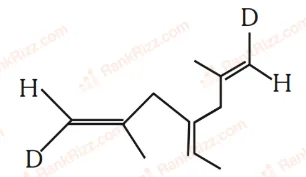
Number of geometrical isomers possible for the given structure is/are ________.
Q56Rate law, order and molecularityTRANSCRIBED
NO2 required for a reaction is produced by decomposition of N2O5 in CCl4 as by equation:
2N2O5(g)→4NO2(g)+O2(g)
The initial concentration of N2O5 is 3 mol L−1 and it is 2.75 mol L−1 after 30 minutes. The rate of formation of NO2 is x×10−3 mol L−1 min−1, value of x is ________.
Q57Structural isomerism in complexesTRANSCRIBED
Number of complexes which show optical isomerism among the following is _________.
cis−[Cr(ox)2Cl2]3−, [Co(en)3]3+, cis−[Pt(en)2Cl2]2+, cis−[Co(en)2Cl2]+, trans−[Pt(en)2Cl2]2+, trans−[Cr(ox)2Cl2]3−
Q58Structural isomerismTRANSCRIBED
2-chlorobutane + Cl2→C4H8Cl2 (isomers)
Total number of optically active isomers shown by C4H8Cl2, obtained in the above reaction is ________.
Q59Preliminary and dry testsTRANSCRIBED
Number of metal ions characterized by flame test among the following is _________.
Sr2+, Ba2+, Ca2+, Cu2+, Zn2+, Co2+, Fe2+
Q60Vitamins and hormonesTRANSCRIBED
The total number of correct statements, regarding the nucleic acids is _________.
A. RNA is regarded as the reserve of genetic information.
B. DNA molecule self-duplicates during cell division.
C. DNA synthesizes proteins in the cell.
D. The message for the synthesis of particular proteins is present in DNA.
E. Identical DNA strands are transferred to daughter cells.