Q31de Broglie wavelength and Heisenberg uncertainty principleTRANSCRIBED
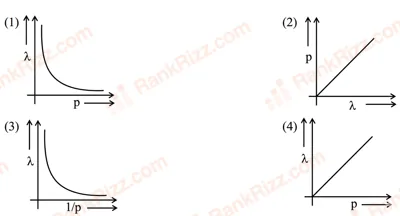
According to the wave-particle duality of matter by de-Broglie, which of the following graph plot presents most appropriate relationship between wavelength of electron λ and momentum of electron p? (Four graphs are shown: (1) λ vs p showing a rectangular hyperbola, (2) p vs λ showing a rectangular hyperbola, (3) λ vs 1/p showing a straight line through origin, (4) λ vs p showing a straight line with negative slope)
- A
Graph showing λ vs p as a rectangular hyperbola (λ decreasing with increasing p)
- B
Graph showing p vs λ as a rectangular hyperbola
- C
Graph showing λ vs 1/p as a straight line through origin
- D
Graph showing λ vs p as a straight line with negative slope
Q32Atomic and ionic radiiTRANSCRIBED
In case of isoelectronic species the size of F−, Ne and Na+ is affected by:
- A
Principal quantum number n
- B
None of the factors because their size is the same
- C
Electron-electron interaction in the outer orbitals
- D
Q33Fajans' rules, polarisation and covalent characterTRANSCRIBED
Arrange the bonds in order of increasing ionic character in the molecules: LiF, K2O, N2, SO2 and ClF3.
- A
ClF3<N2<SO2<K2O<LiF
- B
LiF<K2O<ClF3<SO2<N2
- C
N2<SO2<ClF3<K2O<LiF
- D
N2<ClF3<SO2<K2O<LiF
Q34Hydrogen bonding and intermolecular forcesTRANSCRIBED
Given below are two statements: one is labelled as Assertion A and the other is labelled as Reason R. Assertion A: PH3 has lower boiling point than NH3. Reason R: In liquid state NH3 molecules are associated through Vander Waal's forces, but PH3 molecules are associated through hydrogen bonding. In the light of the above statements, choose the most appropriate answer from the options given below:
- A
Both A and R are correct and R is not the correct explanation of A
- B
A is not correct but R is correct
- C
Both A and R are correct but R is the correct explanation of A
- D
A is correct but R is not correct
Q35First law: work, heat and internal energyTRANSCRIBED
Choose the correct option for free expansion of an ideal gas under adiabatic condition from the following :
- A
q=0,ΔT=0,w=0
- B
q=0,ΔT<0,w=0
- C
q=0,ΔT<0,w=0
- D
q=0,ΔT=0,w=0
Q36Oxidising/reducing agents and types of redox reactionsTRANSCRIBED
Which of the following reactions are disproportionation reactions? (1) Cu+→Cu2++Cu (2) 3MnO42−+4H+→2MnO4−+MnO2+2H2O (3) 2KMnO4→K2MnO4+MnO2+O2 (4) 2MnO4−+3Mn2++2H2O→5MnO2+4H+. Choose the correct answer from the options given below:
- A
- B
- C
- D
Q37Balancing redox equationsTRANSCRIBED
In acidic medium, K2Cr2O7 shows oxidising action as represented in the half reaction Cr2O72−+XH++Ye−→2A+ZH2O. X, Y, Z and A are respectively:
- A
8, 6, 4 and Cr2O3
- B
14, 7, 6 and Cr3+
- C
8, 4, 6 and Cr2O3
- D
14, 6, 7 and Cr3+
Q38Titrimetric exercisesTRANSCRIBED
Given below are two statements: Statement (I): Potassium hydrogen phthalate is a primary standard for standardisation of sodium hydroxide solution. Statement (II): In this titration phenolphthalein can be used as indicator. In the light of the above statements, choose the most appropriate answer from the options given below:
- A
Both Statement I and Statement II are correct
- B
Statement I is correct but Statement II is incorrect
- C
Statement I is incorrect but Statement II is correct
- D
Both Statement I and Statement II are incorrect
Q39Electrophilic substitution of anilineTRANSCRIBED
Given below are two statements: Statement (I): Aminobenzene and aniline are same organic compounds. Statement (II): Aminobenzene and aniline are different organic compounds. In the light of the above statements, choose the most appropriate answer from the options given below:
- A
Both Statement I and Statement II are correct
- B
Statement I is correct but Statement II is incorrect
- C
Statement I is incorrect but Statement II is correct
- D
Both Statement I and Statement II are incorrect
Q40Resonance and hyperconjugationTRANSCRIBED
Ionic reactions with organic compounds proceed through: (A) Homolytic bond cleavage (B) Heterolytic bond cleavage (C) Free radical formation (D) Primary free radical (E) Secondary free radical. Choose the correct answer from the options given below:
- A
- B
- C
- D
Q41Methods of purification of organic compoundsTRANSCRIBED
In Kjeldahl's method for estimation of nitrogen, CuSO4 acts as :
- A
- B
- C
- D
Q42Directive influence of substituentsTRANSCRIBED
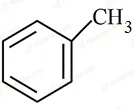
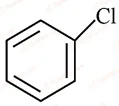
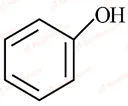
Which of the following compound will most easily be attacked by an electrophile?
- A
- B
- C
- D
Q43Abnormal molar mass and van't Hoff factorTRANSCRIBED
We have three aqueous solutions of NaCl labelled as 'A', 'B' and 'C' with concentration 0.1 M, 0.01 M and 0.001 M, respectively. The value of van't Hoff factor i for these solutions will be in the order:
- A
iA<iB<iC
- B
iA<iC<iB
- C
iA=iB=iC
- D
iA>iB>iC
Q44Structural isomerism in complexesTRANSCRIBED
Which of the following complex is homoleptic?
- A
[Ni(CN)4]2−
- B
[Ni(NH3)2Cl2]
- C
[Fe(NH3)4Cl2]+
- D
[Co(NH3)4Cl2]+
Q45Colour and magnetic behaviour of complexes from CFTTRANSCRIBED
Given below are two statements: Statement (I): A solution of [Ni(H2O)6]2+ is green in colour. Statement (II): A solution of [Ni(CN)4]2− is colourless. In the light of the above statements, choose the most appropriate answer from the options given below:
- A
Both Statement I and Statement II are incorrect
- B
Both Statement I and Statement II are correct
- C
Statement I is incorrect but Statement II is correct
- D
Statement I is correct but Statement II is incorrect
Q46Nucleophilic substitution (SN1 and SN2)TRANSCRIBED
Given below are two statements: one is labelled as Assertion A and the other is labelled as Reason R. Assertion A: Haloalkanes react with KCN to form alkyl cyanides as a main product while with AgCN form isocyanide as the main product. Reason R: KCN and AgCN both are highly ionic compounds. In the light of the above statement, choose the most appropriate answer from the options given below:
- A
A is correct but R is not correct
- B
Both A and R are correct but R is not the correct explanation of A
- C
A is not correct but R is correct
- D
Both A and R are correct and R is the correct explanation of A
Q47Preparation of aldehydes and ketonesTRANSCRIBED
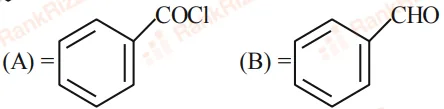
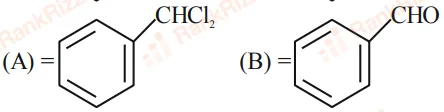
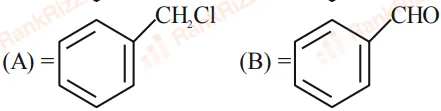
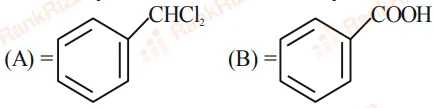
Identify A and B in the following sequence of reaction:
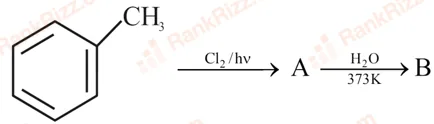
- A
- B
- C
- D
Q48Nucleophilic addition reactions of carbonyl compoundsTRANSCRIBED
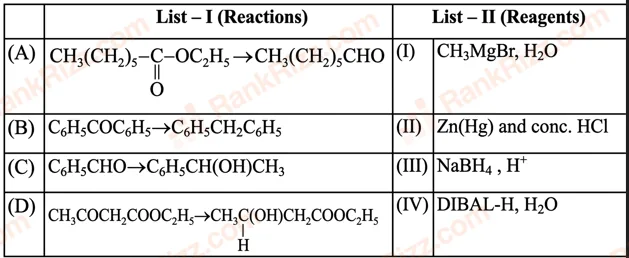
Choose the correct answer from options given below:
- A
A - III, B - IV, C - I, D - II
- B
A - IV, B - II, C - I, D - III
- C
A - IV, B - II, C - III, D - I
- D
A - III, B - IV, C - II, D - I
Q49Electrophilic substitution of anilineTRANSCRIBED
Given below are two statements: Statement (I): The −NH2 group in Aniline is ortho and para directing and a powerful activating group. Statement (II): Aniline does not undergo Friedel-Craft's reaction (alkylation and acylation). In the light of the above statements, choose the most appropriate answer from the options given below:
- A
Both Statement I and Statement II are correct
- B
Both Statement I and Statement II are incorrect
- C
Statement I is incorrect but Statement II is correct
- D
Statement I is correct but Statement II is incorrect
Q50Vitamins and hormonesTRANSCRIBED
If one strand of a DNA has the sequence ATGCTTCA, sequence of the bases in complementary strand is:
- A
- B
- C
- D
Q51Stoichiometry, limiting reagent and percentage yieldTRANSCRIBED
Consider the following reaction: 3PbCl2+2(NH4)3PO4→Pb3(PO4)2+6NH4Cl. If 72 mmol PbCl2 is mixed with 50 mmol of (NH4)3PO4, then amount of Pb3(PO4)2 formed in mmol is (nearest integer):
Q52Lewis structures, formal charge and coordinate bondsTRANSCRIBED
Lowest oxidation number of an atom in a compound A2B is −2. The number of electrons in its valence shell is:
Q53VSEPR theory and shapes of molecules and ionsTRANSCRIBED
The number of molecules/ion/s having trigonal bipyramidal shape is: PF5, BrF5, PCl5, [PtCl4]2−, BF3, Fe(CO)5
Q54Hydrolysis of saltsTRANSCRIBED
Ka for CH3COOH is 1.8×10⁻⁵ and Kb for NH4OH is 1.8×10⁻⁵. The pH of ammonium acetate solution will be:
Q55Structural isomerismTRANSCRIBED
Number of optical isomers possible for 2-chlorobutane is:
Q56Directive influence of substituentsTRANSCRIBED
Total number of deactivating groups in aromatic electrophilic substitution reaction among the following is:
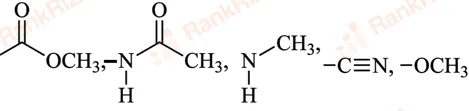
Q57Electrode potentials, electrochemical series and cell EMFTRANSCRIBED
The potential for the given half cell at 298K is −x×10−2 V.
2H(aq)++2e−→H2(g), [H+]=1 M, PH2=2 atm.
(Given 2.303 RT/F=0.06 V, log2=0.3). The value of x is:
Q58Radioactivity and nuclear reactionsTRANSCRIBED
The ratio of 12C14C in a piece of wood is 81 part that of atmosphere. If half life of 14C is 5730 years, the age of wood sample is _____ years.
Q59Group 16: trends, dioxygen, ozone and oxidesTRANSCRIBED
Among the following oxides of p-block elements: Cl2O7, CO, PbO2, N2O, NO, Al2O3, SiO2, N2O5, SnO2, the number of amphoteric oxides is:
Q60Preliminary and dry testsTRANSCRIBED
The number of white coloured salts among the following is: (A) SrSO4 (B) MgNH4PO4 (C) BaCrO4 (D) Mn(OH)2 (E) PbSO4 (F) PbCrO4 (G) AgBr (H) PbI2 (I) CaC2O4 (J) Fe(OH)2(CH3COO)