RankRizz

JEE Main 26 Feb 2021, Shift 2: Chemistry

The 30 Chemistry questions of JEE Main 26 Feb 2021, Shift 2, numbered across the whole paper. Pick an answer on any question to check it against the key. Free to read, nothing to download.

Chemistry

Q31Electron gain enthalpyTRANSCRIBED

The correct order of electron gain enthalpy is:

  1. A

    S > O > Se > Te

  2. B

    O > S > Se > Te

  3. C

    S > Se > Te > O

  4. D

    Te > Se > S > O

Q32Valency, oxidation states and nature of oxidesTRANSCRIBED

Which pair of oxides is acidic in nature?

  1. A

    B2O3B_2O_3, CaO

  2. B

    N2ON_2O, BaO

  3. C

    CaO, SiO2SiO_2

  4. D

    B2O3B_2O_3, SiO2SiO_2

Q33Group 13: general trends and inert pair effectTRANSCRIBED

Given below are two statements: one is labelled as Assertion A and the other is labelled as Reason R.
Assertion A: In TlI3TlI_3, isomorphous to CsI3CsI_3, the metal is present in +1 oxidation state.
Reason R: Tl metal has fourteen f electrons in its electronic configuration.
In the light of the above statements, choose the most appropriate answer from the options given below:

  1. A

    A is correct but R is not correct

  2. B

    Both A and R are correct and R is the correct explanation of A

  3. C

    A is not correct but R is correct

  4. D

    Both A and R are correct but R is NOT the correct explanation of A

Q34Molecular orbital theory of diatomic speciesTRANSCRIBED

Match List-I with List-II.

List-I (Molecule)List-II (Bond order)
(a) Ne2Ne_2(i) 1
(b) N2N_2(ii) 2
(c) F2F_2(iii) 0
(d) O2O_2(iv) 3

Choose the correct answer from the options given below:
  1. A

    (a)→\rightarrow(ii), (b)→\rightarrow(i), (c)→\rightarrow(iv), (d)→\rightarrow(iii)

  2. B

    (a)→\rightarrow(iii), (b)→\rightarrow(iv), (c)→\rightarrow(i), (d)→\rightarrow(ii)

  3. C

    (a)→\rightarrow(i), (b)→\rightarrow(ii), (c)→\rightarrow(iii), (d)→\rightarrow(iv)

  4. D

    (a)→\rightarrow(iv), (b)→\rightarrow(iii), (c)→\rightarrow(ii), (d)→\rightarrow(i)

Q35Hardness of water and its removalTRANSCRIBED

Calgon is used for water treatment. Which of the following statement is NOT true about Calgon?

  1. A

    It is polymeric compound and is water soluble.

  2. B

    Calgon contains the 2nd most abundant element by weight in the Earth's crust.

  3. C

    It is also known as Graham's salt.

  4. D

    It does not remove Ca2+Ca^{2+} ion by precipitation.

Q36Radioactivity and nuclear reactionsTRANSCRIBED

Which of the following forms of hydrogen emits low energy β−\beta^- particles?

  1. A

    Deuterium 12H_1^2H

  2. B

    Proton H+H^+

  3. C

    Tritium 13H_1^3H

  4. D

    Protium 11H_1^1H

Q37Hybridisation and bond anglesTRANSCRIBED

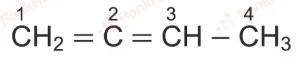
In 

Figure for JEE Main 2021 Chemistry question on Hybridisation and bond angles

molecule, the hybridization of carbon 1, 2, 3 and 4 respectively, are:

  1. A

    sp2,sp3,sp2,sp3sp^2, sp^3, sp^2, sp^3

  2. B

    sp2,sp,sp2,sp3sp^2, sp, sp^2, sp^3

  3. C

    sp2,sp2,sp2,sp3sp^2, sp^2, sp^2, sp^3

  4. D

    sp3,sp,sp3,sp3sp^3, sp, sp^3, sp^3

Q38Properties of colloids and coagulationTRANSCRIBED

The nature of charge on resulting colloidal particles when FeCl3FeCl_3 is added to excess of hot water is:

  1. A

    positive

  2. B

    sometimes positive and sometimes negative

  3. C

    neutral

  4. D

    negative

Q39Extraction of Fe, Cu, Zn, Al, Ag and AuTRANSCRIBED

Match List-I with List-II.

List-IList-II
(a) Sodium Carbonate(i) Deacon
(b) Titanium(ii) Castner-Kellner
(c) Chlorine(iii) van-Arkel
(d) Sodium hydroxide(iv) Solvay

Choose the correct answer from the options given below:
  1. A

    (a)→\rightarrow(i), (b)→\rightarrow(iii), (c)→\rightarrow(iv), (d)→\rightarrow(ii)

  2. B

    (a)→\rightarrow(iii), (b)→\rightarrow(ii), (c)→\rightarrow(i), (d)→\rightarrow(iv)

  3. C

    (a)→\rightarrow(iv), (b)→\rightarrow(i), (c)→\rightarrow(ii), (d)→\rightarrow(iii)

  4. D

    (a)→\rightarrow(iv), (b)→\rightarrow(iii), (c)→\rightarrow(i), (d)→\rightarrow(ii)

Q40Occurrence of metals: minerals and oresTRANSCRIBED

Match List-I with List-II.

List-I (Ore)List-II (Metal)
(a) Siderite(i) Cu
(b) Calamine(ii) Ca
(c) Malachite(iii) Fe
(d) Cryolite(iv) Al
(v) Zn

Choose the correct answer from the options given below:
  1. A

    (a)→\rightarrow(iii), (b)→\rightarrow(i), (c)→\rightarrow(v), (d)→\rightarrow(ii)

  2. B

    (a)→\rightarrow(i), (b)→\rightarrow(ii), (c)→\rightarrow(v), (d)→\rightarrow(iii)

  3. C

    (a)→\rightarrow(iii), (b)→\rightarrow(v), (c)→\rightarrow(i), (d)→\rightarrow(iv)

  4. D

    (a)→\rightarrow(i), (b)→\rightarrow(ii), (c)→\rightarrow(iii), (d)→\rightarrow(iv)

Q41HaloarenesTRANSCRIBED

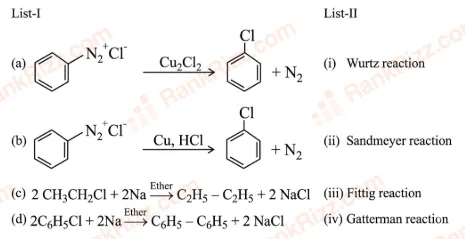
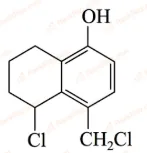
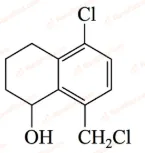
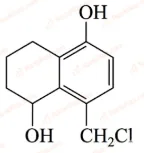
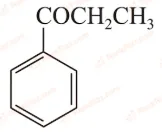
Match List-I with List-II.

Figure for JEE Main 2021 Chemistry question on Haloarenes

Choose the correct answer from the options given below :

  1. A

    (a)→\rightarrow(iii), (b)→\rightarrow(iv), (c)→\rightarrow(i), (d)→\rightarrow(ii)

  2. B

    (a)→\rightarrow(ii), (b)→\rightarrow(i), (c)→\rightarrow(iv), (d)→\rightarrow(iii)

  3. C

    (a)→\rightarrow(iii), (b)→\rightarrow(i), (c)→\rightarrow(iv), (d)→\rightarrow(ii)

  4. D

    (a)→\rightarrow(ii), (b)→\rightarrow(iv), (c)→\rightarrow(i), (d)→\rightarrow(iii)

Q43Nucleophilic addition reactions of carbonyl compoundsTRANSCRIBED

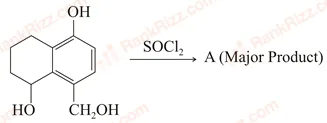
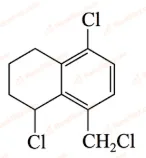
Considering the above reaction, the major product among the following is:
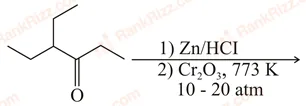
Figure for JEE Main 2021 Chemistry question on Nucleophilic addition reactions of carbonyl compounds
  1. A
    Figure for JEE Main 2021 Chemistry question on Nucleophilic addition reactions of carbonyl compounds
  2. B
    Figure for JEE Main 2021 Chemistry question on Nucleophilic addition reactions of carbonyl compounds
  3. C
    Figure for JEE Main 2021 Chemistry question on Nucleophilic addition reactions of carbonyl compounds
  4. D
    Figure for JEE Main 2021 Chemistry question on Nucleophilic addition reactions of carbonyl compounds
Q44Distinguishing tests for aldehydes and ketonesTRANSCRIBED

2, 4-DNP test can be used to identify:

  1. A

    aldehyde

  2. B

    amine

  3. C

    halogens

  4. D

    ether

Q45Nucleophilic addition reactions of carbonyl compoundsTRANSCRIBED

Identify A in the given chemical reaction.
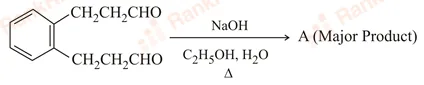
Figure for JEE Main 2021 Chemistry question on Nucleophilic addition reactions of carbonyl compounds
  1. A
    Figure for JEE Main 2021 Chemistry question on Nucleophilic addition reactions of carbonyl compounds
  2. B
    Figure for JEE Main 2021 Chemistry question on Nucleophilic addition reactions of carbonyl compounds
  3. C
    Figure for JEE Main 2021 Chemistry question on Nucleophilic addition reactions of carbonyl compounds
  4. D
    Figure for JEE Main 2021 Chemistry question on Nucleophilic addition reactions of carbonyl compounds
Q46Nucleophilic addition reactions of carbonyl compoundsTRANSCRIBED

Identify A in the following chemical reaction.
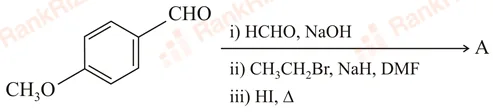
Figure for JEE Main 2021 Chemistry question on Nucleophilic addition reactions of carbonyl compounds
  1. A
    Figure for JEE Main 2021 Chemistry question on Nucleophilic addition reactions of carbonyl compounds
  2. B
    Figure for JEE Main 2021 Chemistry question on Nucleophilic addition reactions of carbonyl compounds
  3. C
    Figure for JEE Main 2021 Chemistry question on Nucleophilic addition reactions of carbonyl compounds
  4. D
    Figure for JEE Main 2021 Chemistry question on Nucleophilic addition reactions of carbonyl compounds
Q47Detection of functional groupsTRANSCRIBED

Ceric ammonium nitrate and CHCl3CHCl_3 / alc. KOH are used for the identification of functional groups present in ______ and ______ respectively.

  1. A

    amine, phenol

  2. B

    alcohol, amine

  3. C

    amine, alcohol

  4. D

    alcohol, phenol

Q48Electrophilic substitution of anilineTRANSCRIBED

A. Phenyl methanamine
B. N, N-Dimethylaniline
C. N-Methyl aniline
D. Benzenamine
Choose the correct order of basic nature of the above amines.

  1. A

    A > B > C > D

  2. B

    A > C > B > D

  3. C

    D > B > C > A

  4. D

    D > C > B > A

Q49Carbohydrates: classification and monosaccharidesTRANSCRIBED

Match List-I with List-II.

List-IList-II
(a) Sucrose(i) β\beta-D-Galactose and β\beta-D-Glucose
(b) Lactose(ii) α\alpha-D-Glucose and β\beta-D-Fructose
(c) Maltose(iii) α\alpha-D-Glucose and α\alpha-D-Glucose

Choose the correct answer from the options given below:
  1. A

    (a)→\rightarrow(iii), (b)→\rightarrow(ii), (c)→\rightarrow(i)

  2. B

    (a)→\rightarrow(iii), (b)→\rightarrow(i), (c)→\rightarrow(ii)

  3. C

    (a)→\rightarrow(ii), (b)→\rightarrow(i), (c)→\rightarrow(iii)

  4. D

    (a)→\rightarrow(i), (b)→\rightarrow(iii), (c)→\rightarrow(ii)

Q50Detection of functional groupsTRANSCRIBED

Seliwanoff test and Xanthoproteic test are used for the identification of ______ and ______ respectively.

  1. A

    aldoses, ketoses

  2. B

    ketoses, proteins

  3. C

    proteins, ketoses

  4. D

    ketoses, aldoses

Q51Mole concept, atomic and molar massTRANSCRIBED

The NaNO3NaNO_3 weighed out to make 50 mL of an aqueous solution containing 70.0 mg Na+^+ per mL is ______ g.
(Rounded off to the nearest integer) [Given: Atomic weight in g mol−1^{-1} - Na: 23; N: 14; O: 16]

Q52de Broglie wavelength and Heisenberg uncertainty principleTRANSCRIBED

A ball weighing 10 g is moving with a velocity of 90 m s−1^{-1}. If the uncertainty in its velocity is 5%, then the uncertainty in its position is ______ ×10−33\times 10^{-33} m. (Rounded off to the nearest integer)
[Given: h = 6.63×10−346.63 \times 10^{-34} Js]

Q53Bond enthalpy, atomisation, phase-change and solution enthalpiesTRANSCRIBED

The average S - F bond energy in kJ mol−1^{-1} of SF6SF_6 is ______. (Rounded off to the nearest integer)
[Given: The values of standard enthalpy of formation of SF6(g)SF_6(g), S(g)S(g) and F(g)F(g) are −1100-1100, 275 and 80 kJ mol−1^{-1} respectively.]

Q54pH of acids, bases and their mixturesTRANSCRIBED

The pH of ammonium phosphate solution, if pKapK_a of phosphoric acid and pKbpK_b of ammonium hydroxide are 5.23 and 4.75 respectively, is ______

Q55Other important compounds of transition metalsTRANSCRIBED

In mildly alkaline medium, thiosulphate ion is oxidized by MnO4−MnO_4^- to 'A'. The oxidation state of sulphur in 'A' is ______

Q56Voids, radius ratio and structures of ionic solidsTRANSCRIBED

The number of octahedral voids per lattice site in a lattice is ______. (Rounded off to the nearest integer)

Q57Abnormal molar mass and van't Hoff factorTRANSCRIBED

When 12.2 g of benzoic acid is dissolved in 100 g of water, the freezing point of solution was found to be −0.93-0.93 °C (Kf(H2O)=1.86K_f(H_2O) = 1.86 K kg mol−1^{-1}). The number (n) of benzoic acid molecules associated (assuming 100% association) is ______.

Q58Electrode potentials, electrochemical series and cell EMFTRANSCRIBED

Emf of the following cell at 298 K in V is x×10−2x \times 10^{-2}
Zn∣Zn2+(0.1M)∣∣Ag+(0.01M)∣AgZn|Zn^{2+}(0.1M)||Ag^+(0.01M)|Ag
The value of xx is ______ (Rounded off to the nearest integer)
[Given: EZn2+/Znθ=−0.76E^\theta_{Zn^{2+}/Zn} = -0.76 V; EAg+/Agθ=+0.80E^\theta_{Ag^+/Ag} = +0.80 V; 2.303RTF=0.059\frac{2.303RT}{F} = 0.059]

Q59Arrhenius equation and activation energyTRANSCRIBED

If the activation energy of a reaction is 80.9 kJ mol−1^{-1}, the fraction of molecules at 700 K, having enough energy to react to form products is e−xe^{-x}. The value of xx is (Rounded off to the nearest integer) [Use R = 8.31 J K−1^{-1} mol−1^{-1}]

Q60Structural isomerism in complexesTRANSCRIBED

The number of stereo isomers possible for [Co(ox)2(Br)(NH3)]2−[Co(ox)_2(Br)(NH_3)]^{2-} is ______.
[ox = oxalate]

NEXT IN THIS PAPER →Maths, Q61 onwards