RankRizz

JEE Main 04 Sep 2020, Shift 2: Chemistry

The 25 Chemistry questions of JEE Main 04 Sep 2020, Shift 2, numbered across the whole paper. Pick an answer on any question to check it against the key. Free to read, nothing to download.

Chemistry

Q26Hydrogen spectrum and spectral seriesTRANSCRIBED

The shortest wavelength of H atom in the Lyman series is λ1\lambda_1. The longest wavelength in the Balmer series of He+^+ is:

  1. A

    36λ15\frac{36\lambda_1}{5}

  2. B

    5λ19\frac{5\lambda_1}{9}

  3. C

    9λ15\frac{9\lambda_1}{5}

  4. D

    27λ15\frac{27\lambda_1}{5}

Q27Electron gain enthalpyTRANSCRIBED

The process that is NOT endothermic in nature is:

  1. A

    Ar(g)+e−→Ar(g)−Ar_{(g)} + e^- \to Ar^-_{(g)}

  2. B

    H(g)+e−→H(g)−H_{(g)} + e^- \to H^-_{(g)}

  3. C

    O(g)−+e−→O(g)2−O^-_{(g)} + e^- \to O^{2-}_{(g)}

  4. D

    Na(g)→Na(g)++e−Na_{(g)} \to Na^+_{(g)} + e^-

Q28VSEPR theory and shapes of molecules and ionsTRANSCRIBED

The reaction in which the hybridisation of the underlined atom is affected is

  1. A

    H3PO2‾→Disproportionation\underline{H_3PO_2} \xrightarrow{Disproportionation}

  2. B

    H2SO4+NaCl→420KH_2SO_4 + NaCl \xrightarrow{420K}

  3. C

    NH3‾→H+\underline{NH_3} \xrightarrow{H^+}

  4. D

    Xe‾F4+SbF5→\underline{Xe}F_4 + SbF_5 \to

Q29Valence bond theory of complexesTRANSCRIBED

The molecule in which hybrid MOs involve only one d-orbital of the central atom is:

  1. A

    [Ni(CN)4]2−[Ni(CN)_4]^{2-}

  2. B

    BrF5BrF_5

  3. C

    XeF4XeF_4

  4. D

    [CrF6]3−[CrF_6]^{3-}

Q30First law: work, heat and internal energyTRANSCRIBED

Five moles of an ideal gas at 1 bar and 298 K is expanded into vacuum to double the volume. The work done is:

  1. A

    Cv(T2−T1)C_v(T_2 - T_1)

  2. B

    −RT(V2−V1)-RT(V_2 - V_1)

  3. C

    −RTln⁡V2/V1-RT \ln V_2/V_1

  4. D

    Zero

Q31Law of mass action and equilibrium constants Kc and KpTRANSCRIBED

If the equilibrium constant for A⇌B+CA \rightleftharpoons B + C is Keq(1)K_{eq}^{(1)} and that of B+C⇌PB + C \rightleftharpoons P is Keq(2)K_{eq}^{(2)}, the equilibrium constant for A⇌PA \rightleftharpoons P is:

  1. A

    Keq(1)/Keq(2)K_{eq}^{(1)}/K_{eq}^{(2)}

  2. B

    Keq(2)−Keq(1)K_{eq}^{(2)} - K_{eq}^{(1)}

  3. C

    Keq(1)+Keq(2)K_{eq}^{(1)} + K_{eq}^{(2)}

  4. D

    Keq(1)Keq(2)K_{eq}^{(1)} K_{eq}^{(2)}

Q32Valency, oxidation states and nature of oxidesTRANSCRIBED

An alkaline earth metal 'M' readily forms water soluble sulphate and water insoluble hydroxide. Its oxide MO is very stable to heat and does not have rock-salt structure. M is

  1. A

    Sr

  2. B

    Ca

  3. C

    Mg

  4. D

    Be

Q33Nucleophilic substitution (SN1 and SN2)TRANSCRIBED

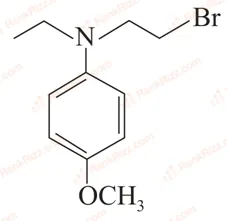
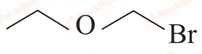
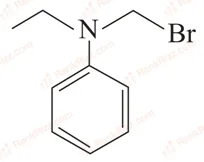
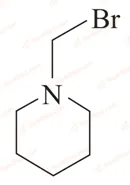
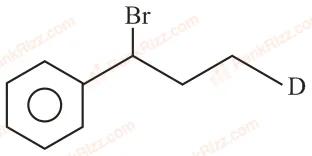
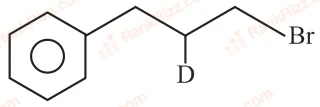
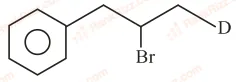
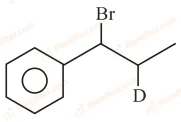
Which of the following compounds will form the precipitate with aq. AgNO3_3 solution most readily?

  1. A
    Figure for JEE Main 2020 Chemistry question on Nucleophilic substitution (SN1 and SN2)
  2. B
    Figure for JEE Main 2020 Chemistry question on Nucleophilic substitution (SN1 and SN2)
  3. C
    Figure for JEE Main 2020 Chemistry question on Nucleophilic substitution (SN1 and SN2)
  4. D
    Figure for JEE Main 2020 Chemistry question on Nucleophilic substitution (SN1 and SN2)
Q34Nucleophilic substitution (SN1 and SN2)TRANSCRIBED

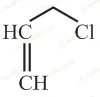
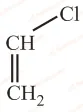
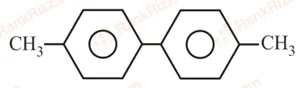
Among the following compounds, which one has the shortest C-Cl bond?
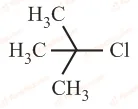
  1. A
    Figure for JEE Main 2020 Chemistry question on Nucleophilic substitution (SN1 and SN2)
  2. B
    Figure for JEE Main 2020 Chemistry question on Nucleophilic substitution (SN1 and SN2)
  3. C

    H3C−ClH_3C - Cl

  4. D
    Figure for JEE Main 2020 Chemistry question on Nucleophilic substitution (SN1 and SN2)
Q35Water pollutionTRANSCRIBED

The processes of calcination and roasting in metallurgical industries, respectively, can lead to:

  1. A

    Global warming and photochemical smog

  2. B

    Global warming and acid rain

  3. C

    Photochemical smog and ozone layer depletion

  4. D

    Photochemical smog and global warming

Q36Conductance, conductivity and molar conductivityTRANSCRIBED

250 mL of a waste solution obtained from the workshop of a goldsmith contains 0.1 M AgNO3_3 and 0.1 M AuCl. The solution was electrolyzed at 2 V by passing a current of 1 A for 15 minutes. The metal/metals electrodeposited will be: (EAg+/Ag0=0.80V,EAu+/Au0=1.69V)\left(E^0_{Ag^+/Ag} = 0.80V, E^0_{Au^+/Au} = 1.69V\right)

  1. A

    only gold

  2. B

    silver and gold in proportion to their atomic weights

  3. C

    only silver

  4. D

    silver and gold in equal mass proportion

Q37Properties of colloids and coagulationTRANSCRIBED

A sample of red ink (a colloidal suspension) is prepared by mixing eosine dye, egg white, HCHO and water. The component which ensures stability of the ink sample is:

  1. A

    Egg white

  2. B

    Water

  3. C

    HCHO

  4. D

    Eosin dye

Q38General properties of transition elementsTRANSCRIBED

The incorrect statement(s) among (a) - (c) is (are):
(a) W(VI) is more stable than Cr(VI).
(b) in the presence of HCl, permanganate titrations provide satisfactory results.
(c) some lanthanoid oxides can be used as phosphors.

  1. A

    (b) and (c) only

  2. B

    (a) and (b) only

  3. C

    (b) only

  4. D

    (a) only

Q39Colour and magnetic behaviour of complexes from CFTTRANSCRIBED

The Crystal Field Stabilization Energy (CFSE) of [CoF3(H2O)3][CoF_3(H_2O)_3] (Δ0<P)(\Delta_0 < P) is:

  1. A

    −0.8Δ0+2P-0.8\Delta_0 + 2P

  2. B

    −0.4Δ0-0.4\Delta_0

  3. C

    −0.8Δ0-0.8\Delta_0

  4. D

    −0.4Δ0+P-0.4\Delta_0 + P

Q40Colour and magnetic behaviour of complexes from CFTTRANSCRIBED

The one that can exhibit highest paramagnetic behaviour among the following is: gly = glycinato; bpy = 2, 2'-bipyridine

  1. A

    [Pd(gly)2][Pd(gly)_2]

  2. B

    [Fe(en)(bpy)(NH3)2]2+[Fe(en)(bpy)(NH_3)_2]^{2+}

  3. C

    [Co(OX)2(OH)2]−[Co(OX)_2(OH)_2]^- (Δ0>P)(\Delta_0 > P)

  4. D

    [Ti(NH3)6]3+[Ti(NH_3)_6]^{3+}

Q41Properties and reactions of alcoholsTRANSCRIBED

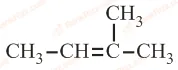
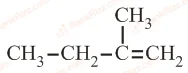
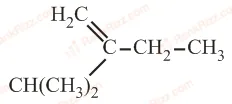
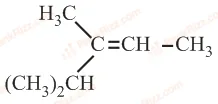
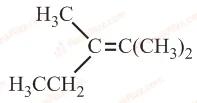
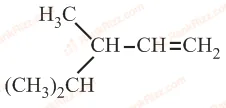
The major product [B] in the following reaction is:
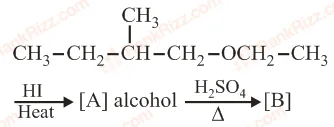
Figure for JEE Main 2020 Chemistry question on Properties and reactions of alcohols
  1. A

    CH2=CH2CH_2 = CH_2

  2. B
    Figure for JEE Main 2020 Chemistry question on Properties and reactions of alcohols
  3. C
    Figure for JEE Main 2020 Chemistry question on Properties and reactions of alcohols
  4. D

    CH3−CH2CH=CH−CH3CH_3-CH_2CH=CH-CH_3

Q42Properties and reactions of alcoholsTRANSCRIBED

The major product [R] in the following sequence of reaction is:

Figure for JEE Main 2020 Chemistry question on Properties and reactions of alcohols
  1. A
    Figure for JEE Main 2020 Chemistry question on Properties and reactions of alcohols
  2. B
    Figure for JEE Main 2020 Chemistry question on Properties and reactions of alcohols
  3. C
    Figure for JEE Main 2020 Chemistry question on Properties and reactions of alcohols
  4. D
    Figure for JEE Main 2020 Chemistry question on Properties and reactions of alcohols
Q43Electrophilic addition to alkenesTRANSCRIBED

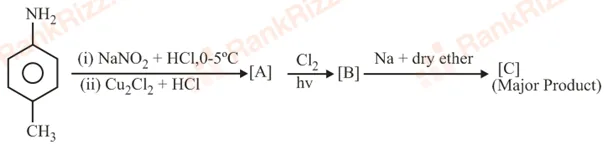
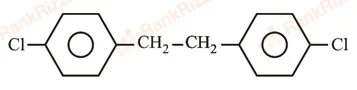
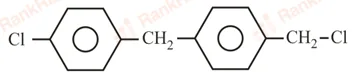
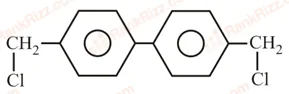
The major product [C] of the following reaction sequence will be:
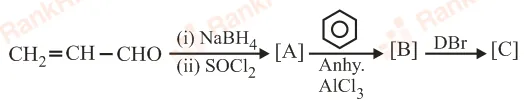
Figure for JEE Main 2020 Chemistry question on Electrophilic addition to alkenes
  1. A
    Figure for JEE Main 2020 Chemistry question on Electrophilic addition to alkenes
  2. B
    Figure for JEE Main 2020 Chemistry question on Electrophilic addition to alkenes
  3. C
    Figure for JEE Main 2020 Chemistry question on Electrophilic addition to alkenes
  4. D
    Figure for JEE Main 2020 Chemistry question on Electrophilic addition to alkenes
Q45Drugs and medicinesTRANSCRIBED

The mechanism of action of "Terfenadine" (Seldane) is:

  1. A

    Activates the histamine receptor

  2. B

    Inhibits the secretion of histamine

  3. C

    Helps in the secretion of histamine

  4. D

    Inhibits the action of histamine receptor

Q46Equivalent weight, n-factor and law of equivalenceTRANSCRIBED

A 100 mL solution was made by adding 1.43 g of Na2CO3⋅xH2ONa_2CO_3 \cdot xH_2O. The normality of the solution is 0.1 N. The value of x is __________ (The atomic mass of Na is 23 g/mol)

Q47Balancing redox equationsTRANSCRIBED

Consider the following equations:
2Fe2++H2O2→xA+yB2Fe^{2+} + H_2O_2 \to xA + yB (in basic medium)
2MnO4−+6H++5H2O2→x′C+y′D+z′E2MnO_4^- + 6H^+ + 5H_2O_2 \to x'C + y'D + z'E (in acidic medium)
The sum of the stoichiometric coefficients x, y, x', y' and z' for products A, B, C, D and E respectively, is

Q48Osmosis and osmotic pressureTRANSCRIBED

The osmotic pressure of a solution of NaCl is 0.10 atm and that of a glucose solution is 0.20 atm. The osmotic pressure of a solution formed by mixing 1 L of the sodium chloride solution with 2 L of the glucose solution is x×10−3x \times 10^{-3} atm. x is __________ (nearest integer)

Q49Arrhenius equation and activation energyTRANSCRIBED

The number of molecules with energy greater than the threshold energy for a reaction increases five fold by a rise of temperature from 27°C to 42°C. Its energy of activation in J/mol is __________ (Take ln 5 = 1.6094; R = 8.314 J mol−1^{-1})

Q50Proteins and enzymesTRANSCRIBED

The number of chiral centres present in threonine is __________

NEXT IN THIS PAPER →Maths, Q51 onwards