RankRizz

JEE Main 12 Apr 2019, Shift 1: Chemistry

The 30 Chemistry questions of JEE Main 12 Apr 2019, Shift 1, numbered across the whole paper. Pick an answer on any question to check it against the key. Free to read, nothing to download.

Chemistry

Q31Mole concept, atomic and molar massTRANSCRIBED

5 moles of AB2_2 weigh 125×10−3125 \times 10^{-3} kg and 10 moles of A2_2B2_2 weigh 300×10−3300 \times 10^{-3} kg. The molar mass of A (MA_A) in kg mol−1^{-1} are:

  1. A

    MA_A = 5×10⁻³⁵ \times 10^{-3} and MB_B = 10×10−310 \times 10^{-3}

  2. B

    MA_A = 25×10−325 \times 10^{-3} and MB_B = 50×10−350 \times 10^{-3}

  3. C

    MA_A = 50×10−350 \times 10^{-3} and MB_B = 25×10−325 \times 10^{-3}

  4. D

    MA_A = 10×10−310 \times 10^{-3} and MB_B = 5×10⁻³⁵ \times 10^{-3}

Q32Quantum mechanical model, wave function and probabilityTRANSCRIBED

The electrons are more likely to be found:
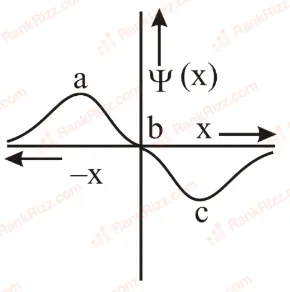
Figure for JEE Main 2019 Chemistry question on Quantum mechanical model, wave function and probability
  1. A

    Only in the region a

  2. B

    In the region a and b

  3. C

    In the region a and c

  4. D

    Only in the region c

Q33Modern periodic table and classification of elementsTRANSCRIBED

The group number, number of valence electrons, and valency of an element with atomic number 15, respectively, are:

  1. A

    15, 6 and 2

  2. B

    16, 6 and 3

  3. C

    16, 5 and 2

  4. D

    15, 5 and 3

Q34Back bonding and electron-deficient bondingTRANSCRIBED

The correct statement among the following is:

  1. A

    (SiH3)3N(SiH_3)_3N is planar and less basic than (CH3)3N(CH_3)_3N

  2. B

    (SiH3)3N(SiH_3)_3N is pyramidal and more basic than (CH3)3N(CH_3)_3N

  3. C

    (SiH3)3N(SiH_3)_3N is pyramidal and less basic than (CH3)3N(CH_3)_3N

  4. D

    (SiH3)3N(SiH_3)_3N is planar and more basic than (CH3)3N(CH_3)_3N

Q35First law: work, heat and internal energyTRANSCRIBED

An ideal gas is allowed to expand from 1 L to 10 L against a constant external pressure of 1 bar. The work done in kJ is:

  1. A

    +10.0

  2. B

    -2.0

  3. C

    -0.9

  4. D

    -9.0

Q36Enthalpies of reaction and Hess's lawTRANSCRIBED

Enthalpy of sublimation of iodine is 24 cal g−1^{-1} at 200°C. If specific heat of I2_2(s) and I2_2(vap) are 0.055 and 0.031 cal g−1^{-1} K−1^{-1} respectively, then enthalpy of sublimation of iodine at 250°C in cal g−1^{-1} is:

  1. A

    11.4

  2. B

    2.85

  3. C

    22.8

  4. D

    5.7

Q37Solubility product and common ion effectTRANSCRIBED

What is the molar solubility of Al(OH)3_3 in 0.2 M NaOH solution? Given that, solubility product of Al(OH)3_3 = 2.4×10−242.4 \times 10^{-24}:

  1. A

    3×10−193 \times 10^{-19}

  2. B

    12×10−2112 \times 10^{-21}

  3. C

    12×10−2312 \times 10^{-23}

  4. D

    3×10−223 \times 10^{-22}

Q38Oxidising/reducing agents and types of redox reactionsTRANSCRIBED

An example of a disproportionation reaction is

  1. A

    2KMnO4→K2MnO4+MnO2+O22KMnO_4 \to K_2MnO_4 + MnO_2 + O_2

  2. B

    2MnO4−+10I−+16H+→2Mn2++5I2+8H2O2MnO_4^- + 10I^- + 16H^+ \to 2Mn^{2+} + 5I_2 + 8H_2O

  3. C

    2 CuBr →\to CuBr2_2 + Cu

  4. D

    2 NaBr + Cl2_2 →\to 2NaCl + Br2_2

Q39Electrode potentials, electrochemical series and cell EMFTRANSCRIBED

Given:
Co3+^{3+} + e−^- →\to Co2+^{2+}; E° = +1.81V
Pb3+^{3+} + 2e−^- →\to Pb2+^{2+}; E° = +1.67V
Ce4+^{4+} + e−^- →\to Ce3+^{3+}; E° = +1.61V
Bi3+^{3+} + 3e−^- →\to Bi; E° = +0.20V
Oxidizing power of the species will increase in the order:

  1. A

    Co3+^{3+} < Ce4+^{4+} < Bi3+^{3+} < Pb4+^{4+}

  2. B

    Bi3+^{3+} < Ce4+^{4+} < Pb4+^{4+} < Co3+^{3+}

  3. C

    Co3+^{3+} < Pb4+^{4+} < Ce3+^{3+} < Bi4+^{4+}

  4. D

    Ce4+^{4+} < Pb4+^{4+} < Bi3+^{3+} < Co3+^{3+}

Q40Alkaline earth metals: properties and trendsTRANSCRIBED

The correct sequence of thermal stability of the following carbonates is:

  1. A

    BaCO3_3 < CaCO3_3 < SrCO3_3 < MgCO3_3

  2. B

    MgCO3_3 < CaCO3_3 < SrCO3_3 < BaCO3_3

  3. C

    BaCO3_3 < SrCO3_3 < CaCO3_3 < MgCO3_3

  4. D

    MgCO3_3 < SrCO3_3 < CaCO3_3 < BaCO3_3

Q41Group 14: trends and carbon allotropesTRANSCRIBED

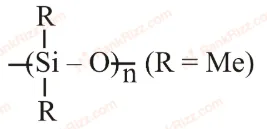
The basic structural unit of feldspar, zeolites, mica, and asbestos is:

  1. A

    SiO44−_4^{4-}

  2. B
    Figure for JEE Main 2019 Chemistry question on Group 14: trends and carbon allotropes
  3. C

    SiO32−_3^{2-}

  4. D

    SiO2_2

Q42Acidity and basicity of organic compoundsTRANSCRIBED

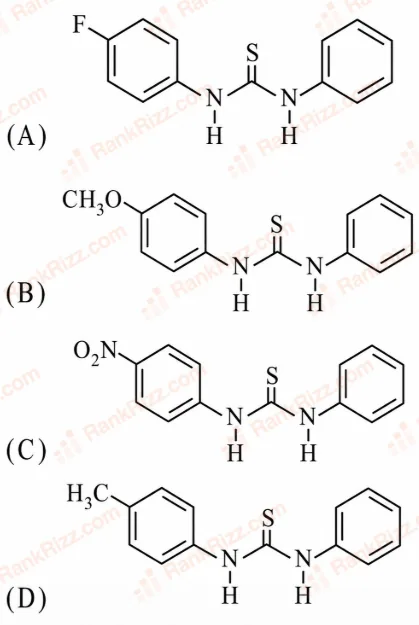
The increasing order of the pKb_b of the following compound is:

Figure for JEE Main 2019 Chemistry question on Acidity and basicity of organic compounds
  1. A

    (B) < (D) < (C) < (A)

  2. B

    (B) < (D) < (A) < (C)

  3. C

    (C) < (A) < (D) < (B)

  4. D

    (A) < (C) < (D) < (B)

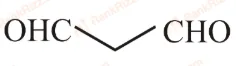
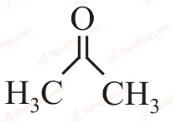
Q43Preparation of aldehydes and ketonesTRANSCRIBED

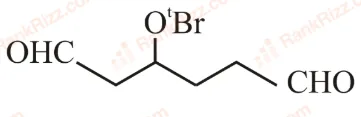
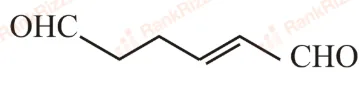
The major product(s) obtained in the following reaction is/are:
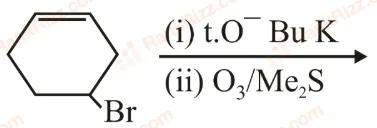
Figure for JEE Main 2019 Chemistry question on Preparation of aldehydes and ketones
  1. A
    Figure for JEE Main 2019 Chemistry question on Preparation of aldehydes and ketones
  2. B
    Figure for JEE Main 2019 Chemistry question on Preparation of aldehydes and ketones
  3. C
    Figure for JEE Main 2019 Chemistry question on Preparation of aldehydes and ketones

    CHO and OHC-CHO

  4. D
    Figure for JEE Main 2019 Chemistry question on Preparation of aldehydes and ketones
Q44Reactions of alkynesTRANSCRIBED

The major product of the following addition reaction is

Figure for JEE Main 2019 Chemistry question on Reactions of alkynes
  1. A
    Figure for JEE Main 2019 Chemistry question on Reactions of alkynes
  2. B
    Figure for JEE Main 2019 Chemistry question on Reactions of alkynes
  3. C
    Figure for JEE Main 2019 Chemistry question on Reactions of alkynes
  4. D
    Figure for JEE Main 2019 Chemistry question on Reactions of alkynes
Q45Electrophilic addition to alkenesTRANSCRIBED

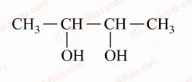
But-2-ene on reaction with alkaline KMnO4_4 at elevated temperature followed by acidification will give:

  1. A

    2 molecules of CH3_3COOH

  2. B
    Figure for JEE Main 2019 Chemistry question on Electrophilic addition to alkenes
  3. C

    2 Molecules of CH3_3CHO

  4. D

    One molecule of CH3_3CHO and one molecule of CH3_3COOH

Q46Stratospheric pollution and ozone depletionTRANSCRIBED

The correct set of species responsible for the photochemical smog is:

  1. A

    CO2_2, NO2_2, SO2_2 and hydrocarbons

  2. B

    NO2_2, O2_2, O3_3 and hydrocarbons

  3. C

    NO2_2, NO2_2 and hydrocarbons

  4. D

    NO, NO2_2, O3_3 and hydrocarbons

Q47Crystal lattices, unit cells and densityTRANSCRIBED

An element has a face-centered cubic fcc structure with a cell edge of a. The distance between the centres of two nearest tetrahedral voids in the lattice is

  1. A

    a2\frac{a}{2}

  2. B

    32a\frac{3}{2}a

  3. C

    a

  4. D

    2a\sqrt{2}a

Q48Concentration terms and their interconversionTRANSCRIBED

The mole fraction of a solvent in aqueous solution of a solute is 0.8. The molality (in mol kg−1^{-1}) of the aqueous solution is:

  1. A

    13.88×10−313.88 \times 10^{-3}

  2. B

    13.88×10−113.88 \times 10^{-1}

  3. C

    13.88

  4. D

    13.88×10−213.88 \times 10^{-2}

Q49Rate law, order and molecularityTRANSCRIBED

In the following reaction; xA →\to yB
log⁡10(−dAdt)=log⁡10(−dBdt)+0.3010\log_{10}\left(-\frac{dA}{dt}\right) = \log_{10}\left(-\frac{dB}{dt}\right) + 0.3010
'A' and 'B' respectively can be:

  1. A

    C2_2H4_4 and C4_4H8_8

  2. B

    C2_2H2_2 and C6_6H6_6

  3. C

    n-Butane and Iso-butane

  4. D

    N2_2O4_4 and NO2_2

Q50Properties of colloids and coagulationTRANSCRIBED

Peptization is a:

  1. A

    Process of converting a colloidal solution into precipitate

  2. B

    Process of converting soluble particles to form colloidal solution

  3. C

    Process of bringing colloidal molecule into solution

  4. D

    Process of converting precipitate into colloidal solution

Q51Concentration of ores, calcination and roastingTRANSCRIBED

The idea of froth flotation method came from a person X and this method is related to the process Y of ores. X and Y, respectively, are:

  1. A

    Washer man and reduction

  2. B

    Fisher women and concentration

  3. C

    Fisher man and reduction

  4. D

    Washer woman and concentration

Q52Position, isotopes, preparation and properties of dihydrogenTRANSCRIBED

The metal that gives hydrogen gas upon treatment with both the acid as well as the base is

  1. A

    Zinc

  2. B

    Magnesium

  3. C

    Iron

  4. D

    Mercury

Q53Colour and magnetic behaviour of complexes from CFTTRANSCRIBED

The complex ion that will lose its crystal field stabilization energy upon oxidation of metal to +3 state is:
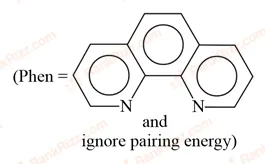
Figure for JEE Main 2019 Chemistry question on Colour and magnetic behaviour of complexes from CFT

(Phen = phenanthroline, ignore pairing energy)

  1. A

    [Ni(phen)3_3]2+^{2+}

  2. B

    [Fe(phen)3_3]2+^{2+}

  3. C

    [Co(phen)3_3]2+^{2+}

  4. D

    [Zn(phen)3_3]2+^{2+}

Q54Colour and magnetic behaviour of complexes from CFTTRANSCRIBED

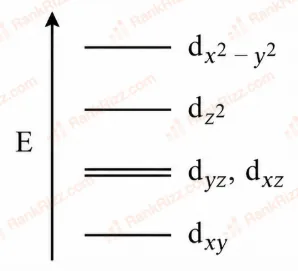
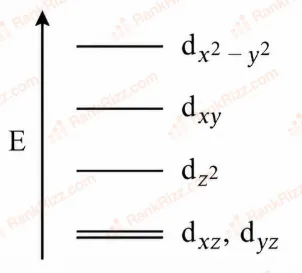
Complete removal of both the axial ligands (along the z-axis) from an octahedral complex leads to which of the following splitting patterns? (relative orbital energies not on scale).
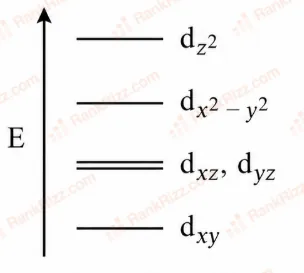
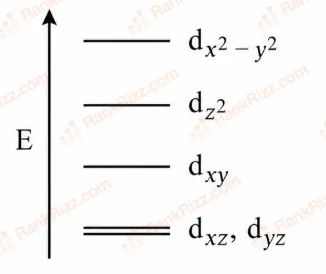
  1. A
    Figure for JEE Main 2019 Chemistry question on Colour and magnetic behaviour of complexes from CFT
  2. B
    Figure for JEE Main 2019 Chemistry question on Colour and magnetic behaviour of complexes from CFT
  3. C
    Figure for JEE Main 2019 Chemistry question on Colour and magnetic behaviour of complexes from CFT
  4. D
    Figure for JEE Main 2019 Chemistry question on Colour and magnetic behaviour of complexes from CFT
Q55Reactions of carboxylic acidsTRANSCRIBED

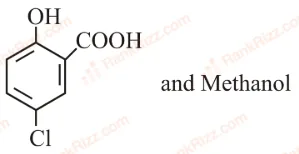
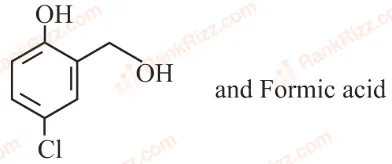
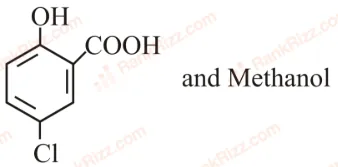
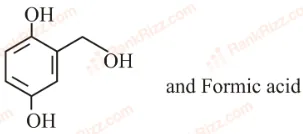
The major products of the following reaction are:
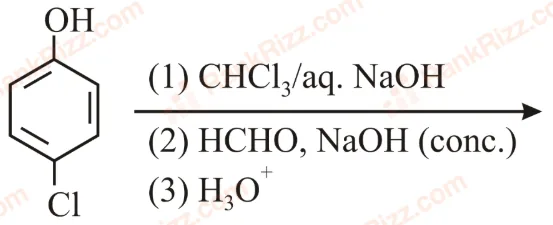
Figure for JEE Main 2019 Chemistry question on Reactions of carboxylic acids
  1. A
    Figure for JEE Main 2019 Chemistry question on Reactions of carboxylic acids
  2. B
    Figure for JEE Main 2019 Chemistry question on Reactions of carboxylic acids
  3. C
    Figure for JEE Main 2019 Chemistry question on Reactions of carboxylic acids
  4. D
    Figure for JEE Main 2019 Chemistry question on Reactions of carboxylic acids
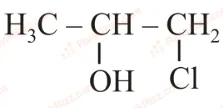
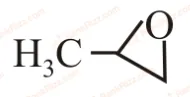
Q56Properties and reactions of alcoholsTRANSCRIBED

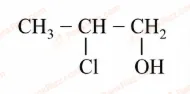
The major product of the following reaction:
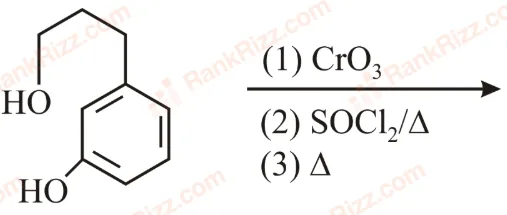
Figure for JEE Main 2019 Chemistry question on Properties and reactions of alcohols
  1. A
    Figure for JEE Main 2019 Chemistry question on Properties and reactions of alcohols
  2. B
    Figure for JEE Main 2019 Chemistry question on Properties and reactions of alcohols
  3. C
    Figure for JEE Main 2019 Chemistry question on Properties and reactions of alcohols
  4. D
    Figure for JEE Main 2019 Chemistry question on Properties and reactions of alcohols
Q57Important polymers and their monomersTRANSCRIBED

Which of the following is a thermosetting polymer?

  1. A

    Bakelite

  2. B

    PVC

  3. C

    Nylon 6

  4. D

    Buna-N

Q58Quantitative estimation of elementsTRANSCRIBED

An organic compound 'A' is oxidized with Na2_2O2_2 followed by boiling with HNO3_3. The resultant solution is then treated with ammonium molybdate to yield a yellow precipitate. Based on above observation, the element present in the given compound is:

  1. A

    Fluorine

  2. B

    Phosphorus

  3. C

    Nitrogen

  4. D

    Sulphur

Q59Carbohydrates: classification and monosaccharidesTRANSCRIBED

Glucose and Galactose are having identical configuration in all the positions except position.

  1. A

    C - 3

  2. B

    C - 4

  3. C

    C - 5

  4. D

    C - 2

Q60Vitamins and hormonesTRANSCRIBED

Which of the following statements is not true about RNA?

  1. A

    It controls the synthesis of protein

  2. B

    It usually does not replicate

  3. C

    It has always double standard α-helix structure

  4. D

    It is present in the nucleus of the cell

NEXT IN THIS PAPER →Maths, Q61 onwards