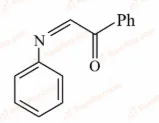
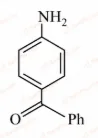
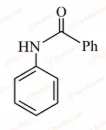
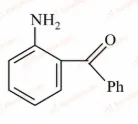
Q31 Mole concept, atomic and molar mass TRANSCRIBED
The minimum amount of O2 _2 2
A P4 _4 4 2 _2 2 → \rightarrow → 4 _4 4 10 _{10} 10
B 2Mgs + O2 _2 2 → \rightarrow →
C 4Fes + 3O2 _2 2 → \rightarrow → 2 _2 2 3 _3 3
D C3 _3 3 8 _8 8 2 _2 2 → \rightarrow → 2 _2 2 2 _2 2
Q32 Hydrogen spectrum and spectral series TRANSCRIBED
The ratio of the shortest wavelength of two spectral series of hydrogen spectrum is found to be about 9. The spectral series are:
A B C D Q33 General properties of transition elements TRANSCRIBED
The correct order of the first ionization enthalpies is:
A B C D Q34 Kinetic theory of gases and molecular speeds TRANSCRIBED
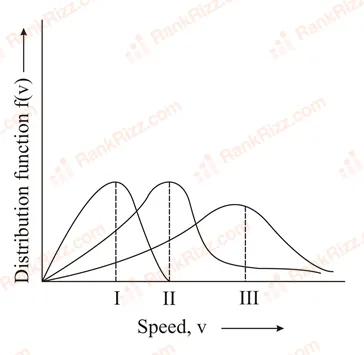
Points I, II and III in the following plot respectively correspond to (Vm p _{mp} m p
A Vm p _{mp} m p 2 _2 2 m p _{mp} m p 2 _2 2 m p _{mp} m p 2 _2 2
B Vm p _{mp} m p 2 _2 2 m p _{mp} m p 2 _2 2 m p _{mp} m p 2 _2 2
C Vm p _{mp} m p 2 _2 2 m p _{mp} m p 2 _2 2 m p _{mp} m p 2 _2 2
D Vm p _{mp} m p 2 _2 2 m p _{mp} m p 2 _2 2 m p _{mp} m p 2 _2 2
Q35 Enthalpies of reaction and Hess's law TRANSCRIBED
The difference between ΔH and ΔU is ΔH - ΔU, when the combustion of one mole of heptane l is carried out at a temperature T, is equal to:
A B C D Q36 Le Chatelier's principle and factors affecting equilibrium TRANSCRIBED
For the reaction,2 _2 2 2 _2 2 ⇌ \rightleftharpoons ⇌ 3 _3 3 − 1 ^{-1} − 1 c _c c 1.7 × 10 16 1.7 \times 10^{16} 1.7 × 1 0 16
A The equilibrium constant is large suggestive of reaction going to completion and so, no catalyst is required.
B The equilibrium will shift in forward direction as the pressure increases.
C The equilibrium constant decreases as the temperature increases.
D The addition of inert gas at constant volume will not affect the equilibrium constant.
Q37 Hydrolysis of salts TRANSCRIBED
The pH of a 0.02 M NH4 _4 4 b _b b 4 _4 4 − 5 ^{-5} − 5
A B C D Q38 Hydrides TRANSCRIBED
The correct statements among a to d are:2 _2 2 2 _2 2 4 _4 4 3 _3 3 2 _2 2 6 _6 6 3 _3 3 4 _4 4 4 _4 4
A B C D Q39 Compounds of alkali metals TRANSCRIBED
A hydrated solid X on heating initially gives a monohydrated compound Y. Y upon heating above 373 K leads to an anhydrous white powder Z. X and Z, respectively, are;
A washing soda and soda ash.
B baking soda and soda ash.
C washing soda and dead burnt plaster.
D baking soda and dead burnt plaster.
Q40 Group 15: trends and hydrides TRANSCRIBED
The number of pentagons in C60 _{60} 60
A B C D Q41 Acidity and basicity of organic compounds TRANSCRIBED
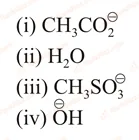
The increasing order of nucleophilicity of the following nucleophiles is:
A (i) < (iv) < (iii) < (ii)
B (ii) < (iii) < (iv) < (i)
C D (ii) < (iii) < (i) < (iv)
Q42 Methods of purification of organic compounds TRANSCRIBED
In chromatography, which of the following statements is incorrect for Rf _f f
A Higher Rf _f f
B The value of Rf _f f
C Rf _f f
D Rf _f f
Q43 Structural isomerism TRANSCRIBED
Which of these factors does not govern the stability of a conformation in acyclic compounds?
A B C D Electrostatic forces of interaction
Q44 Nucleophilic substitution (SN1 and SN2) TRANSCRIBED
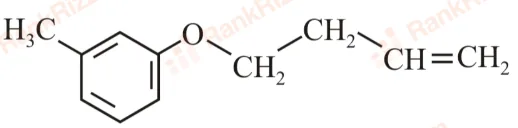
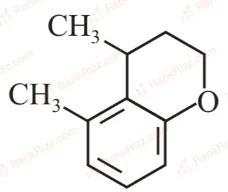
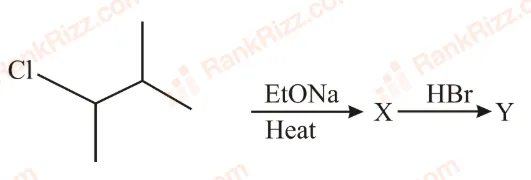
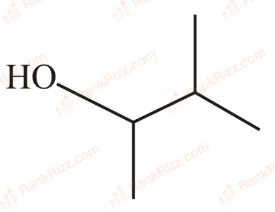
The major product obtained in the given reaction is:
A B C D Q45 Air pollution: tropospheric pollutants, smog, acid rain and greenhouse effect TRANSCRIBED
Air pollution that occurs in sunlight is
A B C D Q46 Group 18: noble gases and xenon compounds TRANSCRIBED
The noble gas that does not occur in the atmosphere is;
A B C D Q47 Elevation in boiling point TRANSCRIBED
1 g of a non-volatile non-electrolyte solute is dissolved in 100 g of two different solvents A and B whose ebullioscopic constants are in the ratio of 1:5. The ratio of the elevation in their boiling points, Δ T b A Δ T b B \frac{\Delta T_{bA}}{\Delta T_{bB}} Δ T b B Δ T b A
A B C D Q48 Conductance, conductivity and molar conductivity TRANSCRIBED
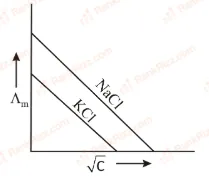
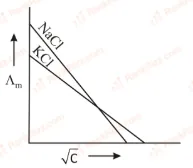
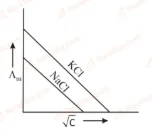
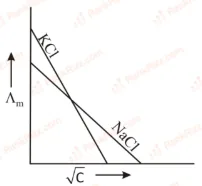
Which one of the following graphs between molar conductivity Λ m \Lambda_m Λ m C \sqrt{C} C
A B C D Q49 Arrhenius equation and activation energy TRANSCRIBED
For the reaction of H2 _2 2 2 _2 2 2.5 × 10 − 4 2.5 \times 10^{-4} 2.5 × 1 0 − 4 3 ^3 3 − 1 ^{-1} − 1 − 1 ^{-1} − 1 3 ^3 3 − 1 ^{-1} − 1 − 1 ^{-1} − 1 − 1 ^{-1} − 1 − 1 ^{-1} − 1 − 1 ^{-1} − 1
A B C D Q50 Properties of colloids and coagulation TRANSCRIBED
The correct option among the following is.
A Brownian motion in colloidal solution is faster if the viscosity of the solution is very high.
B Colloidal particles in lyophobic sols can be precipitated by electrophoresis.
C Colloidal medicines are more effective because they have small surface area.
D Addition of alum to water makes it unfit for drinking.
Q51 Refining of metals TRANSCRIBED
The correct statement is:
A Aniline is a froth stabilizer.
B Zone refining process is used for the refining of titanium.
C Zincite is a carbonate ore.
D Sodium cyanide cannot be used in the metallurgy of silver.
Q52 Lanthanoids and lanthanoid contraction TRANSCRIBED
The highest possible oxidation states of uranium and plutonium, respectively, are
A B C D Q53 Colour and magnetic behaviour of complexes from CFT TRANSCRIBED
The incorrect statement is.
A The spin-only magnetic moments of [FeH2 _2 2 6 _6 6 2 + ^{2+} 2 + 2 _2 2 6 _6 6 2 + ^{2+} 2 +
B The spin-only magnetic moment of [NiNH3 4 _{3_{4}} 3 4 2 _2 2 2 ] 2 + _{2}]^{2+} 2 ] 2 +
C The gemstone, ruby, has Cr3 + ^{3+} 3 +
D The color of [CoClNH3 5 _{3_{5}} 3 5 2 + ^{2+} 2 +
Q54 Colour and magnetic behaviour of complexes from CFT TRANSCRIBED
The crystal field stabilization energy (CFSE) of [FeH2 _2 2 6 _6 6 2 _2 2 2 _2 2 4 _4 4
A − 0.4 Δ 0 -0.4\Delta_0 − 0.4 Δ 0 − 1.2 Δ t -1.2\Delta_t − 1.2 Δ t
B − 2.4 Δ 0 -2.4\Delta_0 − 2.4 Δ 0 − 1.2 Δ t -1.2\Delta_t − 1.2 Δ t
C − 0.4 Δ 0 -0.4\Delta_0 − 0.4 Δ 0 − 0.8 Δ t -0.8\Delta_t − 0.8 Δ t
D − 0.6 Δ 0 -0.6\Delta_0 − 0.6 Δ 0 − 0.8 Δ t -0.8\Delta_t − 0.8 Δ t
Q55 Nucleophilic substitution (SN1 and SN2) TRANSCRIBED
The major product 'Y' in the following reaction is:
A B C D Q56 Distinguishing tests for aldehydes and ketones TRANSCRIBED
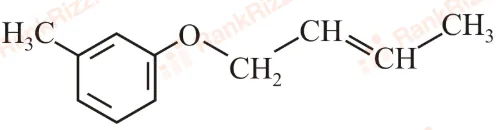
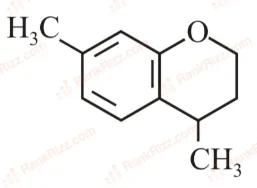
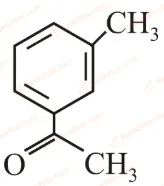
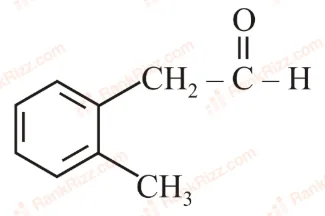
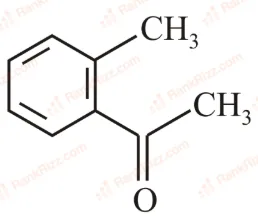
Compound A C9 _9 9 10 _{10} 10 4 _4 4 8 _8 8 6 _6 6 4 _4 4
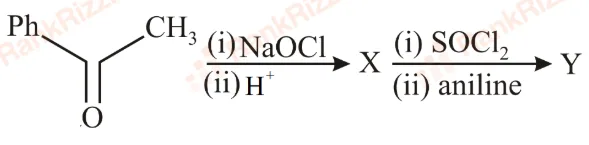
A B C D Q57 Acid derivatives: esters, amides, anhydrides and acid chlorides TRANSCRIBED
The major product Y in the following reaction is:
A B C D Q58 Reactions and tests of amines TRANSCRIBED
Which of the following is not a correct method of the preparation of benzyl amine from cyano benzene?
A B (i) HCl / H2 _2 2 4 _4 4
C (i) SnCl2 _2 2 4 _4 4
D (i) LiAlH4 _4 4 3 _3 3 + ^+ +
Q59 Important polymers and their monomers TRANSCRIBED
The correct match between Item - I and Item - II is:
A a → \rightarrow → → \rightarrow → → \rightarrow → → \rightarrow →
B (a) → \rightarrow → → \rightarrow → → \rightarrow → → \rightarrow →
C (a) → \rightarrow → → \rightarrow → → \rightarrow → → \rightarrow →
D (a) → \rightarrow → → \rightarrow → → \rightarrow → → \rightarrow →
Q60 Carbohydrates: classification and monosaccharides TRANSCRIBED
Number of stereo centers present in linear and cyclic structures of glucose are respectively:
A B C D