RankRizz

JEE Main 02 Apr 2017, Offline: Chemistry

The 30 Chemistry questions of JEE Main 02 Apr 2017, Offline, numbered across the whole paper. Pick an answer on any question to check it against the key. Free to read, nothing to download.

Chemistry

Q31Mole concept, atomic and molar massTRANSCRIBED

1 gram of a carbonate M2_{2}CO3_{3} on treatment with excess HCl produces 0.01186 moles of CO2_{2}. The molar mass of M2_{2}CO3_{3} in g mol−1^{-1} is:

  1. A

    84.3

  2. B

    118.6

  3. C

    11.86

  4. D

    1186

Q32Mole concept, atomic and molar massTRANSCRIBED

The most abundant elements by mass in the body of a healthy human adult are: Oxygen (61.4%); Carbon (22.9%), Hydrogen (10.0%); and Nitrogen (2.6%). The weight which a 75 kg person would gain if all 1^{1}H atoms are replaced by 2^{2}H atoms is:

  1. A

    37.5 kg

  2. B

    7.5 kg

  3. C

    10 kg

  4. D

    15 kg

Q33Electronic configuration and Aufbau, Pauli and Hund's rulesTRANSCRIBED

Among the following species which option contains all isoelectronic species?

  1. A

    O−O^{-}, F−F^{-}, NaNa, Mg+Mg^{+}

  2. B

    O2−O^{2-}, F−F^{-}, NaNa, Mg2+Mg^{2+}

  3. C

    O−O^{-}, F−F^{-}, Na+Na^{+}, Mg2+Mg^{2+}

  4. D

    O2−O^{2-}, F−F^{-}, Na+Na^{+}, Mg2+Mg^{2+}

Q34Bohr model of hydrogen-like speciesTRANSCRIBED

The radius of the second Bohr orbit for hydrogen atom is
(Planck's constant, (h) = 6.6262×10−346.6262 \times 10^{-34} Js; mass of electron = 9.1091×10−319.1091 \times 10^{-31} kg; charge of electron = 1.60210×10−191.60210 \times 10^{-19} C; permittivity of vacuum, (ϵ0\epsilon_{0}) = 8.854185×10−128.854185 \times 10^{-12} kg−1^{-1} m−3^{-3} A2^{2})

  1. A

    4.76 Å

  2. B

    0.529 Å

  3. C

    2.12 Å

  4. D

    1.65 Å

Q35Molecular orbital theory of diatomic speciesTRANSCRIBED

Which of the following species is not paramagnetic?

  1. A

    CO

  2. B

    O2_{2}

  3. C

    B2_{2}

  4. D

    NO

Q36Enthalpies of reaction and Hess's lawTRANSCRIBED

Given:
C(graphite) + O2_{2}(g) →\rightarrow CO2_{2}(g); Δr\Delta_{r}H° = -393.5 kJ mol−1^{-1}
H2_{2}(g) + 12\frac{1}{2}O2_{2}(g) →\rightarrow H2_{2}O(l); Δr\Delta_{r}H° = -285.8 kJ mol−1^{-1}
CO2_{2}(g) + 2H2_{2}O(l) →\rightarrow CH4_{4}(g) + 2O2_{2}(g); Δr\Delta_{r}H° = +890.3 kJ mol−1^{-1}
Based on the above thermochemical equations, the value of Δr\Delta_{r}H° at 298 K for the reaction
C(graphite) + 2H2_{2}(g) →\rightarrow CH4_{4}(g) will be:

  1. A

    +144.0 kJ mol−1^{-1}

  2. B

    -74.8 kJ mol−1^{-1}

  3. C

    -144.0 kJ mol−1^{-1}

  4. D

    +74.8 kJ mol−1^{-1}

Q37First law: work, heat and internal energyTRANSCRIBED

ΔU\Delta U is equal to:

  1. A

    Isobaric work

  2. B

    Adiabatic work

  3. C

    Isothermal work

  4. D

    Isochoric work

Q38pH of acids, bases and their mixturesTRANSCRIBED

pKa_{a} of a weak acid HA and pKb_{b} of a weak base BOH are 3.2 and 3.4 respectively. The pH of their salt AB solution at 25°C is:

  1. A

    6.9

  2. B

    7.0

  3. C

    1.0

  4. D

    7.2

Q39Valency, oxidation states and nature of oxidesTRANSCRIBED

Both lithium and magnesium display several similar properties due to the diagonal relationship; however, the one which is incorrect is:

  1. A

    Both form soluble bicarbonates

  2. B

    Both form nitrides

  3. C

    Nitrates of both Li and Mg yield NO2_{2} and O2_{2} on heating

  4. D

    Both form basic carbonate

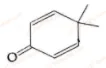
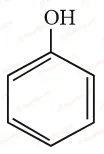
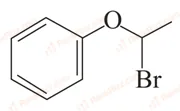
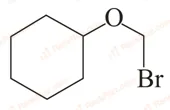
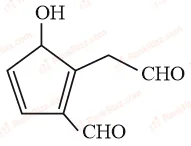
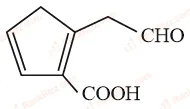
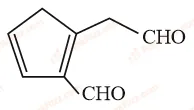
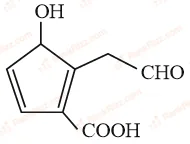
Q40AromaticityTRANSCRIBED

Which of the following molecules is least resonance stabilized?

  1. A
    Figure for JEE Main 2017 Chemistry question on Aromaticity
  2. B
    Figure for JEE Main 2017 Chemistry question on Aromaticity
  3. C
    Figure for JEE Main 2017 Chemistry question on Aromaticity
  4. D
    Figure for JEE Main 2017 Chemistry question on Aromaticity
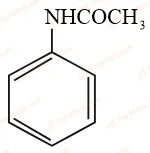
Q41Electrophilic substitution of anilineTRANSCRIBED

Which of the following compounds will form significant amount of meta product during mono-nitration reaction?
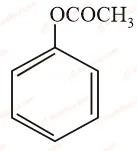
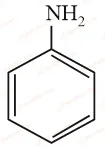
  1. A
    Figure for JEE Main 2017 Chemistry question on Electrophilic substitution of aniline
  2. B
    Figure for JEE Main 2017 Chemistry question on Electrophilic substitution of aniline
  3. C
    Figure for JEE Main 2017 Chemistry question on Electrophilic substitution of aniline
  4. D
    Figure for JEE Main 2017 Chemistry question on Electrophilic substitution of aniline
Q42Water pollutionTRANSCRIBED

A water sample has ppm level concentration of following anions
F−^{-} = 10; SO42−_{4}^{2-} = 100; NO3−_{3}^{-} = 50
The anion/anions that make/makes the water sample unsuitable for drinking is/are

  1. A

    Both SO42−_{4}^{2-} and NO3−_{3}^{-}

  2. B

    Only F−^{-}

  3. C

    Only SO42−_{4}^{2-}

  4. D

    Only NO3−_{3}^{-}

Q43Crystal lattices, unit cells and densityTRANSCRIBED

A metal crystallizes in a face centred cubic structure. If the edge length of its unit cell is 'a', the closest approach between two atoms in the metallic crystal will be

  1. A

    22a2\sqrt{2}a

  2. B

    2a\sqrt{2}a

  3. C

    a2\frac{a}{\sqrt{2}}

  4. D

    2a2a

Q44Abnormal molar mass and van't Hoff factorTRANSCRIBED

The freezing point of benzene decreases by 0.45°C on adding 0.2 g of acetic acid to 20 g of benzene. If acetic acid associates to form a dimer in benzene, then what is the percentage association of acetic acid in benzene?
Kf_{f} for benzene = 5.12 K kg mol−1^{-1}

  1. A

    80.4%

  2. B

    74.6%

  3. C

    94.6%

  4. D

    64.6%

Q45Electrode potentials, electrochemical series and cell EMFTRANSCRIBED

Given
E°Cl2/Cl−_{Cl_{2}/Cl^{-}} = 1.36 V, E°Cr3+/Cr_{Cr^{3+}/Cr} = -0.74 V
E°Cr2O72−/Cr3+_{Cr_{2}O_{7}^{2-}/Cr^{3+}} = 1.33 V, E°MnO4−/Mn2+_{MnO_{4}^{-}/Mn^{2+}} = 1.51 V
Among the following, the strongest reducing agent is:

  1. A

    Mn2+^{2+}

  2. B

    Cr3+^{3+}

  3. C

    Cl−^{-}

  4. D

    Cr

Q46Arrhenius equation and activation energyTRANSCRIBED

Two reactions A1_{1} and A2_{2} have identical pre-exponential factors. The activation energy of A1_{1} is more than A2_{2} by 10 kJ mol−1^{-1}. If k1_{1} and k2_{2} are the rate constants for reactions A1_{1} and A2_{2}, respectively at 300 K, then ln⁡k2k1\ln\frac{k_{2}}{k_{1}} is equal to
(R = 8.314 J mol−1^{-1} K−1^{-1})

  1. A

    12

  2. B

    6

  3. C

    4

  4. D

    8

Q47Properties of colloids and coagulationTRANSCRIBED

The Tyndall effect is observed only when the following conditions are satisfied,
i. The diameter of the dispersed particles is much smaller than the wavelength of the light used.
ii. The diameter of the dispersed particle is not much smaller than the wavelength of the light used.
iii. The refractive indices of the dispersed phase and dispersion medium are almost similar in magnitude.
iv. The refractive indices of the dispersed phase and dispersion medium differ greatly in magnitude.

  1. A

    ii and iv

  2. B

    i and iii

  3. C

    ii and iii

  4. D

    i and iv

Q48Group 17: halogens and hydrogen halidesTRANSCRIBED

The products obtained when chlorine gas reacts with cold and dilute aqueous NaOH are

  1. A

    ClO2−_{2}^{-} and ClO3−_{3}^{-}

  2. B

    Cl−^{-} and ClO−^{-}

  3. C

    Cl−^{-} and ClO2−_{2}^{-}

  4. D

    ClO−^{-} and ClO3−_{3}^{-}

Q49Balancing redox equationsTRANSCRIBED

Which of the following reactions is an example of a redox reaction?

  1. A

    XeF2_{2} + PF5_{5} →\rightarrow XeF+^{+}PF6−_{6}^{-}

  2. B

    XeF6_{6} + H2_{2}O →\rightarrow XeOF4_{4} + 2HF

  3. C

    XeF6_{6} + 2H2_{2}O →\rightarrow XeO2_{2}F2_{2} + 4HF

  4. D

    XeF4_{4} + O2_{2}F2_{2} →\rightarrow XeF6_{6} + O2_{2}

Q50Other important compounds of transition metalsTRANSCRIBED

In the following reactions, ZnO is respectively acting as a/an,
(i) ZnO + Na2_{2}O →\rightarrow Na2_{2}ZnO2_{2}
(ii) ZnO + CO2_{2} →\rightarrow ZnCO3_{3}

  1. A

    base and base

  2. B

    acid and acid

  3. C

    acid and base

  4. D

    base and acid

Q51Chemical principles of qualitative analysisTRANSCRIBED

The sodium salt of an organic acid X produces effervescence with concentrated H2_{2}SO4_{4}. X reacts with the acidified aqueous CaCl2_{2} solution to give a white precipitate which decolourises acidic solution of KMnO4_{4}. X is

  1. A

    HCOONa

  2. B

    CH3_{3}COONa

  3. C

    Na2_{2}C2_{2}O4_{4}

  4. D

    C6_{6}H5_{5}COONa

Q52Valence bond theory of complexesTRANSCRIBED

On treatment of 100 mL of 0.1 M solution of CoCl3_{3}.6H2_{2}O with excess AgNO3_{3}; 1.2×10221.2 \times 10^{22} ions are precipitated. The complex is:

  1. A

    [CoH2_{2}O3_{3}]Cl3_{3}.3H2_{2}O

  2. B

    [CoH2_{2}O6_{6}]Cl3_{3}

  3. C

    [CoH2_{2}O5_{5}Cl]Cl2_{2}.H2_{2}O

  4. D

    [CoH2_{2}O4_{4}Cl2_{2}]Cl.2H2_{2}O

Q53Nucleophilic substitution (SN1 and SN2)TRANSCRIBED

The major product obtained in the following reaction is,
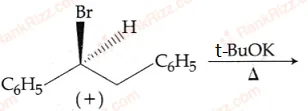
Figure for JEE Main 2017 Chemistry question on Nucleophilic substitution (SN1 and SN2)
  1. A

    C6_{6}H5_{5}CH = CHC6_{6}H5_{5}

  2. B

    + C6_{6}H5_{5}CHOtBuCH2_{2}C6_{6}H5_{5}

  3. C

    - C6_{6}H5_{5}CHOtBuCH2_{2}C6_{6}H5_{5}

  4. D

    ± C6_{6}H5_{5}CHOtBuCH2_{2}C6_{6}H5_{5}

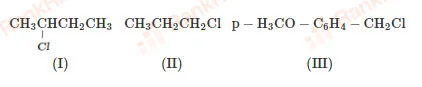
Q54Nucleophilic substitution (SN1 and SN2)TRANSCRIBED

The increasing order of the reactivity of the following halides for the SN_{N}1 reaction is

Figure for JEE Main 2017 Chemistry question on Nucleophilic substitution (SN1 and SN2)
  1. A

    (II) < (I) < (III)

  2. B

    (I) < (III) < (II)

  3. C

    (II) < (III) < (I)

  4. D

    (III) < (II) < (I)

Q55Nucleophilic substitution (SN1 and SN2)TRANSCRIBED

3-Methyl-pent-2-ene on reaction with HBr in presence of peroxide forms an addition product. The number of possible stereoisomers for the product is

  1. A

    zero

  2. B

    two

  3. C

    four

  4. D

    six

Q56Nucleophilic substitution (SN1 and SN2)TRANSCRIBED

Which of the following, upon treatment with tert-BuONa followed by addition of bromine water, fails to decolourize the colour of bromine?
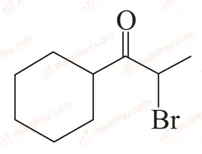
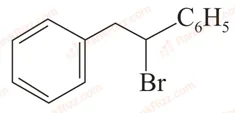
  1. A
    Figure for JEE Main 2017 Chemistry question on Nucleophilic substitution (SN1 and SN2)
  2. B
    Figure for JEE Main 2017 Chemistry question on Nucleophilic substitution (SN1 and SN2)
  3. C
    Figure for JEE Main 2017 Chemistry question on Nucleophilic substitution (SN1 and SN2)
  4. D
    Figure for JEE Main 2017 Chemistry question on Nucleophilic substitution (SN1 and SN2)
Q57Nucleophilic addition reactions of carbonyl compoundsTRANSCRIBED

The correct sequence of reagents for the following conversion will be
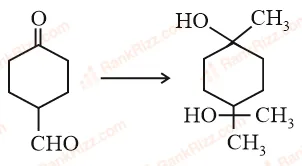
Figure for JEE Main 2017 Chemistry question on Nucleophilic addition reactions of carbonyl compounds
  1. A

    CH3_{3}MgBr, H+^{+}/CH3_{3}OH, AgNH32+_{3_{2}}^{+}OH−^{-}

  2. B

    CH3_{3}MgBr, AgNH32+_{3_{2}}^{+}OH−^{-}, H+^{+}/CH3_{3}OH

  3. C

    AgNH32+_{3_{2}}^{+}OH−^{-}, CH3_{3}MgBr, H+^{+}/CH3_{3}OH

  4. D

    AgNH32+_{3_{2}}^{+}OH−^{-}, H+^{+}/CH3_{3}OH, CH3_{3}MgBr

Q58Preparation of aldehydes and ketonesTRANSCRIBED

The major product obtained in the following reaction is
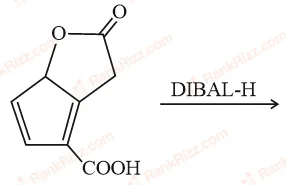
Figure for JEE Main 2017 Chemistry question on Preparation of aldehydes and ketones
  1. A
    Figure for JEE Main 2017 Chemistry question on Preparation of aldehydes and ketones
  2. B
    Figure for JEE Main 2017 Chemistry question on Preparation of aldehydes and ketones
  3. C
    Figure for JEE Main 2017 Chemistry question on Preparation of aldehydes and ketones
  4. D
    Figure for JEE Main 2017 Chemistry question on Preparation of aldehydes and ketones
Q59Important polymers and their monomersTRANSCRIBED

The formation of which of the following polymers involves hydrolysis reaction?

  1. A

    Bakelite

  2. B

    Nylon-6,6

  3. C

    Terylene

  4. D

    Nylon-6

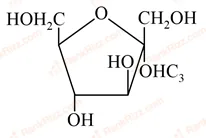
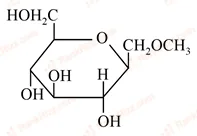
Q60Carbohydrates: classification and monosaccharidesTRANSCRIBED

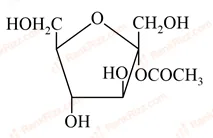
Which of the following compounds will behave as reducing sugar in an aqueous KOH solution?
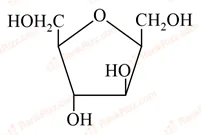
  1. A
    Figure for JEE Main 2017 Chemistry question on Carbohydrates: classification and monosaccharides
  2. B
    Figure for JEE Main 2017 Chemistry question on Carbohydrates: classification and monosaccharides
  3. C
    Figure for JEE Main 2017 Chemistry question on Carbohydrates: classification and monosaccharides
  4. D
    Figure for JEE Main 2017 Chemistry question on Carbohydrates: classification and monosaccharides
NEXT IN THIS PAPER →Maths, Q61 onwards