RankRizz

JEE Main 06 Apr 2014, Offline: Chemistry

The 30 Chemistry questions of JEE Main 06 Apr 2014, Offline, numbered across the whole paper. Pick an answer on any question to check it against the key. Free to read, nothing to download.

Chemistry

Q31Mole concept, atomic and molar massTRANSCRIBED

The ratio of masses of oxygen and nitrogen in a particular gaseous mixture is 1 : 4. The ratio of number of their molecules is:

  1. A

    1 : 4

  2. B

    7 : 32

  3. C

    1 : 8

  4. D

    3 : 16

Q32Quantum numbers and shapes of orbitalsTRANSCRIBED

The correct set of four quantum numbers for the valence electrons of rubidium atom (Z=37Z = 37) is:

  1. A

    5, 0, 0, +12\frac{1}{2}

  2. B

    5, 1, 0, +12\frac{1}{2}

  3. C

    5, 1, 1, +12\frac{1}{2}

  4. D

    5, 0, 1, +12\frac{1}{2}

Q33Group 15: trends and hydridesTRANSCRIBED

Which one of the following properties is not shown by NO?

  1. A

    It is diamagnetic in gaseous state

  2. B

    It is a neutral oxide

  3. C

    It combines with oxygen to form nitrogen dioxide

  4. D

    It's bond order is 2.5

Q34Dipole moment and molecular polarityTRANSCRIBED

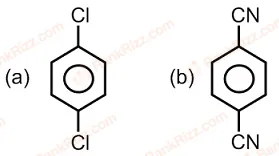
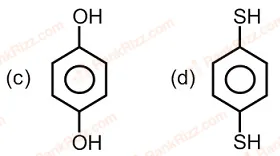
For which of the following molecule significant μ≠0\mu \neq 0?

Figure for JEE Main 2014 Chemistry question on Dipole moment and molecular polarity Figure for JEE Main 2014 Chemistry question on Dipole moment and molecular polarity
  1. A

    Only (a)

  2. B

    (a) and (b)

  3. C

    Only (c)

  4. D

    (c) and (d)

Q35Real gases, compressibility factor and van der Waals equationTRANSCRIBED

If Z is the compressibility factor, then Van der Waal's equation at low pressure can be written as:

  1. A

    Z=1+RTPbZ = 1 + \frac{RT}{Pb}

  2. B

    Z=1−aVRTZ = 1 - \frac{a}{VRT}

  3. C

    Z=1−PbRTZ = 1 - \frac{Pb}{RT}

  4. D

    Z=1+PbRTZ = 1 + \frac{Pb}{RT}

Q36Enthalpies of reaction and Hess's lawTRANSCRIBED

For complete combustion of ethanol, C2H5OH(l)+3O2(g)→2CO2(g)+3H2O(l)C_2H_5OH(l) + 3O_2(g) \to 2CO_2(g) + 3H_2O(l), the amount of heat produced as measured in bomb calorimeter, is 1364.47 kJ mol−1^{-1} at 25°C. Assuming ideality the Enthalpy of combustion, ΔcH\Delta_cH, for the reaction will be: (R=8.314R = 8.314 kJ mol−1^{-1})

  1. A

    −1366.95-1366.95 kJ mol−1^{-1}

  2. B

    −1361.95-1361.95 kJ mol−1^{-1}

  3. C

    −1460.50-1460.50 kJ mol−1^{-1}

  4. D

    −1350.50-1350.50 kJ mol−1^{-1}

Q37Law of mass action and equilibrium constants Kc and KpTRANSCRIBED

For the reaction SO2(g)+12O2(g)⇌SO3(g)SO_2(g) + \frac{1}{2}O_2(g) \rightleftharpoons SO_3(g), if KP=KC(RT)xK_P = K_C(RT)^x where the symbols have usual meaning, then the value of x is: (assuming ideality)

  1. A

    −1-1

  2. B

    −12-\frac{1}{2}

  3. C

    12\frac{1}{2}

  4. D

    1

Q38Balancing redox equationsTRANSCRIBED

In which of the following reactions H2O2H_2O_2 acts as a reducing agent?
(a) H2O2+2H++2e−→2H2OH_2O_2 + 2H^+ + 2e^- \to 2H_2O
(b) H2O2−2e−→O2+2H+H_2O_2 - 2e^- \to O_2 + 2H^+
(c) H2O2+2e−→2OH−H_2O_2 + 2e^- \to 2OH^-
(d) H2O2+2OH−−2e−→O2+2H2OH_2O_2 + 2OH^- - 2e^- \to O_2 + 2H_2O

  1. A

    (a), (b)

  2. B

    (c), (d)

  3. C

    (a), (c)

  4. D

    (b), (d)

Q39Quantitative estimation of elementsTRANSCRIBED

For the estimation of nitrogen, 1.4 g of an organic compound was digested by the Kjeldahl method and the evolved ammonia was absorbed in 60 ml of M10\frac{M}{10} sulphuric acid. The unreacted acid required 20 ml of M10\frac{M}{10} sodium hydroxide for complete neutralization. The percentage of nitrogen in the compound is:

  1. A

    6%

  2. B

    10%

  3. C

    3%

  4. D

    5%

Q40Reactions and tests of aminesTRANSCRIBED

Considering the basic strength of amines in an aqueous solution, which one has the smallest pKb_b value?

  1. A

    (CH3)NH(CH_3)NH

  2. B

    CH3NH2CH_3NH_2

  3. C

    (CH3)3N(CH_3)_3N

  4. D

    C6H5NH2C_6H_5NH_2

Q41Polyhalogen compoundsTRANSCRIBED

The major organic compound formed by the reaction of 1, 1, 1 - trichloroethane with silver powder is:

  1. A

    Acetylene

  2. B

    Ethene

  3. C

    2-Butyne

  4. D

    2-Butene

Q42Voids, radius ratio and structures of ionic solidsTRANSCRIBED

CsCl crystallises in body centred cubic lattice. If 'a' is its edge length then which of the following expressions is correct?

  1. A

    rCs++rCl−=3ar_{Cs^+} + r_{Cl^-} = 3a

  2. B

    rCs++rCl−=3a2r_{Cs^+} + r_{Cl^-} = \frac{3a}{2}

  3. C

    rCs++rCl−=32ar_{Cs^+} + r_{Cl^-} = \frac{\sqrt{3}}{2}a

  4. D

    rCs++rCl−=3ar_{Cs^+} + r_{Cl^-} = \sqrt{3}a

Q43Abnormal molar mass and van't Hoff factorTRANSCRIBED

Consider separate solutions of 0.500 M C2H5OHC_2H_5OH (aq), 0.100 M Mg3(PO4)2Mg_3(PO_4)_2 (aq), 0.250 M KBr (aq) and 0.125 M Na3PO4Na_3PO_4 (aq) at 25 °C. Which statement is true about these solutions, assuming all salts to be strong electrolytes?

  1. A

    They all have the same osmotic pressure.

  2. B

    0.100 M Mg3(PO4)2Mg_3(PO_4)_2 (aq) has the highest osmotic pressure.

  3. C

    0.125 M Na3PO4Na_3PO_4 (aq) has the highest osmotic pressure.

  4. D

    0.500 M C2H5OHC_2H_5OH (aq) has the highest osmotic pressure.

Q44Conductance, conductivity and molar conductivityTRANSCRIBED

Resistance of 0.2 M solution of an electrolyte is 50 Ω\Omega. The specific conductance of the solution is 1.4 S m−1^{-1}. The resistance of 0.5 M solution of the same electrolyte is 280 Ω\Omega. The molar conductivity of 0.5 M solution of the electrolyte in S m2^2 mol−1^{-1} is:

  1. A

    5×10−45 \times 10^{-4}

  2. B

    5×10⁻³⁵ \times 10^{-3}

  3. C

    5×1035 \times 10^3

  4. D

    5×1025 \times 10^2

Q45Conductance, conductivity and molar conductivityTRANSCRIBED

The equivalent conductance of NaCl at concentration C and at infinite dilution are λC\lambda_C and λ∞\lambda_{\infty}, respectively. The correct relationship between λC\lambda_C and λ∞\lambda_{\infty} is given as: (where the constant B is positive)

  1. A

    λC=λ∞+(B)C\lambda_C = \lambda_{\infty} + (B)C

  2. B

    λC=λ∞−(B)C\lambda_C = \lambda_{\infty} - (B)C

  3. C

    λC=λ∞−(B)C\lambda_C = \lambda_{\infty} - (B)\sqrt{C}

  4. D

    λC=λ∞+(B)C\lambda_C = \lambda_{\infty} + (B)\sqrt{C}

Q46Alkaline earth metals: properties and trendsTRANSCRIBED

The metal that cannot be obtained by the electrolysis of an aqueous solution of its salt is:

  1. A

    Ag

  2. B

    Ca

  3. C

    Cu

  4. D

    Cr

Q47Electrode potentials, electrochemical series and cell EMFTRANSCRIBED

Given below are the half-cell reactions:
Mn2++2e−→MnMn^{2+} + 2e^- \to Mn; E∘=−1.18E^\circ = -1.18 V
2(Mn3++e−→Mn2+)2(Mn^{3+} + e^- \to Mn^{2+}); E∘=+1.51E^\circ = +1.51 V
The E∘E^\circ for 3Mn2+→Mn+2Mn3+3Mn^{2+} \to Mn + 2Mn^{3+} will be:

  1. A

    −2.69-2.69 V; the reaction will not occur

  2. B

    −2.69-2.69 V; the reaction will occur

  3. C

    −0.33-0.33 V; the reaction will not occur

  4. D

    −0.33-0.33 V; the reaction will occur

Q48Rate law, order and molecularityTRANSCRIBED

For the non-stoichiometry reaction, 2A+B→C+D2A + B \to C + D, the following kinetic data were obtained in three separate experiments, all at 298 K.
Initial Concentration   Initial Concentration  Initial rate of formation of C
(A)                                   (B)                                (mol L−1^{-1} S−1^{-1})
0.1 M                               0.1 M                          1.2×10−31.2 \times 10^{-3}
0.1 M                               0.2 M                          1.2×10−31.2 \times 10^{-3}
0.2 M                               0.1 M                          2.4×10−32.4 \times 10^{-3}

The rate law for the formation of C is:

  1. A

    dcdt=k[A][B]\frac{dc}{dt} = k[A][B]

  2. B

    dcdt=k[A]2[B]\frac{dc}{dt} = k[A]^2[B]

  3. C

    dcdt=k[A][B]2\frac{dc}{dt} = k[A][B]^2

  4. D

    dcdt=k[A]\frac{dc}{dt} = k[A]

Q49General properties of transition elementsTRANSCRIBED

Which series of reactions correctly represents the chemical relations related to iron and its compound?

  1. A

    Fe →dilute H2SO4\xrightarrow{\text{dilute }H_2SO_4} FeSO4_4 →H2SO4,O2\xrightarrow{H_2SO_4, O_2} Fe2_2(SO4_4)3_3 →heat\xrightarrow{\text{heat}} Fe

  2. B

    Fe →O2,heat\xrightarrow{O_2, \text{heat}} FeO →dilute H2SO4\xrightarrow{\text{dilute }H_2SO_4} FeSO4_4 →heat\xrightarrow{\text{heat}} Fe

  3. C

    Fe →Cl2,heat\xrightarrow{Cl_2, \text{heat}} FeCl3_3 →heat, air\xrightarrow{\text{heat, air}} FeCl2_2 →Zn\xrightarrow{Zn} Fe

  4. D

    Fe →O2,heat\xrightarrow{O_2, \text{heat}} Fe3_3O4_4 →CO,600°C\xrightarrow{CO, 600°C} FeO →CO,700°C\xrightarrow{CO, 700°C} Fe

Q50Group 17: halogens and hydrogen halidesTRANSCRIBED

Among the following oxoacids, the correct decreasing order of acid strength is:

  1. A

    HOCl > HClO2_2 > HClO3_3 > HClO4_4

  2. B

    HClO4_4 > HOCl > HClO2_2 > HClO3_3

  3. C

    HClO4_4 > HClO3_3 > HClO2_2 > HOCl

  4. D

    HClO2_2 > HClO4_4 > HClO3_3 > HOCl

Q51Werner's theory and coordination terminologyTRANSCRIBED

The equation which is balanced and represents the correct product(s) is:

  1. A

    Li2O+2KCl→2LiCl+K2OLi_2O + 2KCl \to 2LiCl + K_2O

  2. B

    [CoCl(NH3)5]++5H+→Co2++5NH4++Cl−[CoCl(NH_3)_5]^+ + 5H^+ \to Co^{2+} + 5NH_4^+ + Cl^-

  3. C

    [Mg(H2O)6]2++(EDTA)4−→excess NaOH[Mg(EDTA)]2−+6H2O[Mg(H_2O)_6]^{2+} + (EDTA)^{4-} \xrightarrow{\text{excess NaOH}} [Mg(EDTA)]^{2-} + 6H_2O

  4. D

    CuSO4+4KCN→K2[Cu(CN)4]+K2SO4CuSO_4 + 4KCN \to K_2[Cu(CN)_4] + K_2SO_4

Q52Colour and magnetic behaviour of complexes from CFTTRANSCRIBED

The octahedral complex of a metal ion M3+M^{3+} with four monodentate ligands L1L_1, L2L_2, L3L_3 and L4L_4 absorb wavelengths in the region of red, green, yellow and blue, respectively. The increasing order of ligand strength of the four ligands is:

  1. A

    L4<L3<L2<L1L_4 < L_3 < L_2 < L_1

  2. B

    L1<L3<L2<L4L_1 < L_3 < L_2 < L_4

  3. C

    L3<L2<L4<L1L_3 < L_2 < L_4 < L_1

  4. D

    L1<L2<L4<L3L_1 < L_2 < L_4 < L_3

Q53Oxoacids of halogens and interhalogen compoundsTRANSCRIBED

The correct statement for the molecule CsI3_3, is:

  1. A

    It is a covalent molecule.

  2. B

    It contains Cs+^+ and I3−_3^- ions.

  3. C

    It contains Cs3+^{3+} and I−^- ions.

  4. D

    It contains Cs+^+, I−^- and lattice I2_2 molecule.

Q54Nucleophilic substitution (SN1 and SN2)TRANSCRIBED

In SN_N2 reactions, the correct order of reactivity for the following compounds: CH3_3Cl, CH3_3CH2_2Cl, (CH3_3)2_2CHCl and (CH3_3)3_3CCl is:

  1. A

    CH3Cl>(CH3)2CHCl>CH3CH2Cl>(CH3)3CClCH_3Cl > (CH_3)_2CHCl > CH_3CH_2Cl > (CH_3)_3CCl

  2. B

    CH3Cl>CH3CH2Cl>(CH3)2CHCl>(CH3)3CClCH_3Cl > CH_3CH_2Cl > (CH_3)_2CHCl > (CH_3)_3CCl

  3. C

    CH3CH2Cl>CH3Cl>(CH3)2CHCl>(CH3)3CClCH_3CH_2Cl > CH_3Cl > (CH_3)_2CHCl > (CH_3)_3CCl

  4. D

    (CH3)2CHCl>CH3CH2Cl>CH3Cl>(CH3)3CCl(CH_3)_2CHCl > CH_3CH_2Cl > CH_3Cl > (CH_3)_3CCl

Q55Properties and reactions of alcoholsTRANSCRIBED

The most suitable reagent for the conversion of R−CH2−OH→R−CHOR - CH_2 - OH \to R - CHO is:

  1. A

    KMnO4_4

  2. B

    K2_2Cr2_2O7_7

  3. C

    CrO3_3

  4. D

    PCC (Pyridinium Chlorochromate)

Q56Preparation of alcoholsTRANSCRIBED

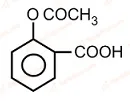
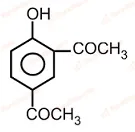
What is the product "C" after following reactions:

Figure for JEE Main 2014 Chemistry question on Preparation of alcohols
  1. A
    Figure for JEE Main 2014 Chemistry question on Preparation of alcohols
  2. B
    Figure for JEE Main 2014 Chemistry question on Preparation of alcohols
  3. C
    Figure for JEE Main 2014 Chemistry question on Preparation of alcohols
  4. D
    Figure for JEE Main 2014 Chemistry question on Preparation of alcohols
Q57Preparation of aldehydes and ketonesTRANSCRIBED

In the reaction, CH3COOH→LiAlH4A→PCl5B→Alc. KOHCCH_3COOH \xrightarrow{LiAlH_4} A \xrightarrow{PCl_5} B \xrightarrow{\text{Alc. KOH}} C, the product C is:

  1. A

    Acetaldehyde

  2. B

    Acetylene

  3. C

    Ethylene

  4. D

    Acetyl chloride

Q58Reactions and tests of aminesTRANSCRIBED

On heating an aliphatic primary amine with chloroform and ethanolic potassium hydroxide, the organic compound formed is:

  1. A

    An alkanol

  2. B

    An alkanediol

  3. C

    An alkyl cyanide

  4. D

    An alkyl isocyanide

Q59Important polymers and their monomersTRANSCRIBED

Which among the following is classified as a condensation polymer?

  1. A

    Dacron

  2. B

    Neoprene

  3. C

    Teflon

  4. D

    Acrylonitrile

Q60Vitamins and hormonesTRANSCRIBED

Which one of the following bases is not present in DNA?

  1. A

    Quinoline

  2. B

    Adenine

  3. C

    Cytosine

  4. D

    Thymine

NEXT IN THIS PAPER →Maths, Q61 onwards