Q31Electromagnetic radiation, Planck's quantum theory and photoelectric effectTRANSCRIBED
The ionization energy of gaseous Na atoms is 495.5 kJ mol−1. The lowest possible frequency of light that ionizes a sodium atom is (h = 6.626×10⁻³⁴ Js, NA = 6.022×10²³ mol−1)
- A
1.24×10¹⁵ s−1
- B
7.50×10⁴ s−1
- C
4.76×10¹⁴ s−1
- D
3.15×10¹⁵ s−1
Q32Atomic and ionic radiiTRANSCRIBED
Which one of the following has the largest ionic radius?
- A
- B
- C
- D
Q33Molecular orbital theory of diatomic speciesTRANSCRIBED
Which one of the following molecules is paramagnetic?
- A
- B
- C
- D
Q34Graham's law of diffusion and effusionTRANSCRIBED
Sulphur dioxide and oxygen were allowed to diffuse through a porous partition. 20 dm3 of SO2 diffuses through the porous partition in 60 seconds. The volume of O2 in dm3 which diffuses under the similar condition in 30 seconds will be (atomic mass of sulphur = 32 u):
- A
- B
- C
- D
Q35Law of mass action and equilibrium constants Kc and KpTRANSCRIBED
For the decomposition of the compound, represented as NH2COONH4(s) ⇌ 2NH3(g) + CO2(g), the Kp = 2.9×10⁻⁵ atm3. If the reaction is started with 1 mole of the compound, the total pressure at equilibrium would be:
- A
7.66×10⁻² atm
- B
38.8×10⁻² atm
- C
5.82×10⁻² atm
- D
1.94×10⁻² atm
Q36Solubility product and common ion effectTRANSCRIBED
Zirconium phosphate [Zr3(PO4)4] dissociates into three zirconium cations of charge +4 and four phosphate anions of charge −3. If molar solubility of zirconium phosphate is denoted by s and its solubility product by Ksp then which of the following relationship between s and Ksp is correct?
- A
S={Ksp/6912}7
- B
S={Ksp/144}1/7
- C
S={Ksp/(6912)1/7}
- D
S=(Ksp/6912)1/7
Q37Balancing redox equationsTRANSCRIBED
How many electrons are involved in the following redox reaction?
Cr2O72− + Fe2+ + C2O42− → Cr3+ + Fe3+ + CO2 (Unbalanced)
- A
- B
- C
- D
Q38Balancing redox equationsTRANSCRIBED
Consider the reaction: H2SO3(aq) + Sn(aq)4+ + H2O(l) → Sn(aq)2+ + HSO4(aq)− + 3H(aq)+. Which of the following statements is correct?
- A
Sn4+ is the oxidizing agent because it undergoes oxidation
- B
Sn4+ is the reducing agent because it undergoes oxidation
- C
H2SO3 is the reducing agent because it undergoes reduction
- D
H2SO3 is the reducing agent because it undergoes oxidation
Q39Fajans' rules, polarisation and covalent characterTRANSCRIBED
Amongst LiCl, RbCl, BeCl2 and MgCl2 the compounds with the greatest and the least ionic character, respectively are:
- A
- B
- C
- D
Q40Group 14: trends and carbon allotropesTRANSCRIBED
Example of a three-dimensional silicate is:
- A
- B
- C
- D
Q41Group 13: general trends and inert pair effectTRANSCRIBED
Which of these statements is not true?
- A
LiAlH4 is versatile reducing agent in organic synthesis.
- B
NO+ is isoelectronic with O2
- C
Boron is always covalent in its compounds
- D
In aqueous solution, the Tl+ ion is much more stable than Tl (III)
Q42IUPAC nomenclature of organic compoundsTRANSCRIBED
The correct IUPAC name of the following compound is:
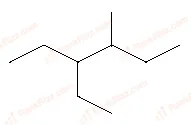
- A
- B
- C
- D
Q43Voids, radius ratio and structures of ionic solidsTRANSCRIBED
The total number of octahedral void(s) per atom present in a cubic close packed structure is:
- A
- B
- C
- D
Q44Relative lowering of vapour pressureTRANSCRIBED
For an ideal solution of two components A & B, which of the following is true?
- A
ΔHmixing>0 (zero)
- B
A − B interaction is stronger than A − A & B − B interactions
- C
A − A, B − B & A − B interactions are identical
- D
ΔHmixing<0 (zero)
Q45Abnormal molar mass and van't Hoff factorTRANSCRIBED
The observed osmotic pressure for a 0.10 M solution of Fe(NH4)2(SO4)2 at 25 °C is 10.8 atm. The expected and experimental (observed) values of Van't Hoff factor 'i' will be respectively; (R = 0.082 L atm k− mol−1)
- A
- B
- C
- D
Q46Relative lowering of vapour pressureTRANSCRIBED
Choose the correct statement with respect to the vapour pressure of a liquid among the following:
- A
Increases non-linearly with increasing temperature
- B
Decreases non-linearly with increasing temperature
- C
Decreases linearly with increasing temperature
- D
Increases linearly with increasing temperature
Q47Rate law, order and molecularityTRANSCRIBED
For the reaction, 3A + 2B → C + D, the differential rate law can be written as:
- A
+31dtd[A]=−dtd[C]=k[A]n[B]m
- B
31dtd[A]=dtd[C]=k[A]n[B]m
- C
−31dtd[A]=dtd[C]=k[A]n[B]m
- D
−dtd[A]=dtd[C]=k[A]n[B]m
Q48Occurrence of metals: minerals and oresTRANSCRIBED
Which one of the following ores is known as Malachite:
- A
- B
- C
- D
Q49Structural isomerism in complexesTRANSCRIBED
An octahedral complex with molecular composition M.5NH3.Cl.SO4 has two isomers, A and B. The solution of A gives a white precipitate with AgNO3 solution and the solution of B gives white precipitate with BaCl2 solution. The type of isomerism exhibited by the complex is:
- A
- B
- C
- D
Q50Valence bond theory of complexesTRANSCRIBED
Nickel (Z = 28) combines with a uninegative monodentate ligand to form a diamagnetic complex [NiL4]2−. The hybridisation involved and the number of unpaired electrons present in the complex are respectively:
- A
- B
- C
- D
Q51Oxidation numberTRANSCRIBED
Amongst the following, identify the species with an atom in +6 oxidation state.
- A
- B
- C
- D
Q52Nucleophilic substitution (SN1 and SN2)TRANSCRIBED
The major product formed when 1, 1, 1-trichloropropane is treated with aqueous potassium hydroxide is:
- A
- B
- C
- D
Q53Acidity and basicity of organic compoundsTRANSCRIBED
Which of the following compounds will not be soluble in sodium bicarbonate?
- A
- B
- C
- D
Q54Hydrogen bonding and intermolecular forcesTRANSCRIBED
Which one of the following substituents at para-position is most effective in stabilizing the phenoxide ion?
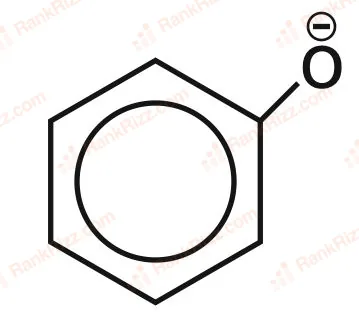
- A
- B
- C
- D
Q55EthersTRANSCRIBED
Williamson synthesis of ether is an example of:
- A
Nucleophilic substitution
- B
- C
- D
Electrophilic substitution
Q56Reactions and tests of aminesTRANSCRIBED
The final product formed when methylamine is treated with NaNO2 and HCl followed by hydrolysis is:
- A
- B
- C
- D
Q57Diazonium saltsTRANSCRIBED
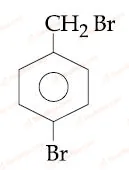
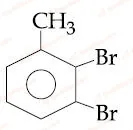
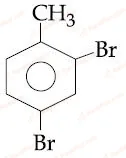
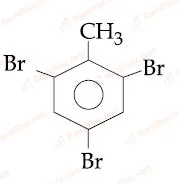
In a set of reactions p-nitrotoluene yielded a product E.
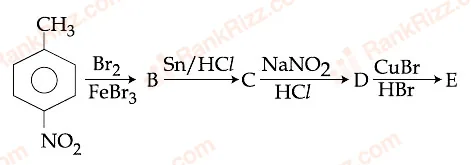
The product E would be:
- A
- B
- C
- D
Q58Important polymers and their monomersTRANSCRIBED
Which one of the following is an example of thermosetting polymer?
- A
- B
- C
- D
Q59Reactions of carboxylic acidsTRANSCRIBED
Among the following organic acids, the acid present in rancid butter is:
- A
- B
- C
- D
Q60Vitamins and hormonesTRANSCRIBED
The reason for double helical structure of DNA is the operation of:
- A
- B
Electrostatic attractions
- C
- D
Dipole-Dipole interactions