JEE Main 2014 Chemistry question — Hydrogen bonding and intermolecular forces
Which one of the following substituents at para-position is most effective in stabilizing the phenoxide ion?
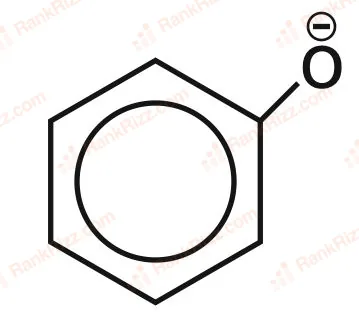
SOLUTION
(Option A): This is an electron-donating group through the (inductive) effect and hyperconjugation. It destabilizes the phenoxide ion.
(Option B): It can donate into the ring via the (mesomeric) effect. This makes it a strong electron-donating group that destabilizes the ion.
(Option C): This acetyl group is a strong electron-withdrawing group. It exerts both a effect and a powerful (resonance withdrawing) effect.
Because it is at the para-position, the negative charge from the phenoxide oxygen can be delocalized through the ring directly onto the oxygen of the carbonyl group. This is the most effective form of stabilization.
Tagged Hydrogen bonding and intermolecular forces. Machine-assigned, so read it as a strong shortlist rather than a verdict.