Q21Sulphur and its compoundsTRANSCRIBED
The correct statement(s) about is(are)
- A
bond lengths are equal.
- B
Thermal decomposition of is endothermic.
- C
is diamagnetic in nature.
- D
has a bentstructure.
The 20 Chemistry questions of JEE Advanced 2013 Paper 2, numbered across the whole paper. Pick an answer on any question to check it against the key. Free to read, nothing to download.
The correct statement(s) about is(are)
bond lengths are equal.
Thermal decomposition of is endothermic.
is diamagnetic in nature.
has a bentstructure.
Inthe nuclear transmutation
The carbon-based reduction method is NOT used for the extraction of
tin from
iron from
aluminium from
magnesium from
The thermal dissociation equilibrium is studied under different conditions.
is dependent on T
K is independent of the initial amount of
Kis dependenton the pressure of at a given T
is independentof the catalyst, if any
The of is at 298 K. The solubility (in ) of in a solution is
In the following reaction, the product(s) formed is(are)
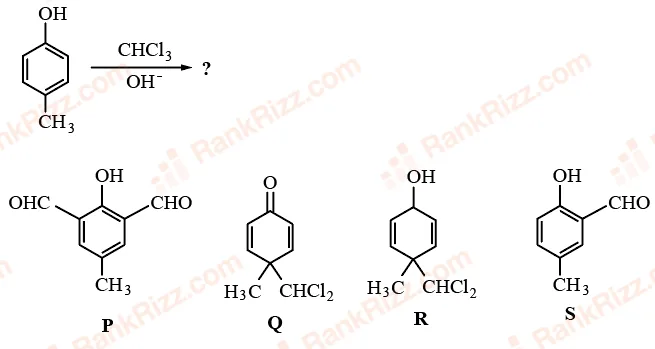
P (major)
Q (minor)
R (minor)
S (major)
The major product(s) of the following reaction is(are)
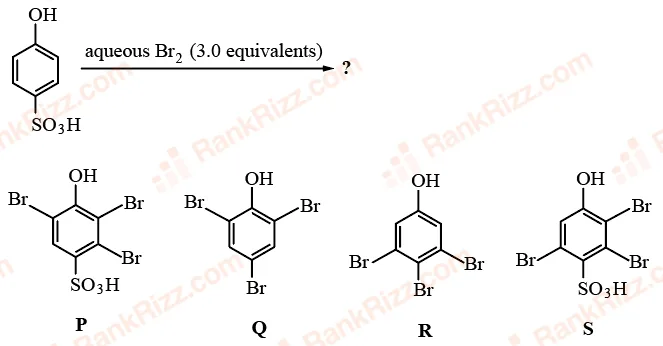
P
Q
R
S
After completion of the reactions (I and IT), the organic compound(s) in the reaction mixtures is(are)
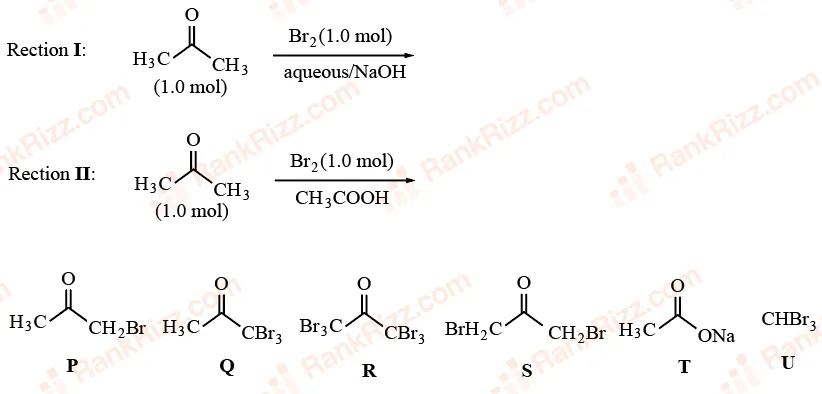
Reaction I:P and Reaction II:P
Reaction I:U, acetone and Reaction II:Q, acetone
Reaction I:7, U, acetone and Reaction II:P
Reaction I:R, acetone and Reaction II:S, acetone
The succeeding operations that enable this transformation of states are
Heating, cooling, heating, cooling
Cooling, heating, cooling, heating
Heating, cooling, cooling, heating
Cooling, heating, heating, cooling
The pair of isochoric processes among the transformation of states is
K to L and L to M
L to M and N to K
L to M and M to N
M to N and N to K
P and Q,respectively, are the sodium salts of
hypochlorus and chloric acids
hypochlorus and chlorus acids
chloric and perchloric acids
chloric and hypochlorus acids
R, S and T, respectively, are
and
and
and
and
The precipitate P contains
The coloured solution S contains
Compounds formed from P and @Q are, respectively
Optically active S and optically active pair (T,U)
Optically inactive S and optically inactive pair (T, U)
Optically active pair (T, U) and optically active S
Optically inactive pair (T, U) and optically inactive S
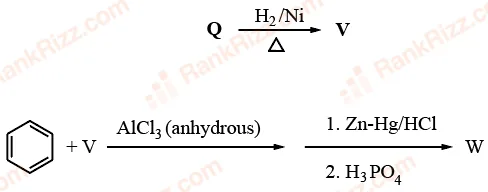
In the following reaction sequences V and W are, respectively
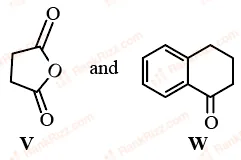
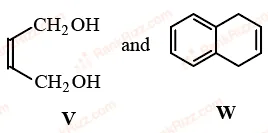
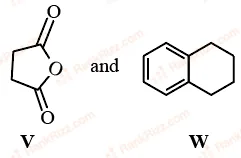
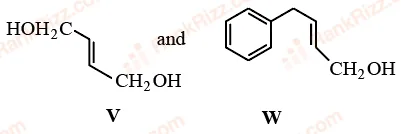
Match the chemical conversions in List I with the appropriate reagents in List II and select the correct answer using the code given below the lists:
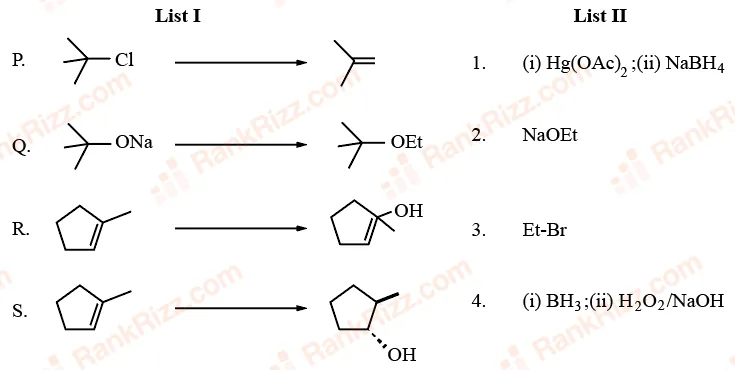
P-2, Q-3, R-1, S-4
P-3, Q-2, R-1, S-4
P-2, Q-3, R-4, S-1
P-3, Q-2, R-4, S-1
The unbalanced chemical reactions given in List I show missing reagent or condition (?) which are provided in List II. Match List I with List Il and select the correct answer using the code given below the lists :
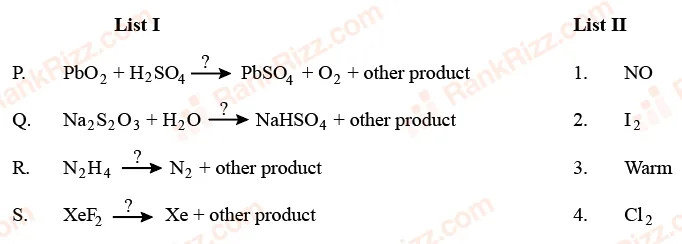
P-4, Q-2, R-3, S-1
P-3, Q-2, R-1, S-4
P-1, Q-4, R-2, S-3
P-3, Q-4, R-2, S-1
The standard reduction potential data at is given below.
;
;
;
;
;
;
;
Match of the redox pair in List I with the values given in List II and select the correct answer using the code given below the lists:
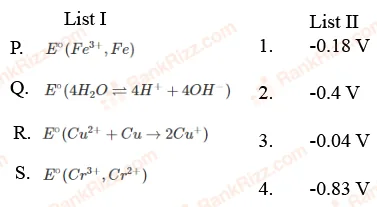
P-4, Q-1, R-2, S-3
P-2, Q-3, R-4, S-1
P-1, Q-2, R-3, S-4
P-3, Q-4, R-1, S-2
An aqueous solution of X is added slowly to an aqueous solution of Y as shown in List J. The variation in conductivity of these reactions is given in List II. Match List I with List II and select the correct answer using the code given below the lists:
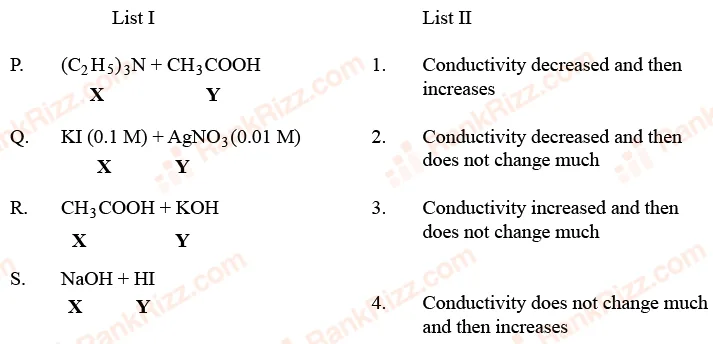
P-3, Q-4, R-2, S-1
P-4, Q-3, R-2, S-1
P-2, Q-3, R-4, S-1
P-1, Q-4, R-3, S-2