Q23Redox titrationsTRANSCRIBED
Consider a titration of potassium dichromate solution with acidified Mohr’s salt solution using diphenylamine as indicator. The number of moles of Mohr’s salt required per mole of dichromate is
- A
3
- B
4
- C
5
- D
6
The 22 Chemistry questions of JEE Advanced 2007 Paper 2, numbered across the whole paper. Pick an answer on any question to check it against the key. Free to read, nothing to download.
Consider a titration of potassium dichromate solution with acidified Mohr’s salt solution using diphenylamine as indicator. The number of moles of Mohr’s salt required per mole of dichromate is
3
4
5
6
Among the following metal carbonyls, the C-O bond order is lowest in
A solution of a metal ion when treated with KI gives a red precipitate which dissolves in excess KI to give a colourless solution. Moreover, the solution of metal ion on treatment with a solution of cobalt(II) thiocyanate gives rise to a deep blue crystalline precipitate. The metal ion is
Cyclohexene on ozonolysis followed by reaction with zinc dust and water gives compound E. Compound E on further treatment with aqueous KOH yields compound F. Compound F is
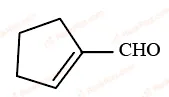
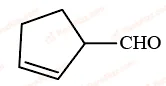
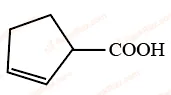
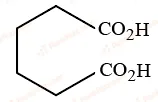
The numberof stereoisomers obtained by bromination of trans-2-butene is
1
2
3
4
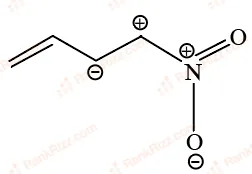
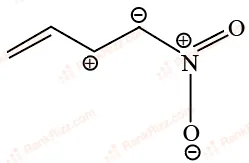
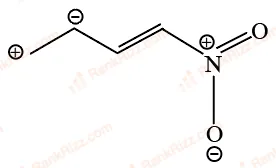
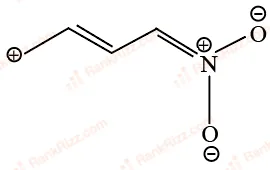
Among the following, the least stable resonance structure is
A positron is emitted from . The ratio of the atomic mass and atomic number of the resulting nuclide is
For the process (1 bar, 373 K) (1 bar, 373 K), the correct set of thermodynamic parameters is
Consider a reaction Products. When concentration of both the reactants G and is doubled, the rate increases by eight times. However, when concentration of G is doubled keeping the concentration of H fixed, the rate is doubled. The overall order of the reaction is
0
1
2
3
STATEMENT-1: Alkali metals dissolve in liquid ammoniato give blue solutions.
because
STATEMENT-2: Alkali metals in liquid ammonia give solvated species of the type (M = alkali metals).
Statement-1 is True, Statement-2 is True; Statement-2 is a correct explanation for Statement-1
Statement-1 is True, Statement-2 is True; Statement-2 is NOT a correct explanation for Statement-1
Statement-1 is True, Statement-2 is False
Statement-1 is False, Statement-2 is True
STATEMENT-1: Glucose gives a reddish-brown precipitate with Fehling’s solution.
because
STATEMENT-2: Reaction of glucose with Fehling’s solution gives CuO and gluconic acid.
Statement-1 is True, Statement-2 is True; Statement-2 is a correct explanation for Statement-1
Statement-1 is True, Statement-2 is True; Statement-2 is NOT a correct explanation for Statement-1
Statement-1 is True, Statement-2 is False
Statement-1 is False, Statement-2 is True
STATEMENT-1: Molecules that are not superimposable on their mirror images are chiral.
because
STATEMENT-2: All chiral molecules have chiral centres.
Statement-1 is True, Statement-2 is True; Statement-2 is a correct explanation for Statement-1
Statement-1 is True, Statement-2 is True; Statement-2 is NOT a correct explanation for Statement-1
Statement-1 is True, Statement-2 is False
Statement-1 is False, Statement-2 is True
STATEMENT-1: Band gap in germanium is small.
because
STATEMENT-2: The energy spread of each germanium atomic energy level is infinitesimally small.
Statement-1 is True, Statement-2 is True; Statement-2 is a correct explanation for Statement-1
Statement-1 is True, Statement-2 is True; Statement-2 is NOT a correct explanation for Statement-1
Statement-1 is True, Statement-2 is False
Statement-1 is False, Statement-2 is True
Among the following, identify the correct statement.
Chloride ion is oxidised by
is oxidised by iodine
Iodide ion is oxidised by chlorine
is oxidised by chlorine
While is stable, is not stable in acid solution because
oxidises to
oxidises both to and to
oxidises to
oxidises to
Sodium fusion extract, obtained from aniline, on treatment with iron(II) sulphate and in presence of air gives a Prussian blue precipitate. The blue colour is due to the formation of
Which one of the following reagents is used in the above reaction?
The electrophile in this reaction is
The structure of the intermediate I is
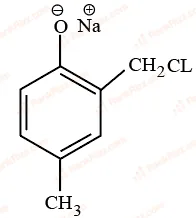
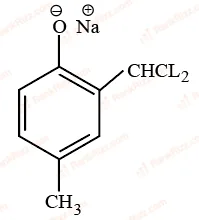
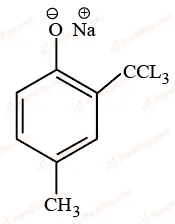
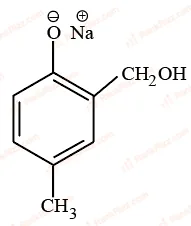
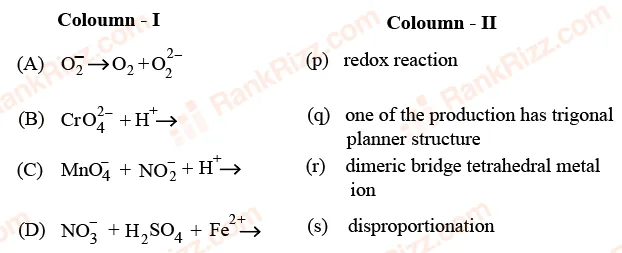
Match the reactions in Column I with nature of the reactions/type of the products in Column II. Indicate your answer by darkening the appropriate bubbles of the matrix given in the ORS.
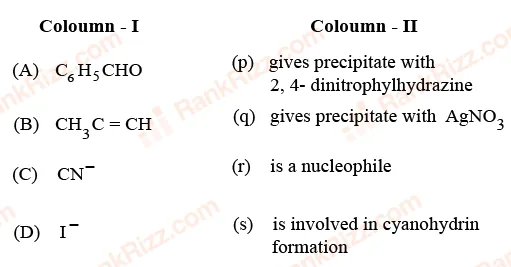
Match the compounds/ions in Column I with their properties/reactions in Column II. Indicate your answer by darkening the appropriate bubbles of the matrix given in the ORS.
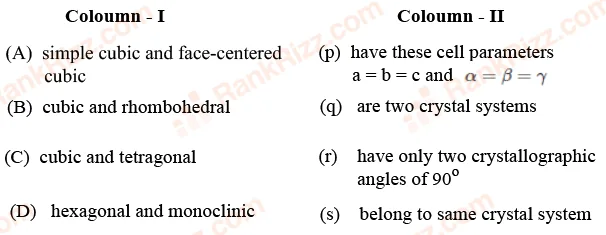
Match the crystal system/unit cells mentioned in Column I with their characteristic features mentioned in Column II. Indicate your answer by darkening the appropriate bubbles of the matrix given in the ORS.