JEE MAIN 2023 · 01 FEB S2Spring-block oscillationsTRANSCRIBED
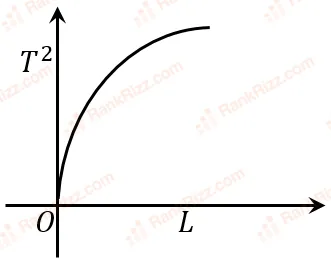
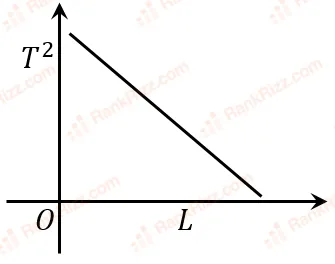
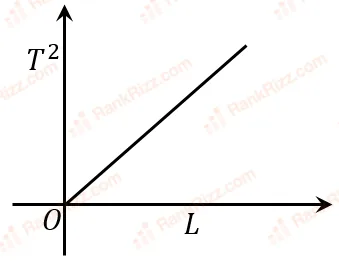
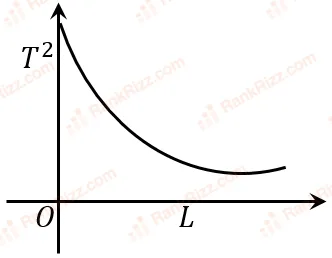
Choose the correct length () versus square of time period () graph for a simple pendulum executing simple harmonic motion.
- A
Option (1)
- B
Option (2)
- C
Option (3)
- D
Option (4)
Every Oscillations question JEE Main has set, grouped by the idea it tests rather than the order of the syllabus. 182 questions across 7 distinct ideas. Free to read, answer key on every one.
Questions
182
Distinct ideas
7
Share of marks
2.8%
Difficulty
MEDIUM
A chapter is not one subject — it is a handful of procedures the examiner reuses. These are the ones Oscillations questions actually test.
41–60 OF 182 · NEWEST FIRST
Choose the correct length () versus square of time period () graph for a simple pendulum executing simple harmonic motion.
Option (1)
Option (2)
Option (3)
Option (4)
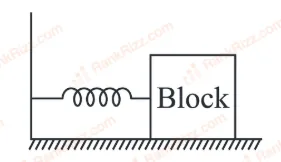
For a simple harmonic motion in a mass spring system shown, the surface is frictionless. When the mass of the block is kg, the angular frequency is . When the mass block is kg the angular frequency is . The ratio is:
For a periodic motion represented by the equation the amplitude of the motion is
1
0.5
2
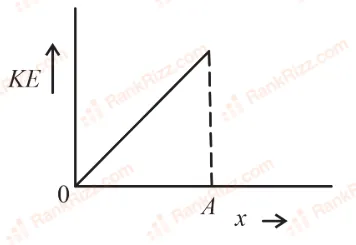
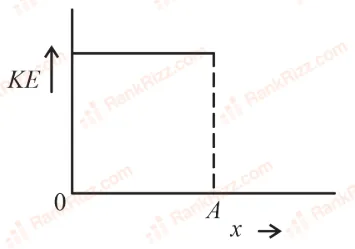
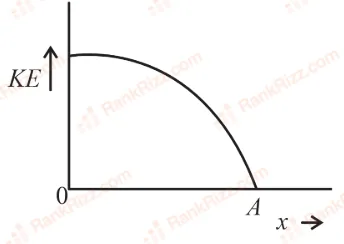
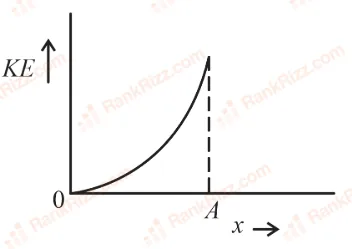
The variation of kinetic energy (KE) of a particle executing simple harmonic motion with the displacement (x) starting from mean position to extreme position (A) is given by
The maximum potential energy of a block executing simple harmonic motion is 25 J. A is amplitude of oscillation. At , the kinetic energy of the block is
37.5 J
9.75 J
18.75 J
12.5 J
A particle is executing simple harmonic motion (SHM). The ratio of potential energy and kinetic energy of the particle when its displacement is half of its amplitude will be
A particle executes SHM of amplitude . The distance from the mean position when its kinetic energy becomes equal to its potential energy is:
A particle executes simple harmonic motion between and . If time taken by particle to go from to is 2 s; then time taken by particle in going from to is:
3 s
2 s
1.5 s
4 s
In a linear Simple Harmonic Motion (SHM)
(A) Restoring force is directly proportional to the displacement.
(B) The acceleration and displacement are opposite in direction.
(C) The velocity is maximum at mean position.
(D) The acceleration is minimum at extreme points.
Choose the correct answer from the options given below:
(C) and (D) only
(A), (C) and (D) only
(A), (B) and (C) only
(A), (B) and (D) only
For particle revolving round the centre with radius of circular path and angular velocity , as shown in below figure, the projection of on the -axis at time is
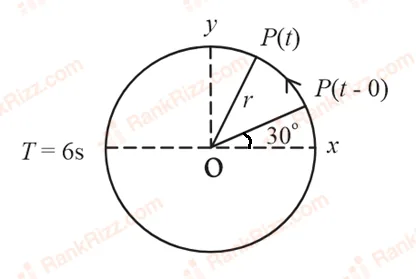
A particle executes S.H.M. of amplitude along -axis. At , the position of the particle is and it moves along positive -axis. The displacement of particle in time is , then the value will be
Which graph represents the difference between total energy and potential energy of a particle executing SHM vs its distance from mean position?
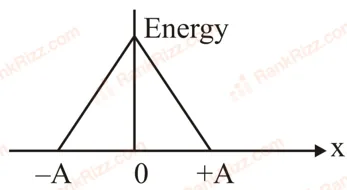
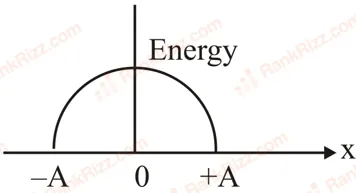
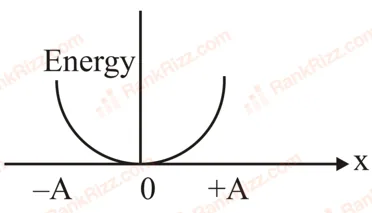
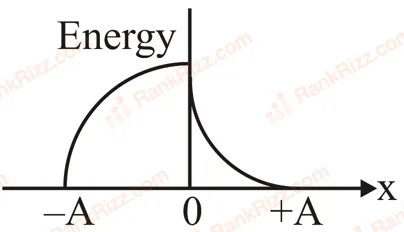
At a given point of time the value of displacement of a simple harmonic oscillator is given as . If amplitude is cm and kinetic energy at that time is J, the value of force constant is N m. The value of is _____.
The general displacement of a simple harmonic oscillator is . Let be its time period. The slope of its potential energy - time curve will be maximum when . The value of is ______.
A mass , attached to free end of a spring executes SHM with a period of 1 s. If the mass is increased by 3 kg, the period of oscillation increases by one second. The value of mass is _____ kg.
A particle of mass g executes a simple harmonic motion under a periodic force N. The particle attains a maximum speed of m s during its oscillation. The amplitude of the motion is ______ cm.
A simple pendulum with length 100 cm and bob of mass 250 g is executing S.H.M of amplitude 10 cm. The maximum tension in the string is found to be N. The value of is ______.
The amplitude of a particle executing SHM is 3 cm. The displacement at which its kinetic energy will be 25% more than the potential energy is: _____ cm.
The velocity of a particle executing SHM varies with displacement as . The time period of oscillations is s. The value of is ______. [Take ]
A rectangular block of mass 5 kg attached to a horizontal spiral spring executes simple harmonic motion of amplitude 1 m and time period 3.14 s. The maximum force exerted by spring on block is _______ N.
OTHER PHYSICS CHAPTERS