JEE MAIN 2026 · 02 APR S1Bohr model of hydrogen-like speciesTRANSCRIBED
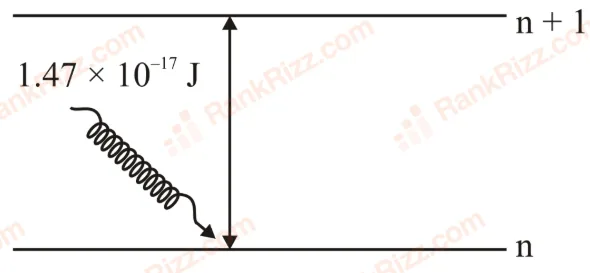
What is the energy (in J atom) required for the following process? (Take the ionization energy for the H atom in the ground state as J atom)
- A
- B
- C
- D
Every JEE Main question on Bohr model of hydrogen-like species, one of the ideas inside Atomic Structure: 35 questions from 2006–2026, 20 of them in the last five years. Newest first, answer key on every one. Free to read.
Questions
35
Years asked
15
Since
2006
Of the chapter
15%
Questions on Bohr model of hydrogen-like species in each year it was asked, the latest 12 of 15.
1–20 OF 35 · NEWEST FIRST
What is the energy (in J atom) required for the following process? (Take the ionization energy for the H atom in the ground state as J atom)
Using Bohr's model, calculate the ratio of the magnetic fields generated due to the motion of the electrons in the 2nd and 4th orbits of hydrogen atom _________.
The species having identical radii according to the Bohr's theory are:
A. H (first orbit)
B. He (first orbit)
C. He (Second orbit)
D. Li (first orbit)
E. Be (Second orbit)
Choose the correct answer from the options given below:
A, C Only
A, E Only
B, E Only
C, D Only
The Bohr radius of a hydrogen like species is 70.53 pm. The species and the stationary state (n) are respectively (Given : Hydrogen atom Bohr radius is 52.9 pm)
Li, 3
He, 3
He, 2
Li, 2
The energy required by electrons, present in the first Bohr orbit of hydrogen atom to J be excited to second Bohr orbit is ______ .
Given
Which of the following statements regarding the energy of the stationary state is true in the following one - electron systems?
for third orbit of ion
for second orbit of H atom.
for second orbit of ion
for first orbit of ion
Radius of the first excited state of Helium ion is given as : radius of first stationary state of hydrogen atom.
Which of the following postulate of Bohr's model of hydrogen atom is not in agreement with quantum mechanical model of an atom ?
An atom in a stationary state does not emit electromagnetic radiation as long as it stays in the same state
An atom can take only certain distinct energies , etc. These allowed states of constant energy are called the stationary states of atom
When an electron makes a transition from a higher energy stationary state to a lower energy stationary state, then it emits a photon of light
The electron in a H atom's stationary state moves in a circle around the nucleus
According to Bohr's model of hydrogen atom, which of the following statement is incorrect?
Radius of 3rd orbit is nine times larger than that of 1st orbit.
Radius of 8th orbit is four times larger than that of 4th orbit.
Radius of 6th orbit is three time larger than that of 4th orbit.
Radius of 4th orbit is four times larger than that of 2nd orbit.
For hydrogen like species, which of the following graphs provides the most appropriate representation of E vs Z plot for a constant n ? [E: Energy of the stationary state, Z : atomic number, n = principal quantum number]
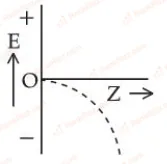
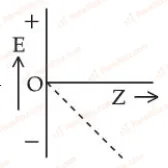
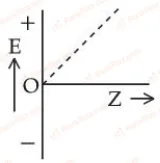
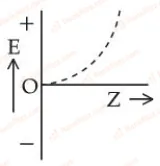
The energy of an electron in first Bohr orbit of H-atom is -13.6 eV. The magnitude of energy value of electron in the first excited state of is _____ eV. (nearest integer value)
The value of Rydberg constant is . The velocity of electron having mass in Bohr's first orbit of hydrogen atom ______ (nearest integer).
For hydrogen atom, energy of an electron in first excited state is , K.E. of the same electron of hydrogen atom is . Value of is ___________ . (Nearest integer)
The energy of an electron in the first Bohr orbit of hydrogen atom is J. Its energy in the third Bohr orbit is _____.
th of the value
of this value
Three times of this value
One third of this value
The radius of the 2 orbit of Li is . The expected radius of the 3 orbit of Be is
Given below are two statements
Statement I : According to Bohr's model of hydrogen atom, the angular momentum of an electron in a given stationary state is quantised.
Statement II : The concept of electron in Bohr's orbit, violates the Heisenberg uncertainty principle. In the light of the above statements, choose the most appropriate answer from the options given below
Statement I is incorrect but Statement II is correct
Both Statement I and Statement II are correct
Both Statement I and Statement II are incorrect
Statement I is correct but Statement II is incorrect
Assume that the radius of the first Bohr orbit of hydrogen atom is . The radius of the third Bohr orbit of He is ______ picometer. (Nearest Integer)
The electron in the n orbit of Li is excited to (n+1) orbit using the radiation of energy J (as shown in the diagram). The value of n is _______ Given: J
If the radius of the Bohr's orbit of hydrogen atom is and the radius of Bohr's orbit is . Then
The longest wavelength of light that can be used for the ionisation of lithium ion is m. The value of is ______ (Nearest Integer)
(Given : Energy of the electron in the first shell of the hydrogen atom is J; Js and ms)
RELATED ATOMIC STRUCTURE TOPICS