RankRizz

JEE Advanced 2017 Paper 1: Chemistry

The 18 Chemistry questions of JEE Advanced 2017 Paper 1, numbered across the whole paper. Pick an answer on any question to check it against the key. Free to read, nothing to download.

Chemistry

Q19First law: work, heat and internal energyTRANSCRIBED

An ideal gas is expanded from (p1,V1,T1)(p_1, V_1, T_1) to (p2,V2,T2)(p_2, V_2, T_2) under different conditions. The correct statement(s) among the following is(are)

  1. A

    The work done on the gas is maximum when it is compressed irreversibly from (p2,V2)(p_2, V_2) to (p1,V1)(p_1, V_1) against constant pressure p1p_1

  2. B

    If the expansion is carried out freely, it is simultaneously both isothermal as well as adiabatic

  3. C

    The work done by the gas is less when it is expanded reversibly from V1V_1 to V2V_2 under adiabatic conditions as compared to that when expanded reversibly from V1V_1 to V2V_2 under isothermal conditions

  4. D

    The change in internal energy of the gas is (i) zero, if it is expanded reversibly with T1=T2T_1 = T_2, and (ii) positive, if it is expanded reversibly under adiabatic conditions with T1≠T2T_1 \neq T_2
Q20Relative lowering of vapour pressureTRANSCRIBED

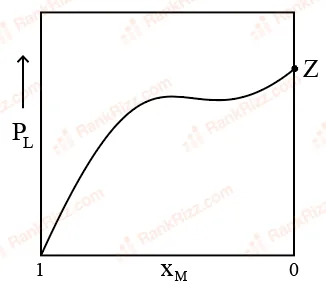
For a solution formed by mixing liquids L and M, the vapour pressure of L plotted against the mole fraction of M in solution is shown in the following figure. Here xLx_L and xMx_M represent mole fractions of L and M, respectively, in the solution. The correct statement(s) applicable to this system is(are)

Figure for JEE Advanced 2017 Chemistry question on Relative lowering of vapour pressure
  1. A

    The point Z represents vapour pressure of pure liquid M and Raoult’s law is obeyed from xL=0x_L = 0 to xL=1x_L = 1

  2. B

    The point Z represents vapour pressure of pure liquid L and Raoult’s law is obeyed when xL→1x_L \rightarrow 1

  3. C

    The point Z represents vapour pressure of pure liquid M and Raoult’s law is obeyed when xL→0x_L \rightarrow 0

  4. D

    Attractive intermolecular interactions between L-L in pure liquid L and M-M in pure liquid M are stronger than those between L-M when mixed in solution

Q21Oxoacids of halogens and interhalogen compoundsTRANSCRIBED

The correct statement(s) about the oxoacids, HClO4HClO_4 and HClOHClO, is(are)

  1. A

    The central atom in both HClO4HClO_4 and HClOHClO is sp3sp^3 hybridized

  2. B

    HClO4HClO_4 is more acidic than HClOHClO because of the resonance stabilization of its anion

  3. C

    HClO4HClO_4 is formed in the reaction between Cl2Cl_2 and H2OH_2O

  4. D

    The conjugate base of HClO4HClO_4 is weaker base than H2OH_2O

Q22Oxoacids of halogens and interhalogen compoundsTRANSCRIBED

The colour of the X2X_2 molecules of group 17 elements changes gradually from yellow to violet down the group. This is due to

  1. A

    the physical state of X2X_2 at room temperature changes from gas to solid down the group

  2. B

    decrease in ionization energy down the group

  3. C

    decrease in π∗−σ∗\pi^* - \sigma^* gap down the group

  4. D

    decrease in HOMO-LUMO gap down the group

Q23Colour and magnetic behaviour of complexes from CFTTRANSCRIBED

Addition of excess aqueous ammonia to a pink coloured aqueous solution of MCl2.6H2O(X)MCl_2.6H_2O(X) and NH4ClNH_4Cl gives an octahedral complex Y in the presence of air. In aqueous solution, complex Y behaves as 1:3 electrolyte. The reaction of X with excess HCl at room temperature results in the formation of a blue coloured complex Z. The calculated spin only magnetic moment of X and Z is 3.87 B.M., whereas it is zero for complex Y. Among the following options, which statement(s) is(are) correct?

  1. A

    Addition of silver nitrate to Y gives only two equivalents of silver chloride

  2. B

    The hybridization of the central metal ion in Y is d2sp3d^2sp^3

  3. C

    Z is a tetrahedral complex

  4. D

    When X and Z are in equilibrium at 0∘C0^\circ C, the colour of the solution is pink

Q24IUPAC nomenclature of organic compoundsTRANSCRIBED

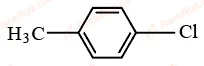
The IUPAC name(s) of the following compound is(are)

Figure for JEE Advanced 2017 Chemistry question on IUPAC nomenclature of organic compounds
  1. A

    1-chloro-4-methylbenzene

  2. B

    4-chlorotoluene

  3. C

    4-methylchlorobenzene

  4. D

    1-methyl-4-chlorobenzene

Q25Structural isomerismTRANSCRIBED

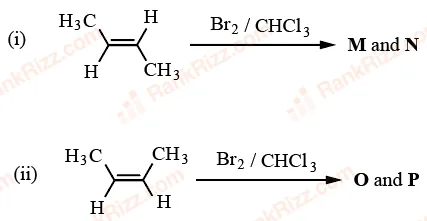
The correct statement(s) for the following addition reactions is(are)

Figure for JEE Advanced 2017 Chemistry question on Structural isomerism
  1. A

    O and P are identical molecules

  2. B

    (M and O) and (N and P) are two pairs of diastereomers

  3. C

    (M and O) and (N and P) are two pairs of enantiomers

  4. D

    Bromination proceeds through trans-addition in both the reactions

Q26Voids, radius ratio and structures of ionic solidsTRANSCRIBED

A crystalline solid of a pure substance has a face-centred cubic structure with a cell edge of 400 pm. If the density of the substance in the crystal is 8 g cm−3cm^{-3}, then the number of atoms present in 256 g of the crystal is N×1024N \times 10^{24}. The value of N is

Q27Conductance, conductivity and molar conductivityTRANSCRIBED

The conductance of a 0.0015 M aqueous solution of a weak monobasic acid was determined by using a conductivity cell consisting of platinized Pt electrodes. The distance between the electrodes is 120 cm with an area of cross section of 1cm21 cm^2. The conductance of this solution was found to be 5×10⁻⁷S5 \times 10^{-7} S. The pH of the solution is 4. The value of limiting molar conductivity (⋀m0)\left(\bigwedge_m^0\right) of this weak monobasic acid in aqueous solution is Z×102Scm−1mol−1Z \times 10^2 S cm^{-1} mol^{-1}. The value of Z is

Q28VSEPR theory and shapes of molecules and ionsTRANSCRIBED

The sum of the number of lone pairs of electrons on each central atom in the following species is
[TeBr6]2−,[BrF2]+,SNF3\left[TeBr_6 \right]^{2−}, \left[BrF_2 \right]^+, SNF_3, and [XeF3]−\left[XeF_3 \right]^−
(Atomic numbers: N = 7, F = 9, S = 16, Br = 35, Te = 52, Xe = 54)

Q29Molecular orbital theory of diatomic speciesTRANSCRIBED

Among H2,He2+,Li2,Be2,B2,C2,N2,O2−H_2, He_2^+, Li_2, Be_2, B_2, C_2, N_2, O_2^−, and F2F_2, the number of diamagnetic species is
(Atomic numbers: H = 1, He = 2, Li = 3, Be = 4, B = 5, C = 6, N = 7, O = 8, F = 9)

Q30AromaticityTRANSCRIBED

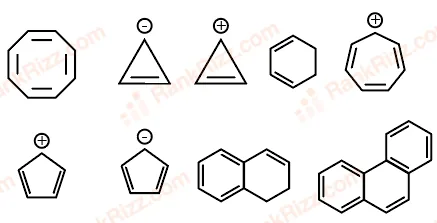
Among the following, the number of aromatic compound(s) is

Figure for JEE Advanced 2017 Chemistry question on Aromaticity
Q31Radial and angular nodes and orbital energiesTRANSCRIBED

For the given orbital in Column 1, the only CORRECT combination for any hydrogen-like species is

  1. A

    (I) (ii) (S)

  2. B

    (IV) (iv) (R)

  3. C

    (II) (ii) (P)

  4. D

    (III) (iii) (P)

Q32Radial and angular nodes and orbital energiesTRANSCRIBED

For hydrogen atom, the only CORRECT combination is

  1. A

    (I) (i) (S)

  2. B

    (II) (i) (Q)

  3. C

    (I) (i) (P)

  4. D

    (I) (iv) (R)

Q33Radial and angular nodes and orbital energiesTRANSCRIBED

For He+He^+ ion, the only INCORRECT combination is

  1. A

    (I) (i) (R)

  2. B

    (II) (ii) (Q)

  3. C

    (I) (iii) (R)

  4. D

    (I) (i) (S)

Q34Reactions of carboxylic acidsTRANSCRIBED

For the synthesis of benzoic acid, the only CORRECT combination is

  1. A

    (II) (i) (S)

  2. B

    (IV) (ii) (P)

  3. C

    (I) (iv) (Q)

  4. D

    (III) (iv) (R)

Q35Reactions of carboxylic acidsTRANSCRIBED

The only CORRECT combination that gives two different carboxylic acids is

  1. A

    (II) (iv) (R)

  2. B

    (IV) (iii) (Q)

  3. C

    (III) (iii) (P)

  4. D

    (I) (i) (S)

Q36Reactions of carboxylic acidsTRANSCRIBED

The only CORRECT combination in which the reaction proceeds through radical mechanism is

  1. A

    (III) (ii) (P)

  2. B

    (IV) (i) (Q)

  3. C

    (II) (iii) (R)

  4. D

    (I) (ii) (R)

NEXT IN THIS PAPER →Maths, Q37 onwards