RankRizz

JEE Advanced 2012 Paper 1: Chemistry

The 20 Chemistry questions of JEE Advanced 2012 Paper 1, numbered across the whole paper. Pick an answer on any question to check it against the key. Free to read, nothing to download.

Chemistry

Q21Classification, functional groups and hybridisation in organic compoundsTRANSCRIBED

Inallene (C3H4)(C_3H_4), the type(s) of hybridisation of the carbon atomsis (are)

  1. A

    spsp and sp3sp^3

  2. B

    spsp and sp2sp^2

  3. C

    only sp2sp^2

  4. D

    sp2sp^2 and sp3sp^3

Q22Real gases, compressibility factor and van der Waals equationTRANSCRIBED

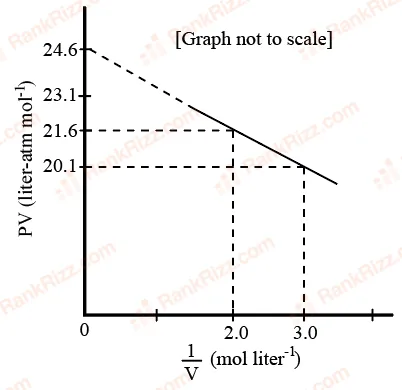
For one mole of a van der Waals gas when b= 0 and T= 300 K, the PV vs. 1/V plot is shown below. The value of the van der Waals constant a (atm.liter2mol−2)(atm.liter^2 mol^{-2}) is

Figure for JEE Advanced 2012 Chemistry question on Real gases, compressibility factor and van der Waals equation
  1. A

    1.0

  2. B

    4.5

  3. C

    1.5

  4. D

    3.0

Q23Aldol condensation, Cannizzaro and related reactionsTRANSCRIBED

The number of optically active products obtained from the complete ozonolysis of the given compound is
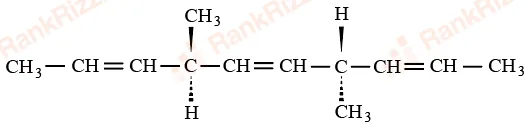
Figure for JEE Advanced 2012 Chemistry question on Aldol condensation, Cannizzaro and related reactions
  1. A

    0

  2. B

    1

  3. C

    2

  4. D

    4

Q24Voids, radius ratio and structures of ionic solidsTRANSCRIBED

A compound MpXqM_pX_q has cubic close packing (ccp) arrangement of X. Its unit cell structure is shown below. The empirical formula of the compound is
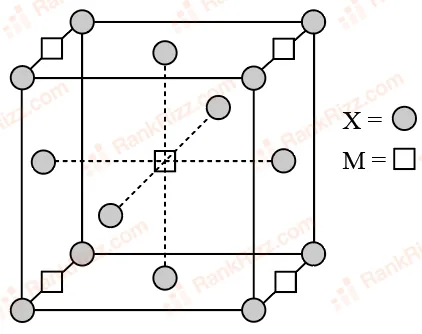
Figure for JEE Advanced 2012 Chemistry question on Voids, radius ratio and structures of ionic solids
  1. A

    MXMX

  2. B

    MX2MX_2

  3. C

    M2XM_2X

  4. D

    M5X14M_5X_{14}

Q25Aldol condensation, Cannizzaro and related reactionsTRANSCRIBED

The number of aldol reaction(s) that occurs in the given transformation is
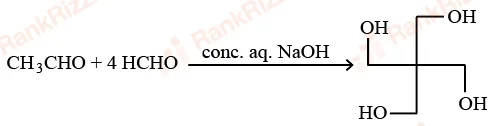
Figure for JEE Advanced 2012 Chemistry question on Aldol condensation, Cannizzaro and related reactions
  1. A

    1

  2. B

    2

  3. C

    3

  4. D

    4

Q26Potassium dichromate and potassium permanganateTRANSCRIBED

The colour oflight absorbed by an aqueous solution of CuSO4CuSO_4 is

  1. A

    orange-red

  2. B

    blue-green

  3. C

    yellow

  4. D

    violet

Q27Reactions of carboxylic acidsTRANSCRIBED

The carboxyl functional group (-COOH) is present in

  1. A

    picric acid

  2. B

    barbituric acid

  3. C

    ascorbic acid

  4. D

    aspirin

Q28Bohr model of hydrogen-like speciesTRANSCRIBED

The kinetic energy of an electron in the second Bohr orbit of a hydrogen atom is
[a0a_0 is Bohr radius]

  1. A

    h24π2ma02\frac{h^2}{4 \pi^2 m a_{0}^{2}}

  2. B

    h216π2ma02\frac{h^2}{16 \pi^2 m a_{0}^{2}}

  3. C

    h232π2ma02\frac{h^2}{32 \pi^2 m a_{0}^{2}}

  4. D

    h264π2ma02\frac{h^2}{64 \pi^2 m a_{0}^{2}}

Q29Phosphorus and its compoundsTRANSCRIBED

Which ordering of compoundsis according to the decreasing order of the oxidation state of nitrogen?

  1. A

    HNO3,NO,NH4Cl,N2HNO_3, NO, NH_4Cl, N_2

  2. B

    HNO3,NO,N2,NH4ClHNO_3, NO, N_2, NH_4Cl

  3. C

    HNO3,NH4Cl,NO,N2HNO_3, NH_4Cl, NO, N_2

  4. D

    NO,HNO3,NH4Cl,N2NO, HNO_3, NH_4Cl, N_2

Q30IUPAC nomenclature of coordination compoundsTRANSCRIBED

As per IUPAC nomenclature, the nameof the complex [CO(H2O)4(NH3)2]Cl3[CO(H_2O)_4(NH_3)_2]Cl_3 is

  1. A

    Tetraaquadiaminecobalt (III) chloride

  2. B

    Tetraaquadiamminecobalt (III) chloride

  3. C

    Diaminetetraaquacobalt (III) chloride

  4. D

    Diamminetetraaquacobalt (III) chloride

Q31Reactions of carboxylic acidsTRANSCRIBED

Identify the binary mixture(s) that can be separatedinto individual compounds, by differential extraction, as shown in the given scheme.
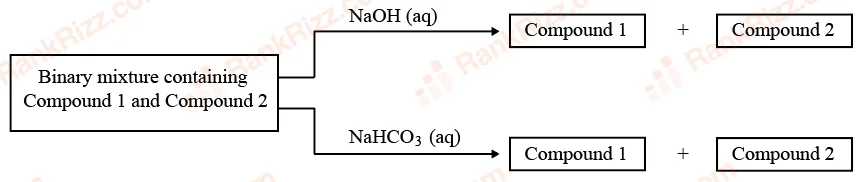
Figure for JEE Advanced 2012 Chemistry question on Reactions of carboxylic acids
  1. A

    C6H5OHC_6H_5OH and C6H5COOHC_6H_5COOH

  2. B

    C6H5COOHC_6H_5COOH and C6H5CH2OHC_6H_5CH_2OH

  3. C

    C6H5CH2OHC_6H_5CH_2OH and C6H5OHC_6H_5OH

  4. D

    C6H5CH2OHC_6H_5CH_2OH and C6H5CH2COOHC_6H_5CH_2COOH

Q32Properties of colloids and coagulationTRANSCRIBED

Choose the correct reason(s) for the stability of the lyophobic colloidal particles.

  1. A

    Preferential adsorption of ions on their surface from the solution

  2. B

    Preferential adsorption of solvent on their surface from the solution

  3. C

    Attraction between different particles having opposite charges on their surface

  4. D

    Potential difference between the fixed layer and the diffused layer of opposite charges around the colloidal particles

Q33AromaticityTRANSCRIBED

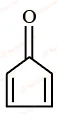
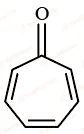
Which of the following molecules, in pure form, is (are) unstable at room temperature ?

  1. A
    Figure for JEE Advanced 2012 Chemistry question on Aromaticity
  2. B
    Figure for JEE Advanced 2012 Chemistry question on Aromaticity
  3. C
    Figure for JEE Advanced 2012 Chemistry question on Aromaticity
  4. D
    Figure for JEE Advanced 2012 Chemistry question on Aromaticity
Q34Oxoacids of halogens and interhalogen compoundsTRANSCRIBED

Which of the following hydrogen halides react(s) with AgNO3(aq)AgNO_3(aq) to give a precipitate that dissolves in Na2S2O3(aq)Na_2S_2O_3(aq)?

  1. A

    HCl

  2. B

    HF

  3. C

    HBr

  4. D

    HI

Q35Entropy and the second lawTRANSCRIBED

For an ideal gas, consider only P-V work in going from an initial state X to the final state Z. The final state Z can be reached by either of the two paths shown in the figure. Which of the following choice(s) is (are) correct ? [take △S\triangle S as change in entropy and w as work done]
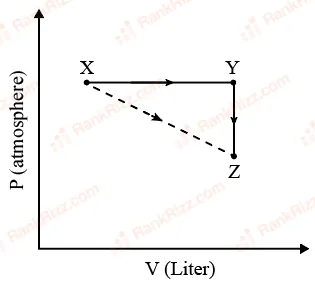
Figure for JEE Advanced 2012 Chemistry question on Entropy and the second law
  1. A

    △Sx→z=△Sx→y+△Sy→z\triangle S_{x \rightarrow z} = \triangle S_{x \rightarrow y} + \triangle S_{y \rightarrow z}

  2. B

    △wx→z=△wx→y+△wy→z\triangle w_{x \rightarrow z} = \triangle w_{x \rightarrow y} + \triangle w_{y \rightarrow z}

  3. C

    △wx→y→z=△wx→y\triangle w_{x \rightarrow y \rightarrow z} = \triangle w_{x \rightarrow y}

  4. D

    △Sx→y→z=△Sx→y\triangle S_{x \rightarrow y \rightarrow z} = \triangle S_{x \rightarrow y}

Q36Proteins and enzymesTRANSCRIBED

The substituents R1R_1 and R2R_2 for nine peptides are listed in the table given below. How many of these peptides are positively charged at pH = 7.0 ?
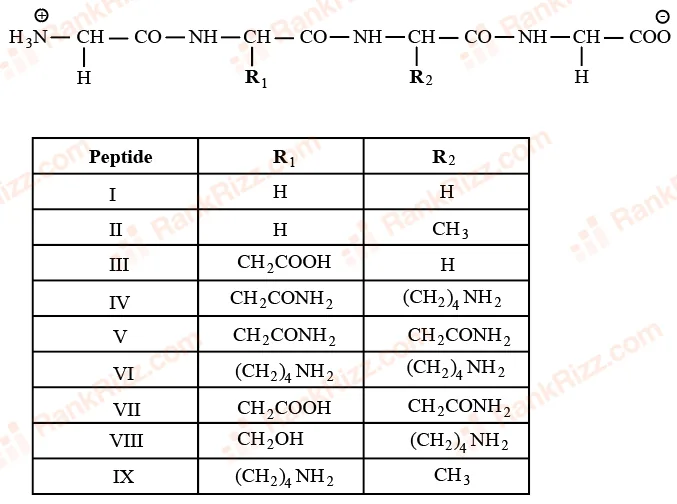
Figure for JEE Advanced 2012 Chemistry question on Proteins and enzymes
Q37Radioactivity and nuclear reactionsTRANSCRIBED

The periodic table consists of 18 groups. An isotope of copper, on bombardment with protons, undergoes a nuclear reaction yielding element X as shown below. To which group, element X belongs in the periodic table ?

2963Cu+11H→601n+α+211H+X_{29}^{63}Cu + _{1}^{1}H \rightarrow 6_{0}^{1}n + \alpha + 2 _{1}^{1}H + X

Q38Structural isomerismTRANSCRIBED

When the following aldohexose exists in its D-configuration, the total number of stereoisomers in its pyranose form is
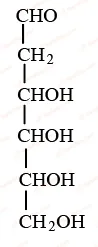
Figure for JEE Advanced 2012 Chemistry question on Structural isomerism
Q39Concentration terms and their interconversionTRANSCRIBED

29.2% (w/w) HCI stock solution has a density of 1.25 g mL−1L^{-1}. The molecular weight of HCl is 36.5 g mol−1mol^{-1}. The volume (mL) of stock solution required to prepare a 200 mL solution of 0.4 M HCl is

Q40Integrated rate laws and half-life (zero and first order)TRANSCRIBED

An organic compound undergoes first-order decomposition. The time taken for its decomposition to 18\frac{1}{8} and 110\frac{1}{10} of its initial concentration are t18t_{\frac{1}{8}} and t110t_{\frac{1}{10}} respectively. What is the value of [t18][t110]×10\frac{[t_{\frac{1}{8}}]}{[t_{\frac{1}{10}}]} \times 10? (take log⁡102=0.3\log_{10} 2 = 0.3)

NEXT IN THIS PAPER →Maths, Q41 onwards