JEE Main 2015 Physics question — Excess pressure in drops and bubbles
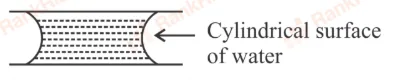
If two glass plates have water between them and are separated by very small distance (see the figure below), it is very difficult to pull them apart. It is because the water in between forms cylindrical surface on the side that gives rise to lower pressure in the water in comparison to atmosphere. If the radius of the cylindrical surface is R and surface tension of water is T then the pressure in water between the plates is lower by:
SOLUTION
The pressure difference () across a curved liquid surface is determined by the surface tension () and the two principal radii of curvature ( and ) is
This excess pressure is the same as the excess pressure inside a drop or air bubble.
So,
Tagged Excess pressure in drops and bubbles. Machine-assigned, so read it as a strong shortlist rather than a verdict.