JEE Main 2026 Chemistry question — Nucleophilic addition reactions of carbonyl compounds
Given below are two statements:
The condensation reaction between and
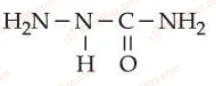
under optimum pH will produce
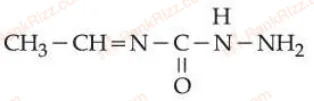
The molecule
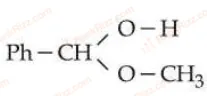
will generate in the presence of dilute acid.
In the light of the above statements, choose the correct answer from the options given below:
SOLUTION
Statement I - Self-condensation of acetaldehyde
Acetaldehyde is represented as (the abbreviated notation ). When the pH of the medium is adjusted to a mild value of about 7-8 (weakly basic), an enolate ion can be generated without causing extensive dehydration. Two molecules of the aldehyde then undergo the aldol reaction:
The product is 3-hydroxybutanal, the normal “aldol’’ obtained before any loss of water. Thus the condensation described in Statement I is correctly stated, so Statement I is true.
Statement II - Acidic hydrolysis of an acetal
Acetals (dialkoxy derivatives) revert to the parent carbonyl compound in the presence of dilute mineral acid. For benzaldehyde dimethyl acetal the reaction is
Hence the molecule named in Statement II indeed generates (benzaldehyde) on treatment with dilute acid, so Statement II is also true.
Since both statements are correct, the option that matches this situation is:
Option A which is: Both statements are true
Tagged Nucleophilic addition reactions of carbonyl compounds. Machine-assigned, so read it as a strong shortlist rather than a verdict.