Q31Stoichiometry, limiting reagent and percentage yieldTRANSCRIBED
The amount of BaSO4 formed upon mixing 100 mL of 20.8% BaCl2 solution with 50 mL of 9.8% H2SO4 solution will be: (Ba = 137, Cl = 35.5, S = 32, H = 1 and O = 16)
- A
- B
- C
- D
Q32Bohr model of hydrogen-like speciesTRANSCRIBED
If m and e are the mass and charge of the revolving electron in the orbit of radius r for hydrogen atom, the total energy of the revolving electron will be:
- A
21re2
- B
- C
- D
−21re2
Q33de Broglie wavelength and Heisenberg uncertainty principleTRANSCRIBED
The de-Broglie wavelength of a particle of mass 6.63 g moving with a velocity of 100 ms−1 is:
- A
- B
- C
- D
Q34Hydrogen spectrum and spectral seriesTRANSCRIBED
Excited hydrogen atom emits light in the ultraviolet region at 2.47×10¹⁵ Hz. With this frequency, the energy of a single photon is: (h = 6.63×10⁻³⁴ Js)
- A
8.041×10−40 J
- B
2.680×10⁻¹⁹ J
- C
1.640×10⁻¹⁸ J
- D
6.111×10⁻¹⁷ J
Q35Modern periodic table and classification of elementsTRANSCRIBED
Similarity in chemical properties of the atoms of elements in a group of the Periodic table is most closely related to:
- A
- B
- C
number of principal energy levels
- D
number of valence electrons
Q36Atomic and ionic radiiTRANSCRIBED
Which of the following arrangements represents the increasing order (smallest to largest) of ionic radii of the given species O2−, S2−, N3−, P3−?
- A
O2− < N3− < S2− < P3−
- B
O2− < P3− < N3− < S2−
- C
N3 < O2− < P3− < S2−
- D
N3− < S2− < O2− < P3−
Q37Valence bond theory, orbital overlap and sigma/pi bondsTRANSCRIBED
Which of the following molecules has two sigma (σ) and two pi (π) bonds?
- A
- B
- C
- D
Q38Gibbs energy and spontaneityTRANSCRIBED
The (S°) of the following substances are: CH4(g) 186.2 JK−1 mol−1, O2(g) 205.2 JK−1 mol−1, CO2(g) 213.6 JK−1 mol−1, H2O(g) 69.9 JK−1 mol−1. The entropy change (ΔS∘) for the reaction CH4(g) + 2O2(g) → CO2(g) + 2H2O(l) is:
- A
−312.5 J K−1 mol−1
- B
−242.8 JK−1 mol−1
- C
−108.1 JK−1 mol−1
- D
−37.6 J K−1 mol−1
Q39Enthalpies of reaction and Hess's lawTRANSCRIBED
The standard enthalpy of formation (ΔfH298∘) for methane, CH4 is −74.9 kJ mol−1. In order to calculate the average energy given out in the formation of a C-H bond from this it is necessary to know which one of the following?
- A
The dissociation energy of the hydrogen molecule, H2.
- B
The first four ionisation energies of carbon.
- C
The dissociation energy of H2 and enthalpy and sublimation of carbon (graphite).
- D
The first four ionisation energies of carbon and electron affinity of hydrogen.
Q40Le Chatelier's principle and factors affecting equilibriumTRANSCRIBED
What happens when an inert gas is added to an equilibrium keeping volume unchanged?
- A
- B
- C
- D
Equilibrium will remain unchanged
Q41Ionisation of weak electrolytes and Ostwald's dilution lawTRANSCRIBED
The conjugate base of hydrazoic acid is:
- A
- B
- C
- D
Q42Hydrogen peroxideTRANSCRIBED
Hydrogen peroxide acts both as an oxidising and as a reducing agent depending upon the nature of the reacting species. In which of the following cases H2O2 acts as a reducing agent in acid medium?
- A
- B
- C
- D
Q43Structural isomerismTRANSCRIBED
Which one of the following acids does not exhibit optical isomerism?
- A
- B
- C
- D
Q44Properties and reactions of alcoholsTRANSCRIBED
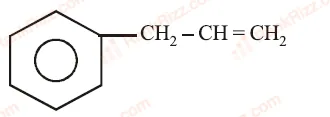
on mercuration-demercuration produces the major product:
- A
- B
- C
- D
Q45Electrophilic addition to alkenesTRANSCRIBED
In the presence of peroxide, HCl and HI do not give anti-Markownikoff's addition of alkenes because:
- A
One of the steps is endothermic in HCl and HI
- B
Both HCl and HI are strong acids
- C
HCl is oxidizing and the HI is reducing
- D
All the steps are exothermic is HCl and HI
Q46Stratospheric pollution and ozone depletionTRANSCRIBED
Global warming is due to increase of:
- A
methane and nitrous oxide in atmosphere
- B
methane and CO2 in atmosphere
- C
methane and O3 in atmosphere
- D
methane and CO in atmosphere
Q47Crystal lattices, unit cells and densityTRANSCRIBED
In a monoclinic unit cell, the relation of sides and angles are respectively:
- A
a = b = c and α=β=γ=90°
- B
a = b = c and α=β=γ=90°
- C
a = b = c and β=γ=90° =α
- D
a = b = c and α=β=γ=90°
Q48Electrolysis and Faraday's lawsTRANSCRIBED
How many electrons would be required to deposit 6.35 g of copper at the cathode during the electrolysis of an aqueous solution of copper sulphate? (Atomic mass of copper = 63.5u, NA = Avogadro's constant):
- A
- B
- C
- D
Q49Arrhenius equation and activation energyTRANSCRIBED
The rate coefficient (k) for a particular reactions is 1.3×10⁻⁴ M−1 s−1 at 100°C, and 1.3×10⁻³ M−1 s−1 at 150°C. What is the energy of activation (EA) (in kJ) for this reaction? (R = molar gas constant = 8.314 JK−1 mol−1)
- A
- B
- C
- D
Q50Group 18: noble gases and xenon compoundsTRANSCRIBED
Which of the following xenon-oxo compounds may not be obtained by hydrolysis of xenon fluorides?
- A
- B
- C
- D
Q51General properties of transition elementsTRANSCRIBED
Which one of the following exhibits the large number of oxidation states?
- A
- B
- C
- D
Q52Batteries, fuel cells and corrosionTRANSCRIBED
Copper becomes green when exposed to moist air for a long period. This is due to:
- A
the formation of a layer of cupric oxide on the surface of copper.
- B
the formation of a layer of basic carbonate of copper on the surface of copper.
- C
the formation of a layer of cupric hydroxide on the surface of copper.
- D
the formation of basic copper sulphate layer on the surface of the metal.
Q53Colour and magnetic behaviour of complexes from CFTTRANSCRIBED
Among the following species the one which causes the highest CFSE, Δ0 as a ligand is:
- A
- B
- C
- D
Q54Colour and magnetic behaviour of complexes from CFTTRANSCRIBED
Which one of the following complexes will most likely absorb visible light? (At. nos. Sc = 21, Ti = 22, V = 23, Zn = 30)
- A
[Sc(H2O)6]3+
- B
[Ti(NH3)6]4+
- C
[V(NH3)6]3+
- D
[Zn(NH3)6]2+
Q55Diazonium saltsTRANSCRIBED
Conversion of benzene diazonium chloride to chlorobenzene is an example of which of the following reactions?
- A
- B
- C
- D
Q56Reactions of alkanesTRANSCRIBED
The major product obtained in the photo catalysed bromination of 2-methylbutane is:
- A
- B
- C
- D
Q57Properties and reactions of alcoholsTRANSCRIBED
In the Victor-Meyer's test, the colour given by 1°, 2° and 3° alcohols are respectively:
- A
- B
- C
- D
Q58Reactions of phenolsTRANSCRIBED
Phthalic acid reacts with resorcinol in the presence of concentrated H2SO4 to give:
- A
- B
- C
- D
Q59Drugs and medicinesTRANSCRIBED
Aminoglycosides are usually used as:
- A
- B
- C
- D
Q60Carbohydrates: classification and monosaccharidesTRANSCRIBED
Which of the following will not show mutarotation?
- A
- B
- C
- D