RankRizz

JEE Main 25 Apr 2013, Online: Chemistry

The 30 Chemistry questions of JEE Main 25 Apr 2013, Online, numbered across the whole paper. Pick an answer on any question to check it against the key. Free to read, nothing to download.

Chemistry

Q31Stoichiometry, limiting reagent and percentage yieldTRANSCRIBED

6 litres of an alkene require 27 litres of oxygen at constant temperature and pressure for complete combustion. The alkene is :

  1. A

    Ethene

  2. B

    Propene

  3. C

    1-Butene

  4. D

    2-Butene

Q32Depression in freezing pointTRANSCRIBED

How many grams of methyl alcohol should be added to a 10 litre tank of water to prevent its freezing at 268 K? (KfK_f for water is 1.86 K kg mol−1^{-1})

  1. A

    880.07 g

  2. B

    899.04 g

  3. C

    886.02 g

  4. D

    868.81 g

Q33Concentration terms and their interconversionTRANSCRIBED

10 mL of 2(M) NaOH solution is added to 200 mL of 0.5(M) of NaOH solution. What is the final concentration?

  1. A

    0.57(M)

  2. B

    5.7(M)

  3. C

    11.4(M)

  4. D

    1.14(M)

Q34Quantum numbers and shapes of orbitalsTRANSCRIBED

Given (A) n = 5, mlm_l = +1 (B) n = 2, ll = 1, mlm_l = -1, msm_s = -1/2. The maximum number of electron(s) in an atom that can have the quantum numbers as given in (A) and (B) are respectively:

  1. A

    25 and 1

  2. B

    8 and 1

  3. C

    2 and 4

  4. D

    4 and 1

Q35Group 14: trends and carbon allotropesTRANSCRIBED

The catenation tendency of C, Si and Ge is in the order Ge < Si < C. The bond energies (in kJ mol−1^{-1}) of C-C, Si-Si and Ge-Ge bonds are respectively ;

  1. A

    348, 297, 260

  2. B

    297, 348, 260

  3. C

    348, 260, 297

  4. D

    260, 297, 348

Q36Balancing redox equationsTRANSCRIBED

Which one of the following cannot function as an oxidising agent?

  1. A

    I−^-

  2. B

    S(s)

  3. C

    NO3−_3^- (aq)

  4. D

    Cr2_2O72−_7^{2-}

Q37VSEPR theory and shapes of molecules and ionsTRANSCRIBED

In which of the following sets, all the given species are isostructural?

  1. A

    CO2CO_2, NO2NO_2, ClO2ClO_2, SiO2SiO_2

  2. B

    PCl3PCl_3, AlCl3AlCl_3, BCl3BCl_3, SbCl3SbCl_3

  3. C

    BF3BF_3, NF3NF_3, PF3PF_3, AlF3AlF_3

  4. D

    BF4−BF_4^-, CCl4CCl_4, NH4+NH_4^+, PCl4+PCl_4^+

Q38Molecular orbital theory of diatomic speciesTRANSCRIBED

The internuclear distances in O-O bonds for O2+O_2^+, O2O_2, O2−O_2^- and O22−O_2^{2-} respectively are :

  1. A

    1.30 A˚\text{Å}, 1.49 A˚\text{Å}, 1.12 A˚\text{Å}, 1.21 A˚\text{Å}

  2. B

    1.49 A˚\text{Å}, 1.21 A˚\text{Å}, 1.12 A˚\text{Å}, 1.30 A˚\text{Å}

  3. C

    1.21 A˚\text{Å}, 1.12 A˚\text{Å}, 1.49 A˚\text{Å}, 1.30 A˚\text{Å}

  4. D

    1.12 A˚\text{Å}, 1.21 A˚\text{Å}, 1.30 A˚\text{Å}, 1.49 A˚\text{Å}

Q39Valence bond theory of complexesTRANSCRIBED

The structure of which of the following chloro species can be explained on the basis of dsp2^2 hybridization?

  1. A

    PdCl42−PdCl_4^{2-}

  2. B

    FeCl42−FeCl_4^{2-}

  3. C

    CoCl42−CoCl_4^{2-}

  4. D

    NiCl42−NiCl_4^{2-}

Q40Kinetic theory of gases and molecular speedsTRANSCRIBED

Which one of the following is the wrong assumption of kinetic theory of gases?

  1. A

    Momentum and energy always remain conserved.

  2. B

    Pressure is the result of elastic collision of molecules with the container's wall.

  3. C

    Molecules are separated by great distances compared to their sizes.

  4. D

    All the molecules move in straight line between collision and with same velocity.

Q41Compounds of alkaline earth metalsTRANSCRIBED

In which of the following exothermic reactions, the heat liberated per mole is the highest?

  1. A

    CaO+H2O→Ca(OH)2CaO + H_2O \rightarrow Ca(OH)_2

  2. B

    SrO+H2O→Sr(OH)2SrO + H_2O \rightarrow Sr(OH)_2

  3. C

    BaO+H2O→Ba(OH)2BaO + H_2O \rightarrow Ba(OH)_2

  4. D

    MgO+H2O→Mg(OH)2MgO + H_2O \rightarrow Mg(OH)_2

Q42Bond enthalpy, atomisation, phase-change and solution enthalpiesTRANSCRIBED

Given that: (i) ΔfH°\Delta_f H° of N2ON_2O is 82 kJ mol−1^{-1} (ii) Bond energies of N≡NN \equiv N, N=NN = N, O=OO = O and N=ON = O are 946, 418, 498 and 607 kJ mol−1^{-1} respectively. The resonance energy of N2ON_2O is :

  1. A

    -88 kJ

  2. B

    -66 kJ

  3. C

    -62 kJ

  4. D

    -44 kJ

Q43Law of mass action and equilibrium constants Kc and KpTRANSCRIBED

The ratio KpKc\frac{K_p}{K_c} for the reaction CO(g)+12O2(g)⇌CO2(g)CO(g) + \frac{1}{2}O_2(g) \rightleftharpoons CO_2(g) is:

  1. A

    1RT\frac{1}{\sqrt{RT}}

  2. B

    (RT)1/2(RT)^{1/2}

  3. C

    RT

  4. D

    1

Q44pH of acids, bases and their mixturesTRANSCRIBED

What would be the pH of a solution obtained by mixing 5 g of acetic acid and 7.5 g of sodium acetate and making the volume equal to 500 mL? (Ka=1.75×10⁻⁵K_a = 1.75 \times 10^{-5}, pKa_a = 4.76)

  1. A

    pH = 4.70

  2. B

    pH < 4.70

  3. C

    pH of solution will be equal to pH of acetic acid

  4. D

    4.76 < pH < 5.0

Q45Ionisation of weak electrolytes and Ostwald's dilution lawTRANSCRIBED

Which one of the following arrangements represents the correct order of the proton affinity of the given species :

  1. A

    I−<F−<HS−<NH2−I^- < F^- < HS^- < NH_2^-

  2. B

    HS−<NH2−<F−<I−HS^- < NH_2^- < F^- < I^-

  3. C

    F−<I−<NH2−<HS−F^- < I^- < NH_2^- < HS^-

  4. D

    NH2−<HS−<I−<F−NH_2^- < HS^- < I^- < F^-

Q46Electrophilic aromatic substitutionTRANSCRIBED

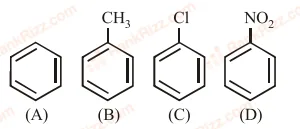
Given 

Figure for JEE Main 2013 Chemistry question on Electrophilic aromatic substitution

In the above compounds correct order of reactivity in electrophilic substitution reactions will be:

  1. A

    B > A > C > D

  2. B

    D > C > B > A

  3. C

    A > B > C > D

  4. D

    B > C > A > D

Q47Crystal lattices, unit cells and densityTRANSCRIBED

Copper crystallises in fcc with a unit length of 361 pm. What is the radius of copper atom?

  1. A

    157 pm

  2. B

    128 pm

  3. C

    108 pm

  4. D

    181 pm

Q48Electrode potentials, electrochemical series and cell EMFTRANSCRIBED

The Gibbs energy for the decomposition of Al2O3Al_2O_3 at 500°C is as follows :
23Al2O3→43Al+O2\frac{2}{3}Al_2O_3 \rightarrow \frac{4}{3}Al + O_2, ΔrG=+940\Delta_r G = +940 kJ mol−1^{-1}
The potential difference needed for the electrolytic reduction of aluminium oxide at 500°C should be at least :

  1. A

    4.5 V

  2. B

    3.0 V

  3. C

    5.0 V

  4. D

    2.5 V

Q49Electrolysis and Faraday's lawsTRANSCRIBED

A solution of copper sulphate (CuSO4_4) is electrolysed for 10 minutes with a current of 1.5 amperes. The mass of copper deposited at the cathode (at. mass of Cu = 63u) is :

  1. A

    0.3892 g

  2. B

    0.2938 g

  3. C

    0.2398 g

  4. D

    0.3928 g

Q50Radioactivity and nuclear reactionsTRANSCRIBED

A radioactive isotope having a half-life period of 3 days was received after 12 days. If 3 g of the isotope is left in the container, what would be the initial mass of the isotope?

  1. A

    12 g

  2. B

    36 g

  3. C

    48 g

  4. D

    24 g

Q51Colour and magnetic behaviour of complexes from CFTTRANSCRIBED

In which of the following octahedral complex species the magnitude of Δ0\Delta_0 will be maximum?

  1. A

    [Co(H2O)6]2+[Co(H_2O)_6]^{2+}

  2. B

    [Co(CN)6]3−[Co(CN)_6]^{3-}

  3. C

    [Co(C2O4)3]3−[Co(C_2O_4)_3]^{3-}

  4. D

    [Co(NH3)6]3+[Co(NH_3)_6]^{3+}

Q52Nucleophilic substitution (SN1 and SN2)TRANSCRIBED

In nucleophilic substitution reaction, order of halogens as incoming (attacking) nucleophile is: I−>Br−>Cl−I^- > Br^- > Cl^-. The order of halogens as departing nucleophile should be :

  1. A

    Br−^- > I−^- > Cl−^-

  2. B

    I−^- > Br−^- > Cl−^-

  3. C

    Cl−^- > Br−^- > I−^-

  4. D

    Cl−^- > I−^- > Br−^-

Q53Properties and reactions of alcoholsTRANSCRIBED

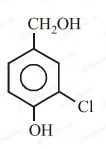
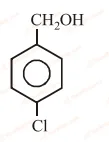
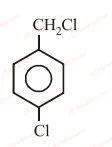
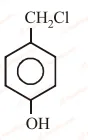
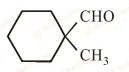
The major product in the following reaction 
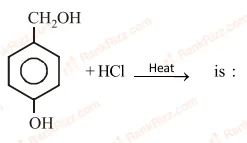
Figure for JEE Main 2013 Chemistry question on Properties and reactions of alcohols
  1. A
    Figure for JEE Main 2013 Chemistry question on Properties and reactions of alcohols
  2. B
    Figure for JEE Main 2013 Chemistry question on Properties and reactions of alcohols
  3. C
    Figure for JEE Main 2013 Chemistry question on Properties and reactions of alcohols
  4. D
    Figure for JEE Main 2013 Chemistry question on Properties and reactions of alcohols
Q54Nucleophilic addition reactions of carbonyl compoundsTRANSCRIBED

Cannizaro's reaction is not given by :
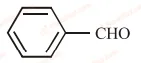
  1. A
    Figure for JEE Main 2013 Chemistry question on Nucleophilic addition reactions of carbonyl compounds
  2. B
    Figure for JEE Main 2013 Chemistry question on Nucleophilic addition reactions of carbonyl compounds
  3. C

    CH3CHOCH_3CHO

  4. D

    HCHO

Q55Reactions of phenolsTRANSCRIBED

Phenol on heating with CHCl3_3 and NaOH gives salicylaldehyde. The reaction is called:

  1. A

    Reimer - Tiemann reaction

  2. B

    Claisen reaction

  3. C

    Cannizzaro's reaction

  4. D

    Hell - Volhard - Zelinsky reaction

Q56Nucleophilic addition reactions of carbonyl compoundsTRANSCRIBED

Which of the following reagent(s) used for the conversion?
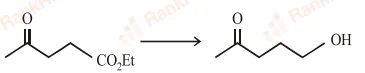
Figure for JEE Main 2013 Chemistry question on Nucleophilic addition reactions of carbonyl compounds
  1. A

    glycol/LiAlH4_4/H3_3O+^+

  2. B

    glycol/ NaH/H3_3O+^+

  3. C

    LiAlH4_4

  4. D

    NaBH4_4

Q57Reactions and tests of aminesTRANSCRIBED

Carbylamine forms from aliphatic or aromatic primary amine via which of the following intermediates?

  1. A

    Carbanion

  2. B

    Carbene

  3. C

    Carbocation

  4. D

    Carbon radical

Q58Carbohydrates: classification and monosaccharidesTRANSCRIBED

Which of the following statement is not correct?

  1. A

    Amylopectin is a branched polymer of α\alpha-glucose.

  2. B

    Cellulose is a linear polymer of β\beta-glucose.

  3. C

    Glycogen is the food reserve of plants.

  4. D

    All proteins are polymers of α\alpha-amino acids.

Q59Important polymers and their monomersTRANSCRIBED

Bakelite is obtained from phenol by reacting with:

  1. A

    Acetal

  2. B

    CH3_3CHO

  3. C

    HCHO

  4. D

    Chlorobenzene

Q60Vitamins and hormonesTRANSCRIBED

Among the following vitamins the one whose deficiency causes rickets (bone deficiency) is :

  1. A

    Vitamin A

  2. B

    Vitamin B

  3. C

    Vitamin D

  4. D

    Vitamin C

NEXT IN THIS PAPER →Maths, Q61 onwards