RankRizz

JEE Main 23 Apr 2013, Online: Chemistry

The 30 Chemistry questions of JEE Main 23 Apr 2013, Online, numbered across the whole paper. Pick an answer on any question to check it against the key. Free to read, nothing to download.

Chemistry

Q31Mole concept, atomic and molar massTRANSCRIBED

Number of atoms in the following samples of substances is largest in:

  1. A

    4.0 g of hydrogen

  2. B

    71.0 g of chlorine

  3. C

    127.0 g of iodine

  4. D

    48.0 g of magnesium

Q32de Broglie wavelength and Heisenberg uncertainty principleTRANSCRIBED

The de Broglie wavelength of a car of mass 1000 kg and velocity 36 km/hr is :

  1. A

    6.626×10−346.626 \times 10^{-34} m

  2. B

    6.626×10−386.626 \times 10^{-38} m

  3. C

    6.626×10−316.626 \times 10^{-31} m

  4. D

    6.626×10−306.626 \times 10^{-30} m

Q33Ionisation enthalpyTRANSCRIBED

Which is the correct order of second ionization potential of C, N, O and F in the following?

  1. A

    O > N > F > C

  2. B

    O > F > N > C

  3. C

    F > O > N > C

  4. D

    C > N > O > F

Q34VSEPR theory and shapes of molecules and ionsTRANSCRIBED

The shape of IF6−IF_6^- is :

  1. A

    Trigonally distorted octahedron

  2. B

    Pyramidal

  3. C

    Octahedral

  4. D

    Square antiprism

Q35Dipole moment and molecular polarityTRANSCRIBED

Bond distance in HF is 9.17×10−119.17 \times 10^{-11} m. Dipole moment of HF is 6.104×10−306.104 \times 10^{-30} Cm. The percentage ionic character in HF will be : (electron charge = 1.60×10−191.60 \times 10^{-19} C)

  1. A

    61.0%

  2. B

    38.0%

  3. C

    35.5%

  4. D

    41.5%

Q36Hydrogen bonding and intermolecular forcesTRANSCRIBED

The correct order of viscosity of the following liquids will be :

  1. A

    Water < methyl alcohol < dimethyl ether < glycerol

  2. B

    methyl alcohol < glycerol < water < dimethyl ether

  3. C

    dimethyl ether < methyl alcohol < water < glycerol

  4. D

    glycerol < dimethyl ether < water < methyl alcohol

Q37First law: work, heat and internal energyTRANSCRIBED

Which of the following statements/relationships is not correct in thermodynamic changes?

  1. A

    ΔU=0\Delta U = 0 (isothermal reversible expansion of a gas)

  2. B

    w=−nRTln⁡V2V1w = -nRT\ln\frac{V_2}{V_1} (isothermal reversible expansion of an ideal gas)

  3. C

    w=nRTln⁡V2V1w = nRT\ln\frac{V_2}{V_1} (isothermal reversible expansion of an ideal gas)

  4. D

    For a system of constant volume heat involved directly changes to internal energy.

Q38Law of mass action and equilibrium constants Kc and KpTRANSCRIBED

(1) N2(g)+3H2(g)⇌2NH3(g)N_2(g) + 3H_2(g) \rightleftharpoons 2NH_3(g), K1K_1
(2) N2(g)+O2(g)⇌2NO(g)N_2(g) + O_2(g) \rightleftharpoons 2NO(g), K2K_2
(3) H2(g)+12O2(g)⇌H2O(g)H_2(g) + \frac{1}{2}O_2(g) \rightleftharpoons H_2O(g), K3K_3
The equation for the equilibrium constant of the reaction 2NH3(g)+52O2(g)⇌2NO(g)+3H2O(g)2NH_3(g) + \frac{5}{2}O_2(g) \rightleftharpoons 2NO(g) + 3H_2O(g), (K4)(K_4) in terms of K1K_1, K2K_2 and K3K_3 is :

  1. A

    K1⋅K2K3\frac{K_1 \cdot K_2}{K_3}

  2. B

    K1⋅K22K2\frac{K_1 \cdot K_2^2}{K_2}

  3. C

    K1K2K3K_1 K_2 K_3

  4. D

    K2⋅K33K1\frac{K_2 \cdot K_3^3}{K_1}

Q39pH of acids, bases and their mixturesTRANSCRIBED

What is the pH of a 10−410^{-4} M OH−^- solution at 330 K, if KwK_w at 330 K is 10−13.610^{-13.6}?

  1. A

    4

  2. B

    9.0

  3. C

    10

  4. D

    9.6

Q40Water and heavy waterTRANSCRIBED

The numbers of protons, electrons and neutrons in a molecule of heavy water are respectively :

  1. A

    8, 10, 11

  2. B

    10, 10, 10

  3. C

    10, 11, 10

  4. D

    11, 10, 10

Q41Alkaline earth metals: properties and trendsTRANSCRIBED

Equimolar solutions of the following compounds are prepared separately in water. Which will have the lowest pH value?

  1. A

    BeCl2_2

  2. B

    SrCl2_2

  3. C

    CaCl2_2

  4. D

    MgCl2_2

Q42Structural isomerismTRANSCRIBED

Monocarboxylic acids are functional isomers of:

  1. A

    Ethers

  2. B

    Amines

  3. C

    Esters

  4. D

    Alcohols

Q43Crystal lattices, unit cells and densityTRANSCRIBED

In a face centred cubic lattice, atoms of A form the corner points and atoms of B form the face centred points. If two atoms of A are missing from the corner points, the formula of the ionic compound is :

  1. A

    AB3_3

  2. B

    AB4_4

  3. C

    A2_2 B5_5

  4. D

    AB2_2

Q44Relative lowering of vapour pressureTRANSCRIBED

Vapour pressure of pure benzene is 119 torr and that of toluene is 37.0 torr at the same temperature. Mole fraction of toluene in vapour phase which is in equilibrium with a solution of benzene and toluene having a mole fraction of toluene 0.50, will be :

  1. A

    0.137

  2. B

    0.237

  3. C

    0.435

  4. D

    0.205

Q45Electrode potentials, electrochemical series and cell EMFTRANSCRIBED

Given :
E12Cl2/Cl−∘=1.36E^\circ_{\frac{1}{2}Cl_2/Cl^-} = 1.36 V, ECr3+/Cr∘=−0.74E^\circ_{Cr^{3+}/Cr} = -0.74 V
ECr2O72−/Cr3+∘=1.33E^\circ_{Cr_2O_7^{2-}/Cr^{3+}} = 1.33 V, EMnO4−/Mn2+∘=1.51E^\circ_{MnO_4^-/Mn^{2+}} = 1.51 V
The correct order of reducing power of the species (Cr, Cr3+^{3+}, Mn2+^{2+} and Cl−^-) will be:

  1. A

    Mn2+^{2+} < Cl−^- < Cr3+^{3+} < Cr

  2. B

    Mn2+^{2+} < Cl3+^{3+} < Cl−^- < Cr

  3. C

    Cr3+^{3+} < Cl−^- < Mn2+^{2+} < Cr

  4. D

    Cr3+^{3+} < Cl−^- < Cr < Mn2+^{2+}

Q46Integrated rate laws and half-life (zero and first order)TRANSCRIBED

The rate constant of a zero order reaction is 2.0×10−22.0 \times 10^{-2} mol L−1^{-1} s−1^{-1}. If the concentration of the reactant after 25 seconds is 0.5M. What is the initial concentration?

  1. A

    0.5M

  2. B

    1.25M

  3. C

    12.5M

  4. D

    1.0M

Q47Properties of colloids and coagulationTRANSCRIBED

Smoke is an example of:

  1. A

    Solid dispersed in solid

  2. B

    Gas dispersed in liquid

  3. C

    Solid dispersed in gas

  4. D

    Gas dispersed in solid

Q48VSEPR theory and shapes of molecules and ionsTRANSCRIBED

Which has trigonal bipyramidal shape?

  1. A

    XeOF4_4

  2. B

    XeO3_3

  3. C

    XeO3_3F2_2

  4. D

    XeOF2_2

Q49Other important compounds of transition metalsTRANSCRIBED

When a small amount of KMnO4_4 is added to concentrated H2_2SO4_4, a green oily compound is obtained which is highly explosive in nature. Compound may be :

  1. A

    MnSO4_4

  2. B

    Mn2_2O7_7

  3. C

    MnO2_2

  4. D

    Mn2_2O3_3

Q50General properties of transition elementsTRANSCRIBED

Identify the incorrect statement :

  1. A

    Cu2_2O is colourless.

  2. B

    Copper (I) compounds are colourless except when colour results from charge transfer.

  3. C

    Copper (I) compounds are diamagnetic.

  4. D

    Cu2_2S is black.

Q51Valence bond theory of complexesTRANSCRIBED

The magnetic moment of the complex anion [Cr(NO)(NH3)(CN)4]2−[Cr(NO)(NH_3)(CN)_4]^{2-} is :

  1. A

    5.91 BM

  2. B

    3.87 BM

  3. C

    1.73 BM

  4. D

    2.82 BM

Q52Group 14: trends and carbon allotropesTRANSCRIBED

Identify the incorrect statement:

  1. A

    In (Si3O9)6−(Si_3O_9)^{6-}, tetrahedral SiO4_4 units share two oxygen atoms.

  2. B

    Trialkylchlorosilane on hydrolysis gives R3_3SiOH.

  3. C

    SiCl4_4 undergoes hydrolysis to give H4_4SiO4_4.

  4. D

    (Si3O9)6−(Si_3O_9)^{6-} has cyclic structure.

Q53Nucleophilic substitution (SN1 and SN2)TRANSCRIBED

The order of reactivity of the given haloalkanes towards nucleophile is :

  1. A

    RI > RBr > RCl

  2. B

    RCl > RBr > RI

  3. C

    RBr > RCl > RI

  4. D

    RBr > RI > RCl

Q54Reactions of phenolsTRANSCRIBED

The reaction of phenol with benzoyl chloride to give phenyl benzoate is known as :

  1. A

    Claisen reaction

  2. B

    Schotten-Baumann reaction

  3. C

    Reimer-Tiemann reaction

  4. D

    Gatterman-Koch reaction

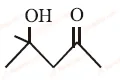
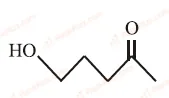
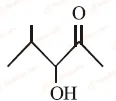
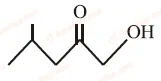
Q55Nucleophilic addition reactions of carbonyl compoundsTRANSCRIBED

Which of the following is the product of aldol condensation?
  1. A
    Figure for JEE Main 2013 Chemistry question on Nucleophilic addition reactions of carbonyl compounds
  2. B
    Figure for JEE Main 2013 Chemistry question on Nucleophilic addition reactions of carbonyl compounds
  3. C
    Figure for JEE Main 2013 Chemistry question on Nucleophilic addition reactions of carbonyl compounds
  4. D
    Figure for JEE Main 2013 Chemistry question on Nucleophilic addition reactions of carbonyl compounds
Q56Reactions and tests of aminesTRANSCRIBED

The order of basicity of amines in gaseous state is :

  1. A

    1°>2°>3°>NH31° > 2° > 3° > NH_3

  2. B

    3°>2°>NH3>1°3° > 2° > NH_3 > 1°

  3. C

    3°>2°>1°>NH33° > 2° > 1° > NH_3

  4. D

    NH3>1°>2°>3°NH_3 > 1° > 2° > 3°

Q57Important polymers and their monomersTRANSCRIBED

Which of the following polymer is a polyamide?

  1. A

    Terylene

  2. B

    Nylon

  3. C

    Rubber

  4. D

    Vulcanised rubber

Q58Drugs and medicinesTRANSCRIBED

H1_1 - Receptor antagonists is a term associated with :

  1. A

    Antiseptics

  2. B

    Antihistamins

  3. C

    Antacids

  4. D

    Analgesics

Q59Carbohydrates: classification and monosaccharidesTRANSCRIBED

Glycosidic linkage is actually an :

  1. A

    Carbonyl bond

  2. B

    Ether bond

  3. C

    Ester bond

  4. D

    Amide bond

Q60Carbohydrates: classification and monosaccharidesTRANSCRIBED

Natural glucose is termed D-glucose because :

  1. A

    -OH on the second carbon is on the right side in Fischer projection

  2. B

    -OH on the sixth carbon is on the right side in Fischer projection.

  3. C

    -OH on the fifth carbon is on the right side in Fischer projection.

  4. D

    It is dextrorotatory.

NEXT IN THIS PAPER →Maths, Q61 onwards