JEE MAIN 2018 · 08 APR OFFLINE+4 / −1TRANSCRIBED
JEE Main 2018 Physics question — Parallel and perpendicular axis theorems
From a uniform circular disc of radius R and mass 9 M, a small disc of radius is removed as shown in the figure. The moment of inertia of the remaining disc about an axis perpendicular to the plane of the disc and passing through centre of disc is: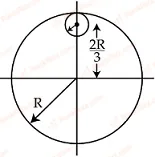
SOLUTION
Key idea: , using the parallel-axis theorem for the removed part.
- Mass is proportional to area, so the removed disc has mass
- Full disc: .
- Removed disc: its centre is at from O. By the parallel-axis theorem:
- Remaining disc:
Answer: (B)
Tagged Parallel and perpendicular axis theorems. Machine-assigned, so read it as a strong shortlist rather than a verdict.