JEE MAIN 2023 · 30 JAN S1+4 / −1MEDIUMTRANSCRIBED
JEE Main 2023 Physics question — Motion graphs: x-t, v-t and a-t
Match Column-I with Column-II:
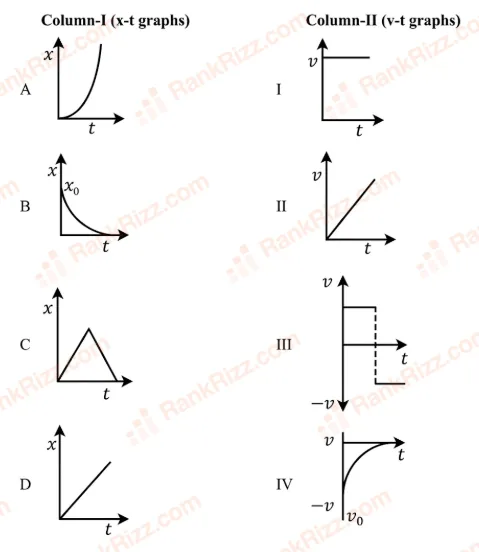
Choose the correct answer from the options given below:
SOLUTION
Key idea:
Graph A:-
- Slope increases with time velocity increases with time
- That means accelerated motion
Matches II (v increases linearly with time)
So:
A II
Graph B:-
- Initially slope is large (negative direction), then becomes less steep
- So velocity starts negative and approaches zero
- Velocity increasing towards zero (but still negative initially)
Matches IV (velocity increasing from negative towards zero)
So:
B IV
Graph C:-
- First slope positive velocity positive
- Then slope negative velocity negative
- Sudden change velocity jumps from +v to −v
Matches III (step from +v to −v)
So:
C III
Graph D:-
- Constant slope constant velocity
Matches I (constant velocity)
So:
D I
Final answer:
AII,BIV,CIII,DI
Tagged Motion graphs: x-t, v-t and a-t. Machine-assigned, so read it as a strong shortlist rather than a verdict.