JEE MAIN 2026 · 28 JAN S1+4 / −1MEDIUMTRANSCRIBED
JEE Main 2026 Chemistry question — Methods of purification of organic compounds
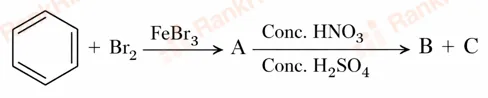
Method used for separation of mixture of products (B and C) obtained in the following reaction is
SOLUTION
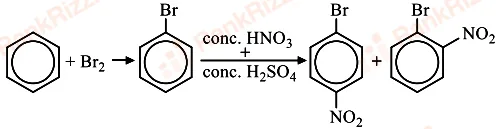 The Reaction Sequence
- Step 1: Benzene reacts with (Halogenation) to form Bromobenzene (A).
- Step 2: Bromobenzene reacts with (Nitration). The bromine atom is ortho/para directing, leading to a mixture of o-nitrobromobenzene (B) and p-nitrobromobenzene (C).
- Physical State: Both isomers are liquids at the reaction temperature.
- Boiling Point Difference: Ortho and para isomers of substituted benzenes often have distinct boiling points due to differences in molecular symmetry and dipole moments.
- The Method: Fractional Distillation is the ideal technique for separating two miscible liquids that have boiling points relatively close to each other. The fractionating column allows for repeated cycles of evaporation and condensation, effectively purifying the components based on their volatility.
Tagged Methods of purification of organic compounds. Machine-assigned, so read it as a strong shortlist rather than a verdict.