JEE Main 2023 Chemistry question — Methods of purification of organic compounds
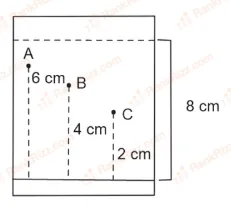
Three organic compounds A, B and C were allowed to run in thin layer chromatography using hexane and gave the following result (see figure). The R value of the most polar compound is _____
SOLUTION
1. Points of TLC
- Stationary Phase: Usually a polar substance like silica gel attached to the TLC plate.
- Mobile Phase: The solvent used to move the compounds. In this case, hexane is used, which is a highly non-polar solvent.
- Polarity vs. Distance: Since the stationary phase is polar and the mobile phase (hexane) is non-polar, a more polar compound will adhere more strongly to the plate and travel a shorter distance. A less polar (more non-polar) compound will dissolve better in hexane and travel further up the plate.
2. Identifying the Most Polar Compound
Looking at the distances traveled by each compound from the baseline:
- Distance traveled by Compound A = 6 cm
- Distance traveled by Compound B = 4 cm
- Distance traveled by Compound C = 2 cm
Since Compound C traveled the shortest distance (2 cm), it interacted the strongest with the polar stationary phase. Therefore, Compound C is the most polar compound.
3. Calculating the Rf Value
The Retardation Factor (Rf) is calculated using the formula:
From the given image:
- Distance traveled by Compound C = 2 cm
- Total distance traveled by the solvent front = 8 cm
Plugging these values into the formula:
4. Matching the Question Format
We can convert 0.25 into scientific notation matching this layout:
Correct Answer: 25
Tagged Methods of purification of organic compounds. Machine-assigned, so read it as a strong shortlist rather than a verdict.