JEE MAIN 2024 · 01 FEB S2+4 / −1MEDIUMTRANSCRIBED
JEE Main 2024 Chemistry question — Electrophilic addition to alkenes
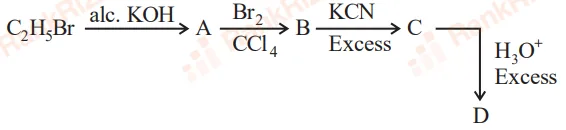
Acid D formed in above reaction is:
SOLUTION
Key idea: Dehydrohalogenation, then addition, then double cyanide substitution, then hydrolysis adds two carbons and produces a 4-carbon diacid.
- (A, ethene)
- (B, 1,2-dibromoethane)
- (C, succinonitrile)
- Hydrolysis of both nitrile groups: D is butanedioic acid, i.e. succinic acid.
Answer: (B) Succinic acid
Tagged Electrophilic addition to alkenes. Machine-assigned, so read it as a strong shortlist rather than a verdict.