JEE Main 2004 Chemistry question — IUPAC nomenclature of organic compounds
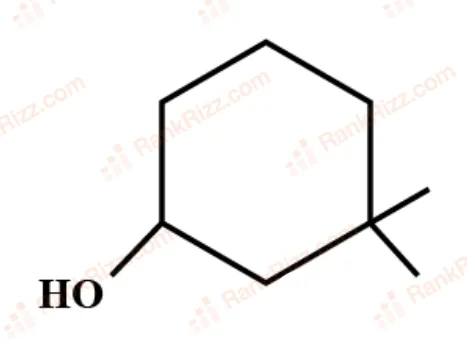
The IUPAC name of the compound
SOLUTION
-
Step 1: Identify the Principal Functional Group
The compound contains a six-membered carbon ring with a hydroxyl group () and two methyl groups (). According to IUPAC priority rules, the principal functional group is the alcohol (), which gives the molecule the suffix -ol.
-
Step 2: Number the Parent Ring
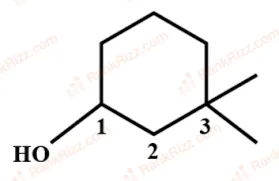
The ring is numbered to give the principal functional group the lowest possible locant:
- The carbon atom bonded to the morning high-priority group () is assigned C1.
- We then number around the ring towards the substituents to give them the lowest possible numbers. Numbering clockwise leads to the methyl groups residing on C3.
This establishes a numbering sequence of 1, 3, 3 for all attached functional groups.
-
Step 3: Identify and Name the Substituents
There are two identical methyl groups located at the third carbon position, which are combined and prefixed as 3,3-dimethyl.
-
Step 4: Assemble the Complete Name
Combining the prefixed substituents, the parent cyclic alkane root (cyclohexane), and the principal suffix gives:
Following standard priority rules ensures that the alcohol group takes precedence over the alkyl groups at position 1.
Answer: Option C — 3,3-dimethyl-1-cyclohexanol
Tagged IUPAC nomenclature of organic compounds. Machine-assigned, so read it as a strong shortlist rather than a verdict.