JEE Main 2020 Chemistry question — Reactions of carboxylic acids
An organic compound [A], molecular formula was hydrolyzed with dilute sulphuric acid to give a carboxylic acid [B] and an alcohol [C]. Oxidation of [C] with produced [B]. Which of the following structures are not possible for [A]?
P)
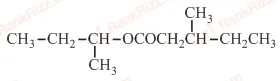
Q)
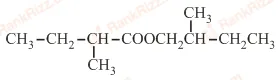
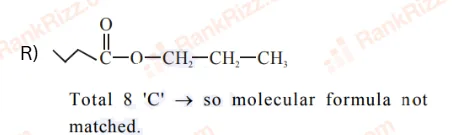
R)
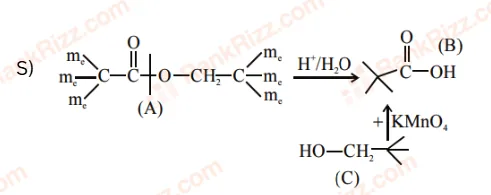
S)
SOLUTION
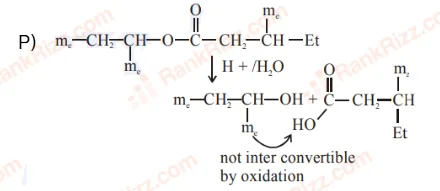
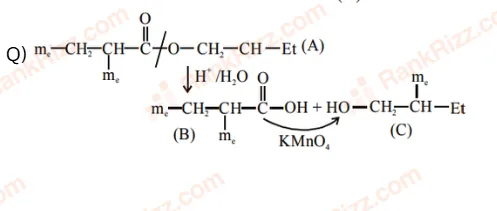
Chemical Analysis of the Reactions:
-
Hydrolysis of Compound [A]:
Compound [A] has the molecular formula . Since it undergoes hydrolysis with dilute sulfuric acid () to yield a carboxylic acid [B] and an alcohol [C], compound [A] must be an ester.
-
Oxidation of Alcohol [C]:
Oxidation of alcohol [C] with Jones reagent () produces the exact same carboxylic acid [B]. Jones reagent is a strong oxidizing agent that converts primary alcohols directly into carboxylic acids without altering the carbon framework:
This implies that both the acyl part (from the acid) and the alkyl part (from the alcohol) of the ester must contain the same number of carbon atoms with identical connectivity, meaning:
Tagged Reactions of carboxylic acids. Machine-assigned, so read it as a strong shortlist rather than a verdict.