JEE Main 2023 Chemistry question — Reactions and tests of amines
In the following reaction, 'A' is
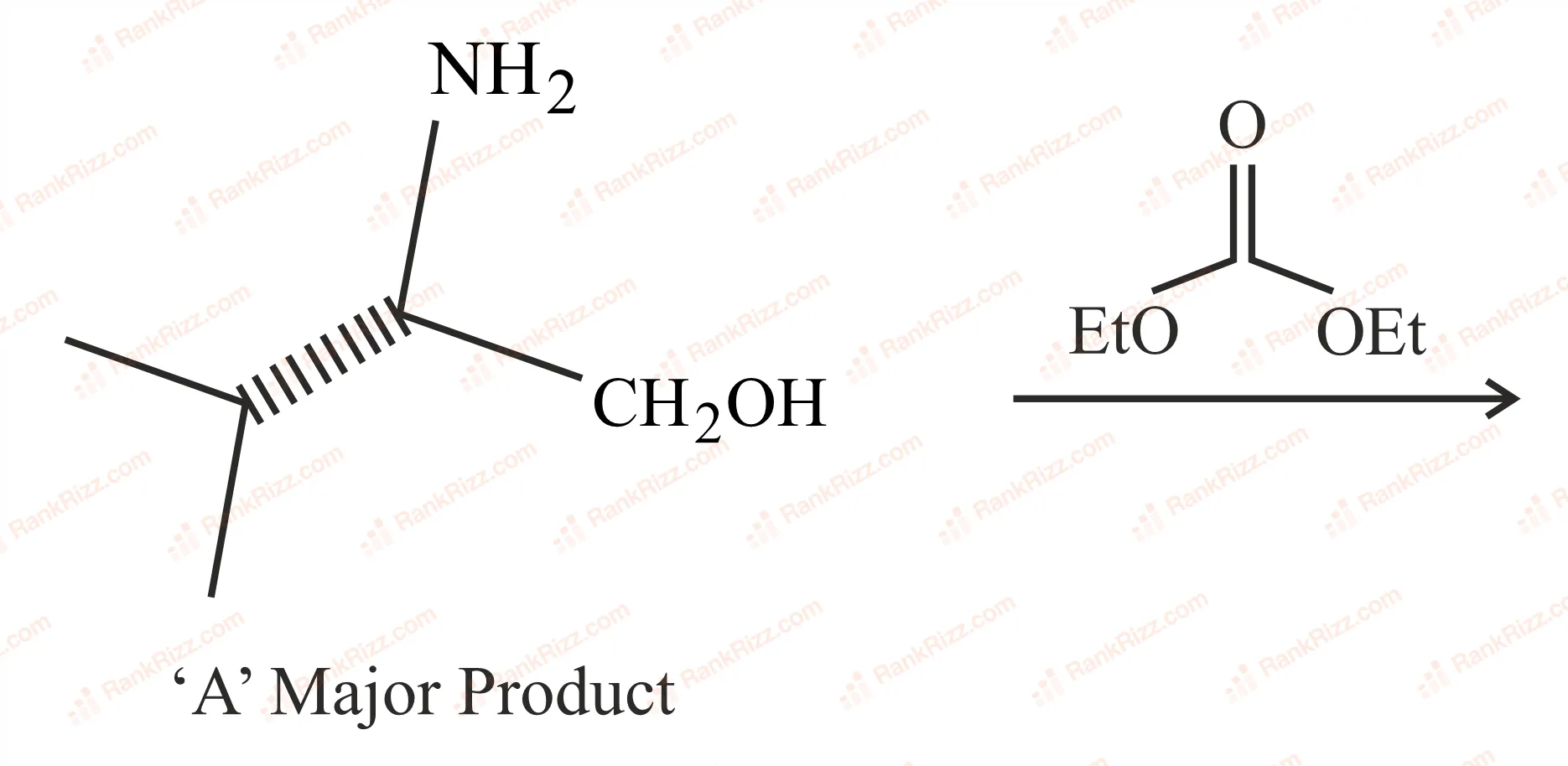
SOLUTION
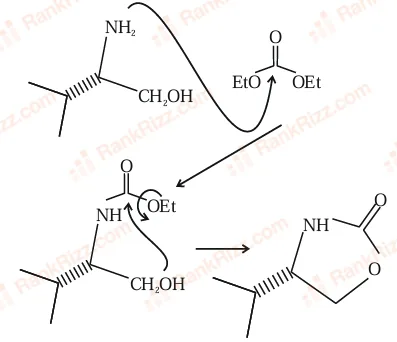
-
Step 1: Intermolecular Nucleophilic Acyl Substitution (Carbamate Formation)
The primary amino group () of the starting material is a stronger nucleophile than the primary hydroxyl group (). It attacks the carbonyl carbon of diethyl carbonate (), displacing one ethoxide () leaving group to form an ethyl carbamate intermediate:
-
Step 2: Intramolecular Cyclization (Oxazolidin-2-one Ring Closure)
The adjacent hydroxyl group () now acts as an internal nucleophile. It attacks the carbonyl group of the newly formed carbamate line, displacing the second ethoxide group () through an intramolecular nucleophilic acyl substitution:
Stereochemistry Retention:
Crucially, throughout both nucleophilic substitution steps, neither bond connected to the chiral center is ever broken or altered. Because the chiral center remains completely undisturbed, its original configuration (wedge/dash orientation of the tert-butyl group) is fully retained in the final product.
Tagged Reactions and tests of amines. Machine-assigned, so read it as a strong shortlist rather than a verdict.